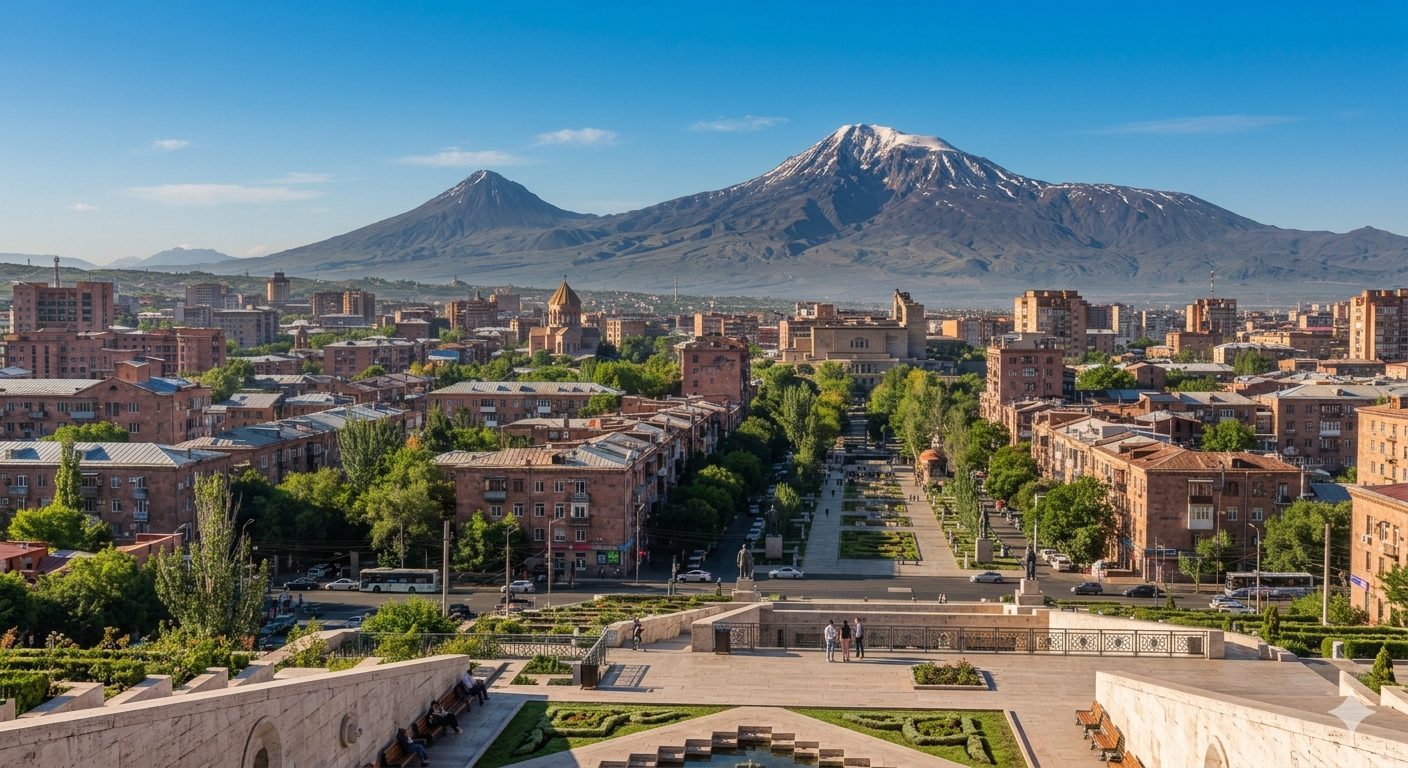
Armenia, once a vast ancient empire, is now a landlocked country whose ever-present Mount Ararat serves as a painful reminder of its past. The country is the remnant of a millennia-old mountain fortress forged from volatile volcanic plates. This high-altitude plateau — boxed in by the Pontic Mountains and lakes Van, Sevan, and Urmia — forms a rugged collision zone between Europe and Asia. For over 3000 years, Armenians have endured, despite hostel neighbors and an unforgiving geography.
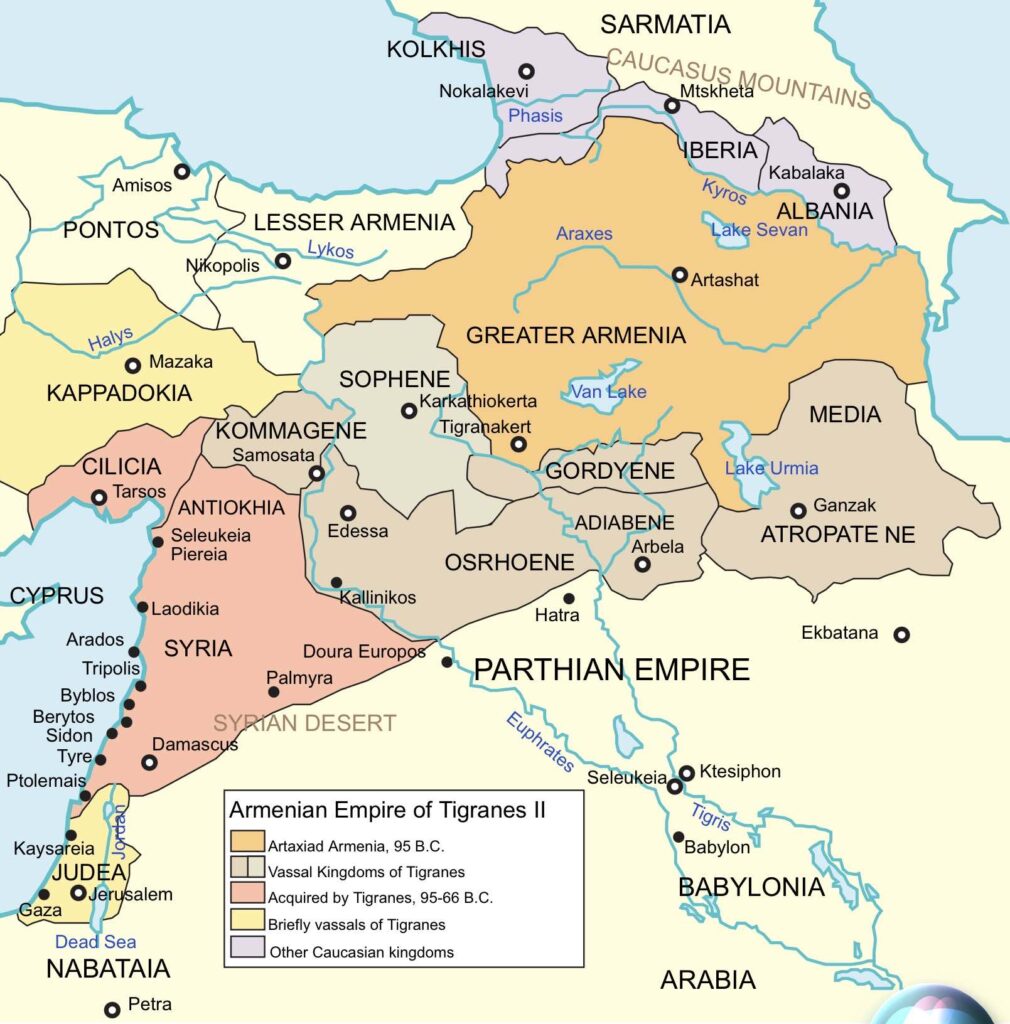
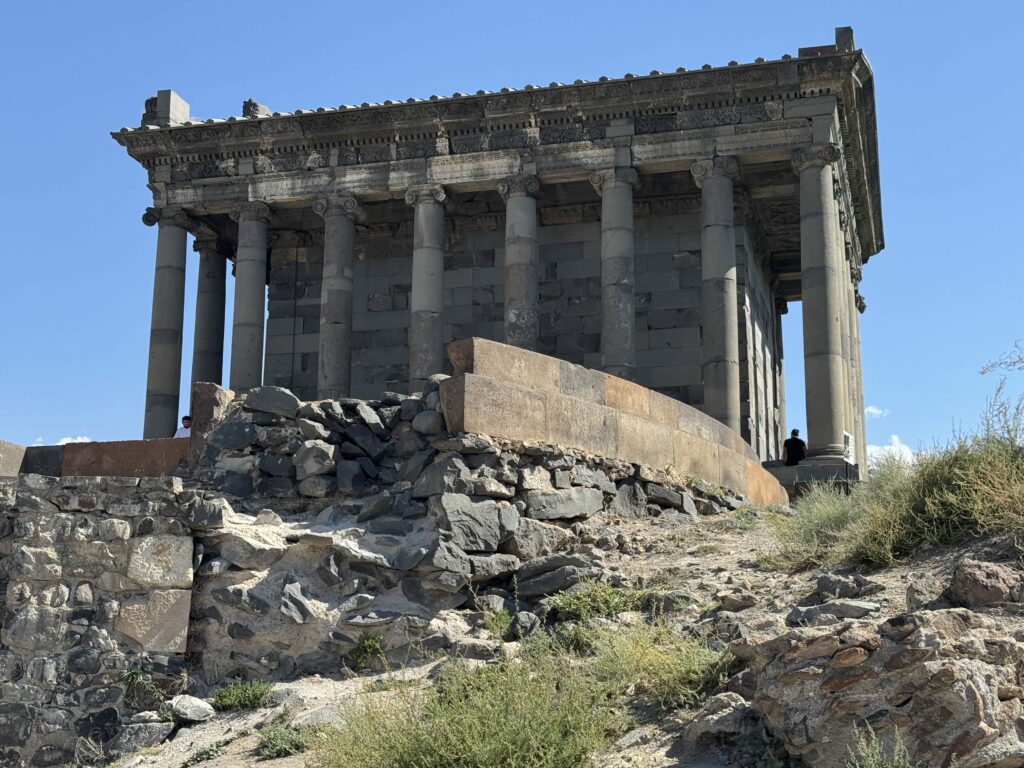
The peak of this ancient power came under Tigranes the Great. During a brief 14-year window (83–69 BC), he created an empire stretching from the Caspian to the Mediterranean, and from the Black Sea to Mesopotamia. This expansion was short-lived; in 69 BC, the expanding Roman Republic invaded and pushed Armenia back to its mountainous highland boundaries. Relics of this era still stand in Garni, where a Greco-Roman temple built for the sun god Mihr survived for nearly 2,000 years before a massive 1679 earthquake toppled it. The temple was later meticulously rebuilt during the Soviet era.
Mount Ararat
While Mount Ararat is recognized as the biblical landing site of Noah’s Ark, its symbolic importance to Armenian identity evolved over time. Long before Christianity, the dormant volcano held deep mythological meaning, revered in ancient pagan folklore as Azatn Masis. This was the sacred mountain where guardian spirits resided and the sun came to rest. Its transition into a political and dynastic symbol was solidified by the 1st century BC, when the royal emblem featured the mountain’s twin peaks alongside Armenian rulers.
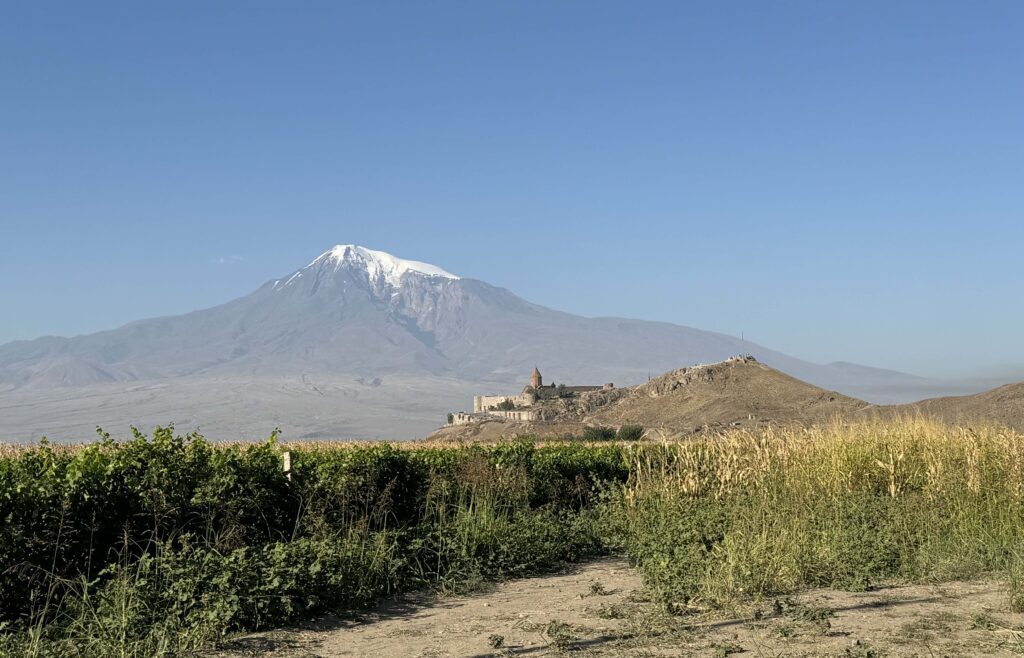
The modern spiritual symbolism of Ararat was forged in the 5th century by the medieval historian Movses Khorenatsi. He explicitly linked the biblical flood narrative to national origins, detailing how the Armenians were direct descendants of Hayk, a forefather who established the homeland at the foot of the mountain. Over the centuries, this narrative transformed Ararat from a mere geographical landmark into the permanent, unyielding heart of the Armenian soul.
The Armenian Church
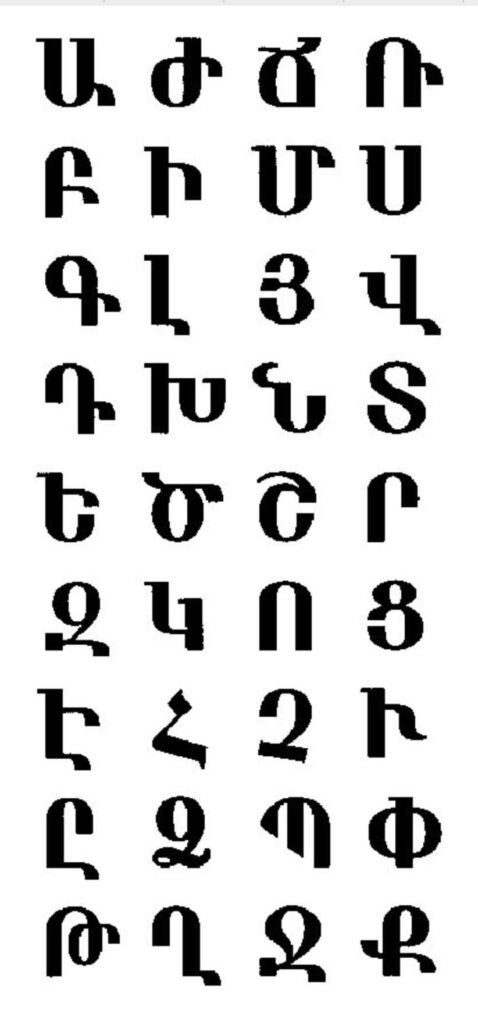
In 301 AD, Armenia became the first country to adopt Christianity as its official religion, tethering its identity to the West just as it was becoming surrounded by Zoroastrian and Islamic powers. To preserve this identity, a monk named Mesrop Mashtots invented the Armenian alphabet in 405 AD to translate the Bible. The nation further insulated itself in 451 AD by rejecting the Council of Chalcedon. By breaking theological ties with both Rome and Constantinople, the Armenian Apostolic Orthodox Church charted an independent course, transforming faith into a cultural wall. Belonging to the church defined your identity regardless of which empire controlled your ancestral homeland.
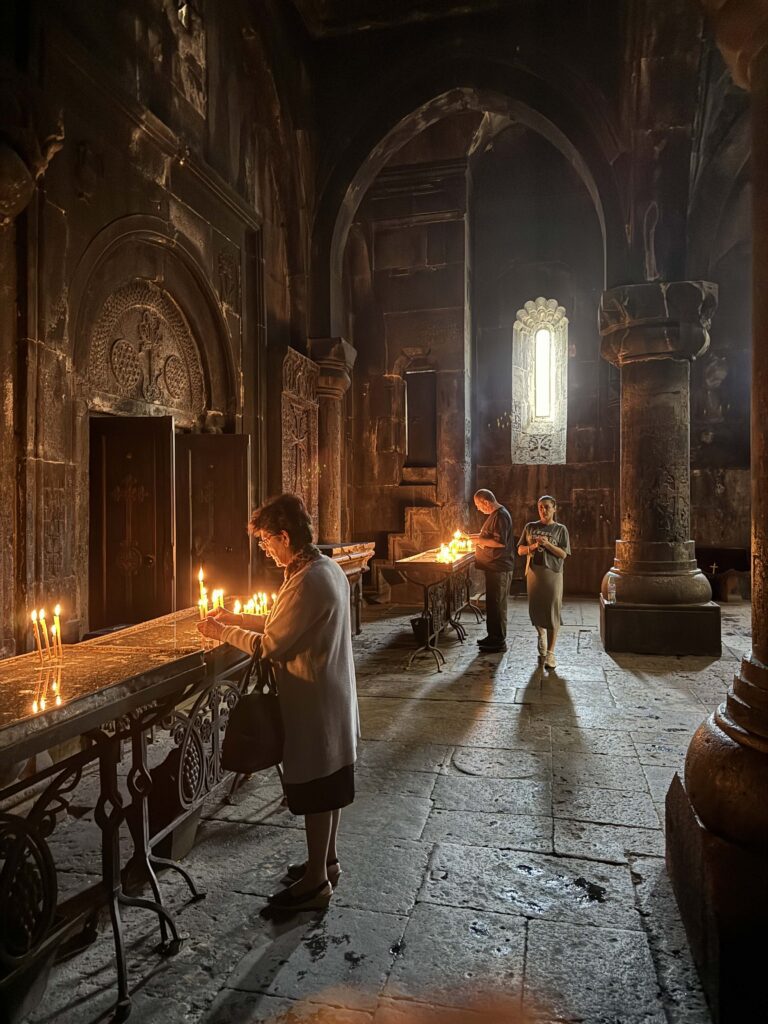
As Christianity swept the landscape, pagan sites were systematically replaced by churches. The Geghard Monastery was first developed in the 4th century around a sacred cave spring; its tombs and chapels were hand-carved directly into the volcanic rock face. Despite its remote location in the Azat River gorge, the Mongol horde plundered the complex in the 13th century, burning its manuscript library. Structural expansions transformed the site during this era, with the rock-cut lower chapel hand-chiseled in the 1240s and an upper chapel added in 1283. The monastery’s unique engineering creates a sound that feels otherworldly. In this rough, rock-hewn space, our group heard a quintet perform, their voices ascending into the shadows of the ancient dome as if bridging the gap between the earthly rock and the divine.
The Medieval Golden Age: Splendor and Betrayal
Between 885 and 1045 AD, the Bagratid Dynasty enjoyed a golden age of independence from Arab and Byzantine rule. King Ashot I, a master diplomat, was recognized and crowned by both the Caliph in Baghdad and the Emperor in Constantinople. The crown jewel of this era was Ani, a magnificent Silk Road metropolis of over 100,000 people known as the “City of 1,001 Churches.” While it once rivaled the scale and wealth of Cairo and Rome, this ancient capital now sits in silent ruin in eastern Turkey. The tragic emptiness of the site stands in stark contrast to the brilliant innovation born there; centuries before Western Europe laid a single brick of its great cathedrals, Ani’s builders were already pioneering the pointed arches and clustered stone pillars that would later define Gothic architecture.
Armenia’s decentralized feudal governance became its ultimate undoing. Wanting direct control of the lucrative Silk Road trade, the Byzantine Empire used bribery to annex strategic border lands, offering minor Armenian nobles estates deep within the empire. The final blow came with the “Trickery of 1045”, when King Gagik II was lured to Constantinople for peace talks, taken hostage, and forced to sign away Ani. In a strategic blunder, the Byzantine leadership defanged local defenses by replacing battle-tested native border armies with unpaid mercenaries. When Seljuk Sultan Alp Arslan attacked in 1064, the frontier crumpled, leading to the brutal sack of the capital.
Imperial Partitions
The regional conflict eventually settled into a permanent partition under the 1555 Peace of Amasya, which sliced the region in two, handing Western Armenia to the Ottoman Empire and Eastern Armenia to the Safavid Persian Empire. Under the Ottoman Millet System, the Armenian Patriarchate in Constantinople was granted direct administrative power over its people, effectively turning the Church into the primary political liaison to the Sultan and allowing stateless Armenians to maintain a central authority. However, the peace was a myth, as the fertile Ararat plain and Yerevan changed hands constantly as a frontline in the Ottoman-Persian wars.
Perpetually caught in the crossfire, the population was often uprooted by shifting foreign powers. In 1604 and 1605, Persian Shah Abbas executed a scorched-earth strategy to starve advancing Ottoman armies, forcibly relocating hundreds of thousands of Armenians deep into Iran. This displaced population adapted, building the wealthy merchant hub of New Julfa near modern-day Isfahan, Iran. This sparked the rise of a vast Armenian global trade network. By 1828, the geopolitical map shifted again when Imperial Russia marched south under Tsar Nicholas I, capturing Eastern Armenia through the Treaty of Turkmenchay. While initially welcomed as a Christian ally, the relationship soured when Russia launched aggressive “Russification” laws to suppress the Armenian language and curb the Church. Consequently, after 1850, the traditional Armenian homeland found itself partitioned among three distinct empires: Tsarist Russia, the Ottoman Empire, and Qajar Persia.
The Genocides
The late 19th and early 20th centuries brought severe hardships as the decaying Ottoman Empire turned on its Christian minorities. Sultan Abdul Hamid II grew increasingly hostile toward Armenian demands for civil liberties, launching a wave of state-sanctioned pogroms following local tax protests. Across the interior provinces, towns were plundered and families devastated; in December 1895, nearly 3,000 Armenians who took shelter inside the cathedral of Urfa were burned alive. These massacres claimed between 100,000 and 300,000 lives.
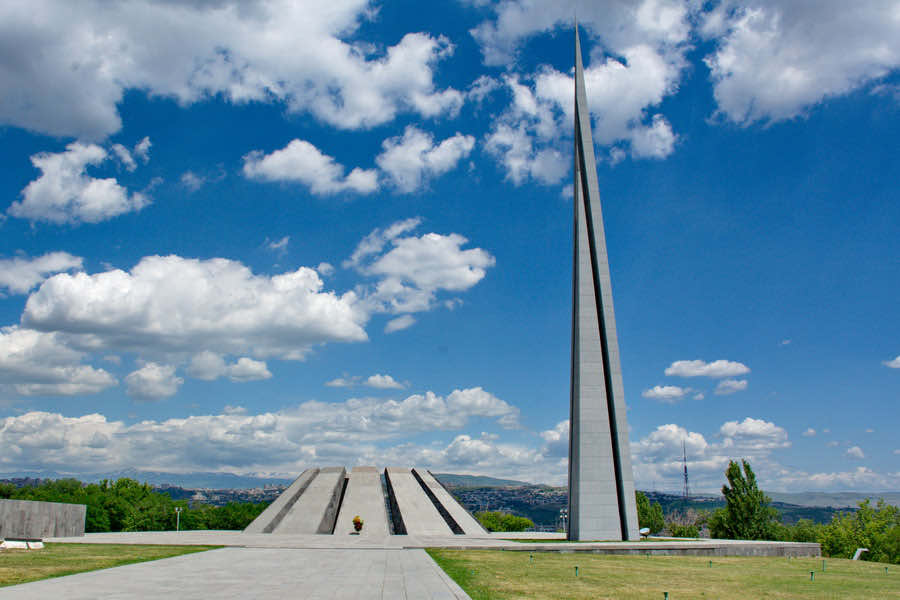
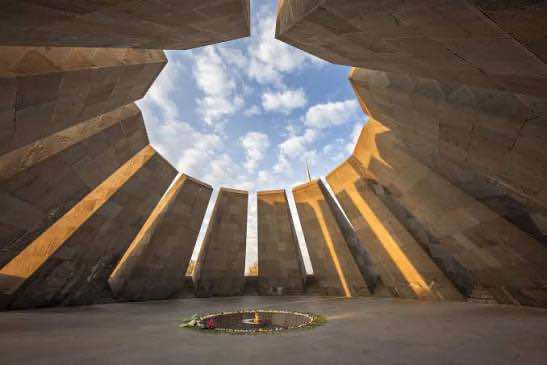
The Ottoman administration changed when the Young Turks overthrew the Sultan, promising equal civil liberties. However, any illusion of security vanished in 1909 when a violent anti-Armenian backlash swept the province of Adana, resulting in the slaughter of an estimated 20,000 to 30,000 Armenians. With World War I raging, the Young Turk regime executed a systematic eradication of the population. On April 24, 1915, the government arrested and executed hundreds of Armenian intellectuals in Constantinople. Able-bodied men were disarmed and worked to death in labor battalions, while millions of women, children, and the elderly were driven on forced death marches into the Syrian desert without food or water. When the atrocities finally subsided, roughly 1.5 million Armenians—alongside hundreds of thousands of Assyrian and Greek Christians—had been wiped from their ancestral homelands.
The Soviet Yoke
In the turbulent aftermath of World War I and the collapse of the Russian Empire, the independent First Republic of Armenia was declared in 1918. It was a brief period of independence where the nascent state was overwhelmed by famine, disease, and hundreds of thousands of destitute refugees. Squeezed between Turkish nationalist forces and the advancing Soviet Red Army, the leadership surrendered sovereignty to Moscow in late 1920 to avoid total destruction.
This capitulation marked a rapid transition from centuries of fragmented imperial subjugation to centralized Soviet dominance. Bolshevik Russia solidified this control by signing the treaties of Moscow and Kars in 1921. These pacts permanently ceded Western Armenia—including the ruins of Ani and Mount Ararat—to Turkey.
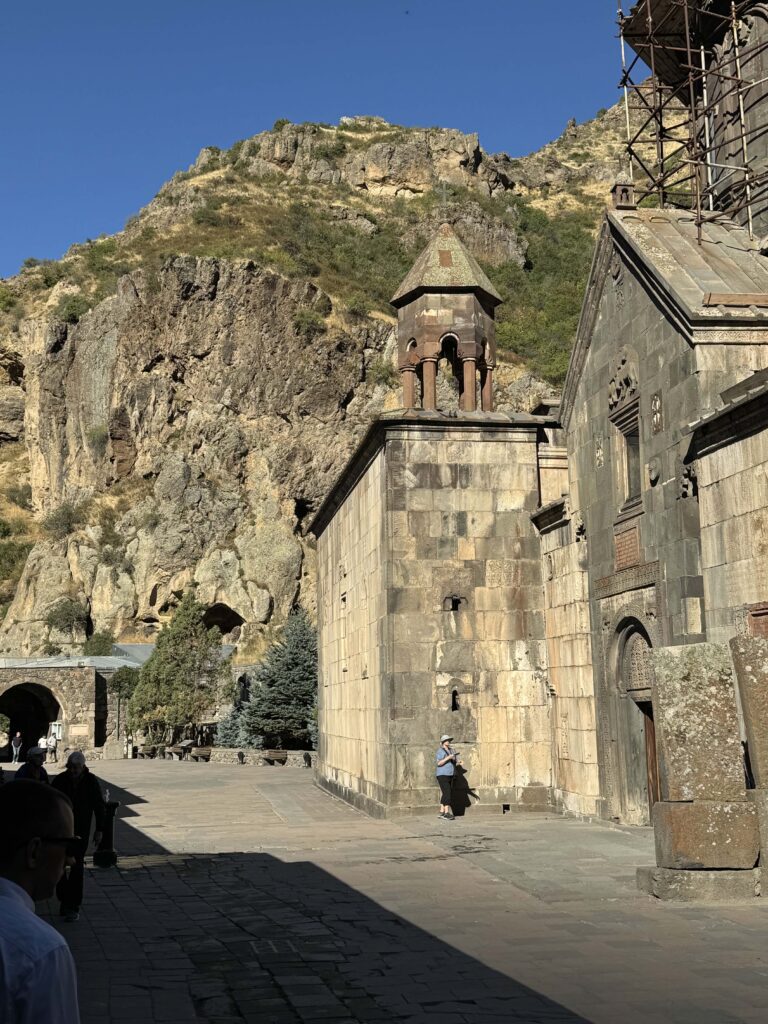
Life under the Armenian Soviet Socialist Republic was a tug-of-war between oppression and progress. Joseph Stalin orchestrated brutal purges, enforced collectivization, and repurposed ancient monasteries—including Geghard itself—into empty agricultural warehouses. Yet, Moscow also industrialized the country and funded major heritage restorations, including rebuilding the Garni Temple. When the Soviet Union finally collapsed in 1991, Armenia walked out independent, but left looking across a closed Turkish border at its severed history
The Pink City: Alexander Tamanyan’s Master Plan
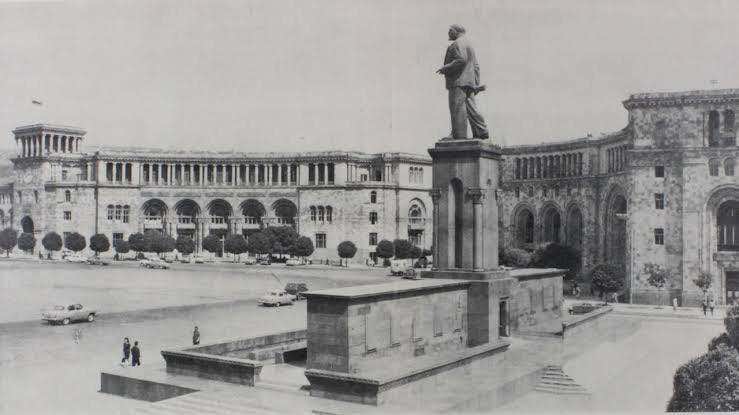
Nowhere is the stamp of the Soviets more visually apparent than in the transformation of Yerevan. In the early 1920s, the Soviets commissioned architect Alexander Tamanyan to reimagine a provincial outpost of 30,000 people into a grand, utopian socialist city built for hundreds of thousands. By mandating the use of pink tuff, a local volcanic rock, he gave the capital a warm, glowing hue that earned it the moniker “The Pink City.” Tamanyan organized this new metropolis around a circular, sun-burst grid focused on the Opera House and a central square—later renamed Republic Square—whose vast, oppressive architecture perfectly reflected the communist design of the era. Radiating outward from this central hub, the city’s grand avenues were strategically aligned to frame a direct viewpoint of the inaccessible Mount Ararat—a bittersweet reminder of the severed heartland.
Dancing on a Pinhead
Modern Armenia is dancing on a pinhead worn smooth by centuries of friction. It is a tiny, landlocked republic trapped in a high-stakes geopolitical chess game, physically bordered by historic rivals and constantly maneuvering between the conflicting pressures of Moscow, Ankara, Tehran, and the West.
Barely 2.9 million Armenians live inside the country, while a massive diaspora of roughly 5 to 8 million people is scattered across the world. Less than one-third of the global Armenian population resides in the actual homeland. From the historic silk traders of New Julfa to modern communities in Los Angeles, Paris, and Moscow, this vast global network acts as the economic, cultural, and political lungs for the country. For a country pinned down by the constraints of its physical geography and the shifting territorial whims of its neighbors, survival has always depended on a brilliant and stubborn identity that refuses to be contained by lines on a map.