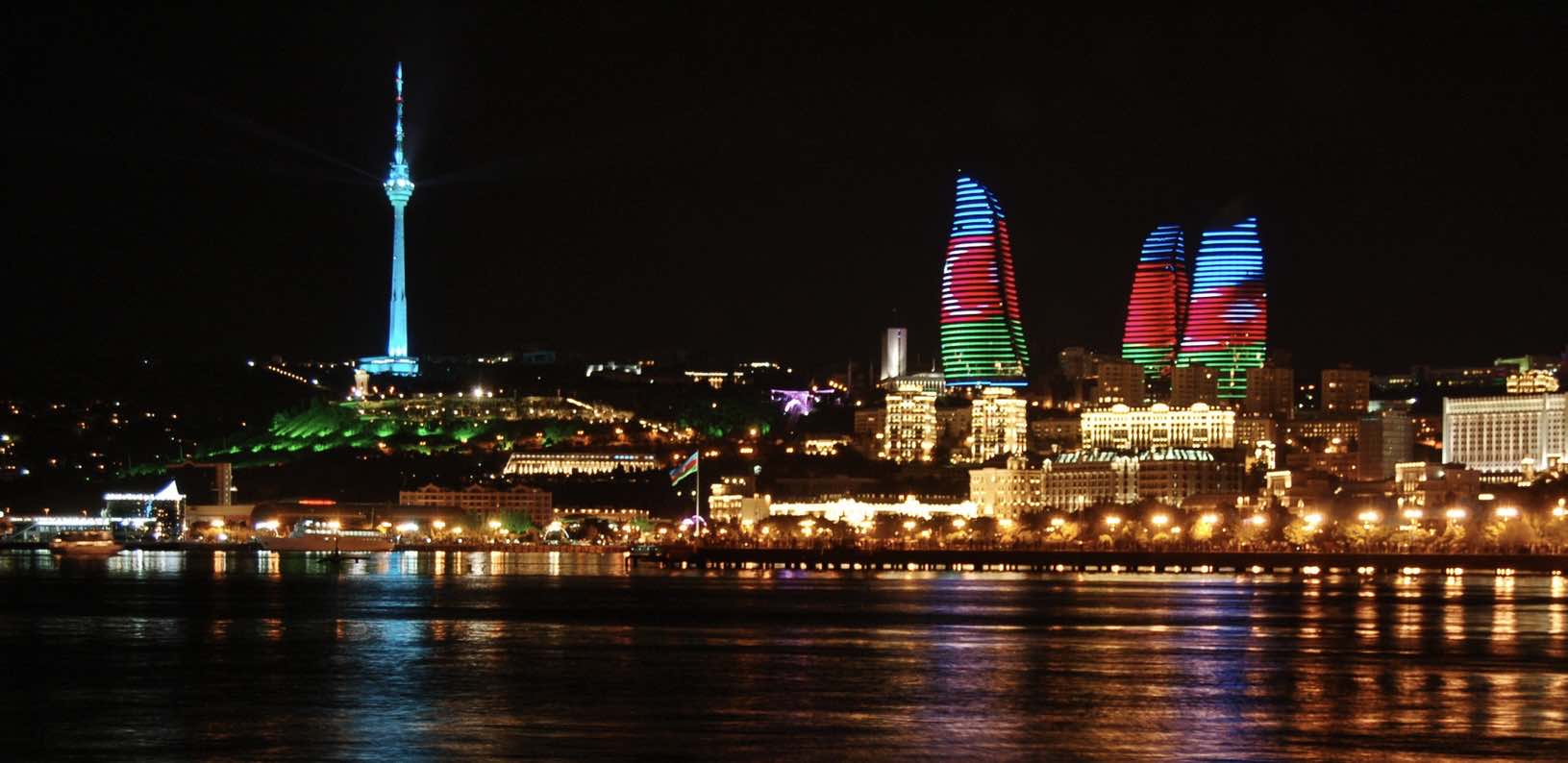
Azerbaijan is roughly the size of Maine, but its footprint on the global stage—and its history—is massive. Known historically for its “black gold,” this unique nation is currently balancing a hyper-modern oil boom with deep-rooted traditions. If you travel past the glittering glass towers of the capital city, you’ll discover a world of dramatic landscapes, quirky history, and very friendly and hospitable people.
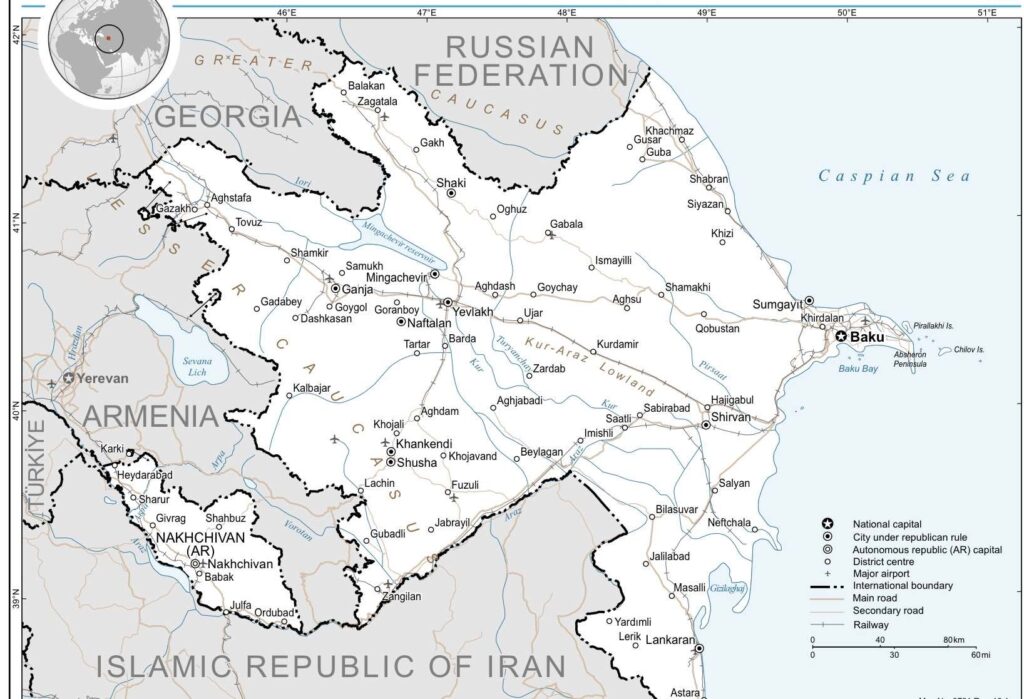
The country is sandwiched between Russia and Iran. Size-wise, it’s similar to Maine, covering a bit more than 31,900 square miles. The Caspian Sea makes up its entire eastern boundary, stretching across 443 miles. The country has nine distinct climate zones.
My trip took me east-northeast from the arid Absheron peninsula where Baku sits, straight through the central plains, and high up into the Caucasus Mountains. If you look closely at a map, you’ll notice a geographic quirk: the western region of Azerbaijan—an exclave called Nakhchivan—is entirely separated from the main part of the country by a strip of Armenian land. The Soviets established these borders back in 1920 in an effort to manage ethnic tensions and appease neighboring Turkey, which has always been closely aligned with Azerbaijan.
Baku
The capital city is home to roughly 2.4 million people, about 24% of the population. Baku is best experienced at night, when the daytime heat subsides and cool breezes rustle the trees along the seaside promenade.
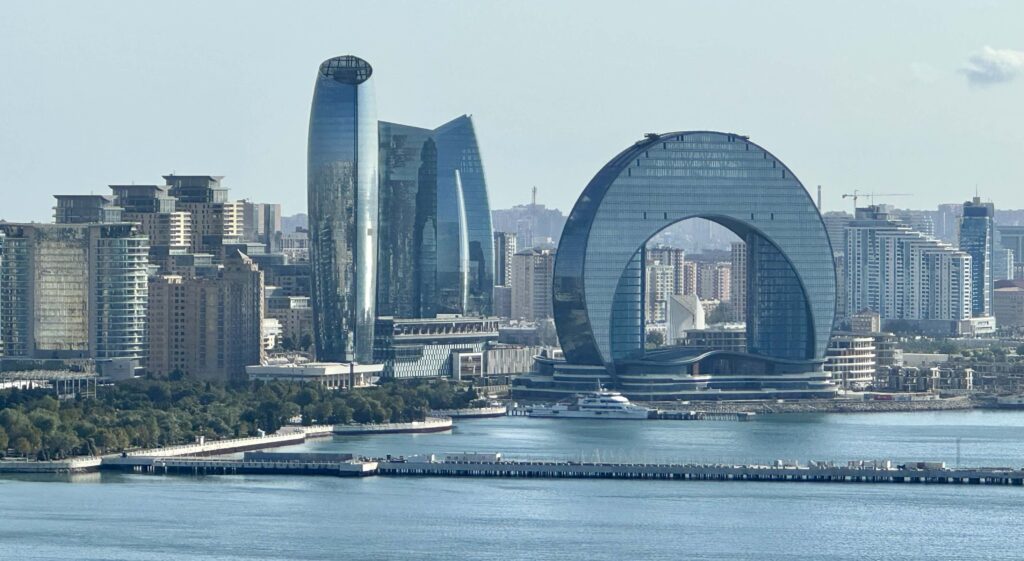
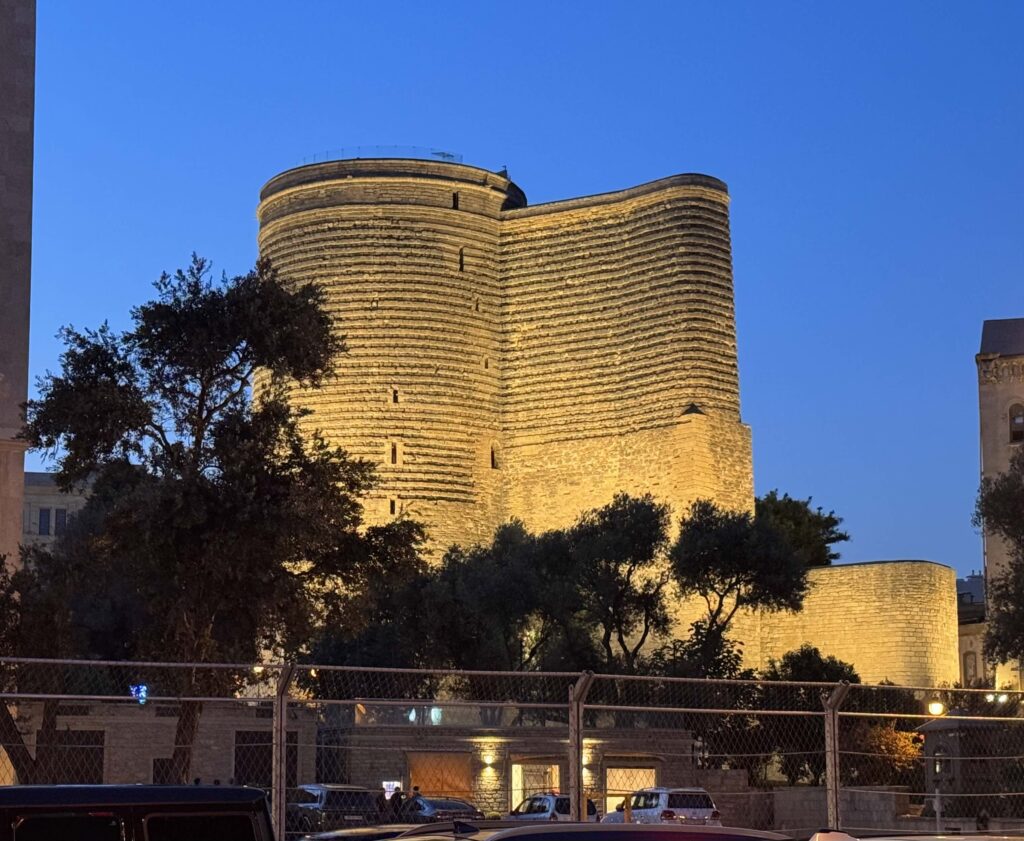
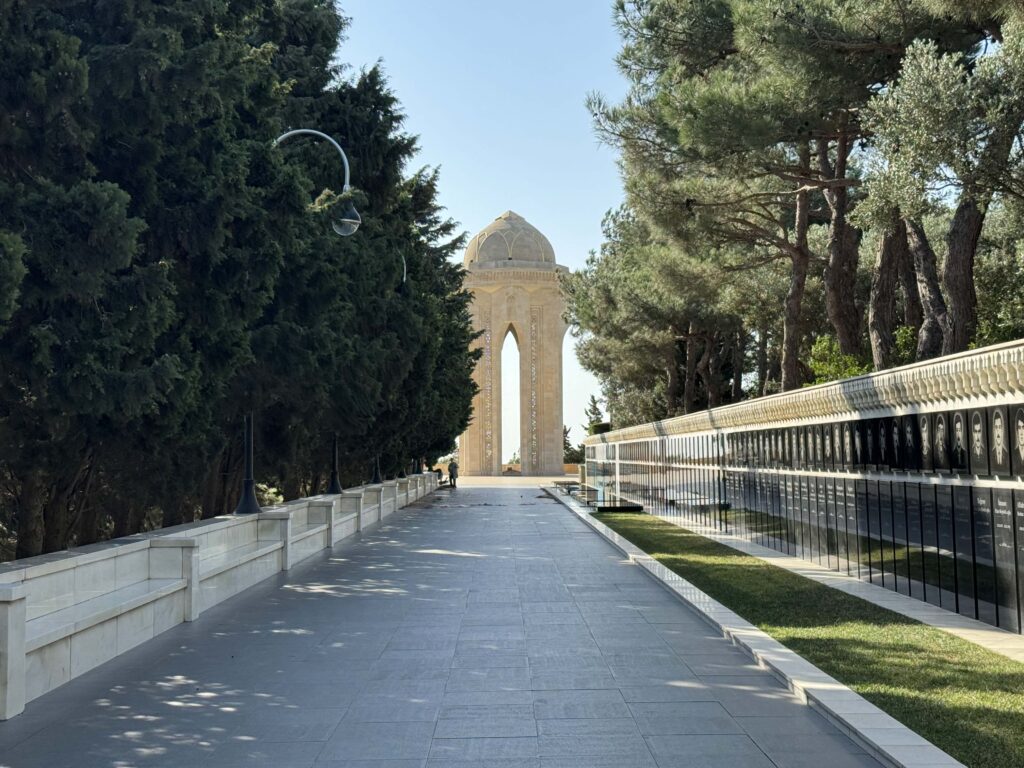
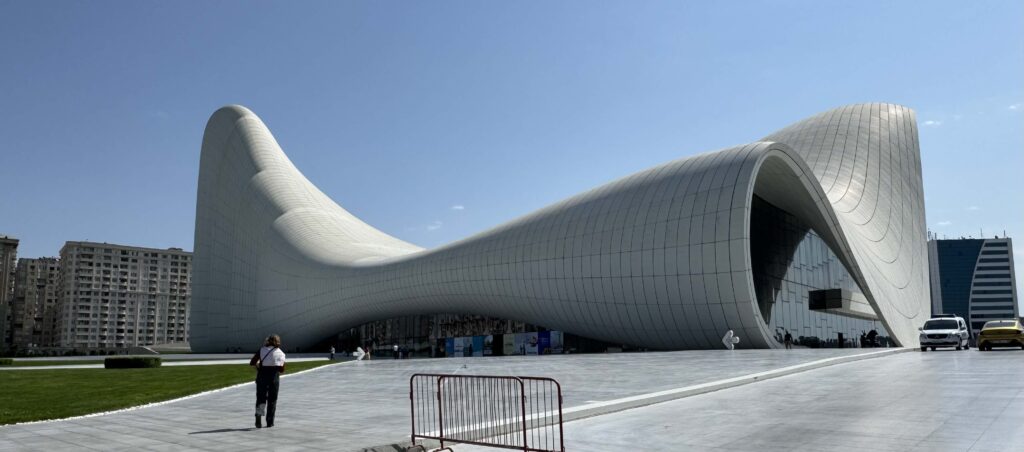
The architecture mimics Dubai, flashing futuristic glass buildings with mind-bending designs. I found the Heydar Aliyev Cultural Center the most aesthetically pleasing due to its flowing, wave-like curves. Meanwhile, Martyrs’ Lane just south of the city center offers a stark, meticulously maintained contrast that feels appropriately somber. The site commemorates the individuals killed in ethic border wars and the fall of the Soviet Union.
The country’s crown jewel, the Crescent Development project is too gaudy and seems out of place. It’s reminiscent of something you’d see on the Las Vegas Strip. The famous Flame Towers are definitely interesting and playfully light up the skyline at night, but they feel a bit sterile and harsh during the day.
Black Gold
Baku runs on oil. Haji Zeynalabdin Taghiyev, often considered the “Father of Azerbaijan,” was born in 1838 as the son of a poor shoemaker. He saved every penny he had and bought land in Bibiheybat, where he hit a massive oil gusher in 1877. With his newfound fortune, he built hospitals, established Baku’s first fire brigade, constructed a water aqueduct from the Caucasus mountains, and founded the first secular school for girls in the Muslim East.
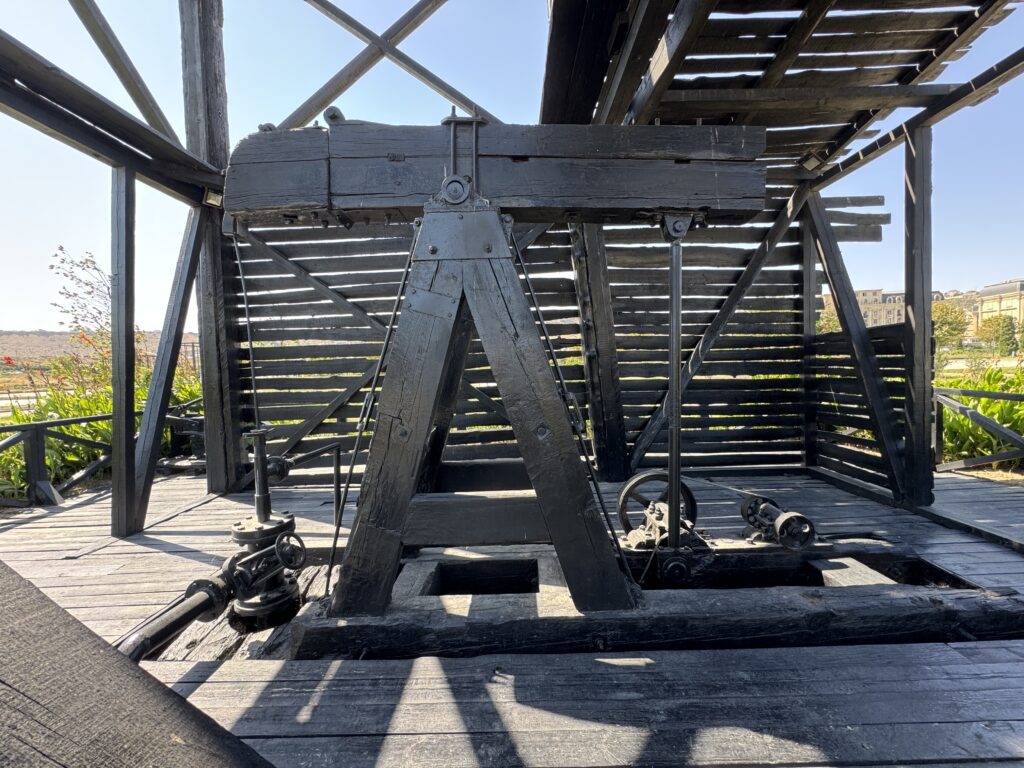
Just a few years before Haji’s big break, Robert Nobel was touring the area looking for high-quality walnut wood to build rifle butts for the Tsarist army. Instead, in 1874, he spent his budget on a small refinery, and convinced his brothers Ludwig and Alfred to invest. Fun fact: Alfred Nobel’s financial returns from the Baku oil fields later helped fund the Nobel Prizes!
The Nobels revolutionized the oil industry. Ludwig designed the Zoroaster, the world’s first steam-driven oil tanker, and the brothers laid the region’s very first pipeline to connect oil wells directly to refineries. The first local pipelines were made of birch wood!
By the turn of the 20th century, Baku was producing nearly half of the world’s oil supply. When the Russian Empire collapsed in 1918, the Azerbaijan Democratic Republic (ADR) was proclaimed in Tbilisi before moving its capital to Baku. The ADR made history as the very first secular, democratic republic in the Muslim world, and it granted women full voting rights. Sadly, independence lasted just two years before the Bolshevik Red Army invaded Baku to secure the oil fields, forcing the Nobels to flee back to Sweden.
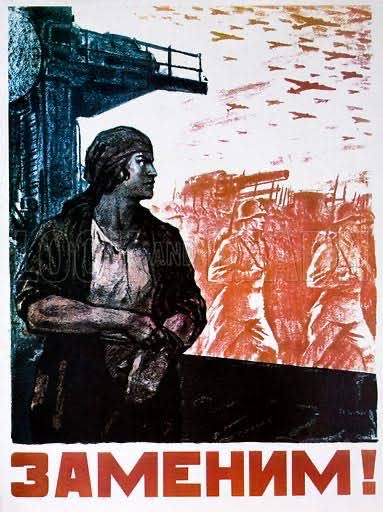
Azerbaijan’s oil remained extremely important. During WWII, Baku’s refineries supplied over 80% of the fuel and lubricants used by the Soviet military. With 700,000 Azerbaijani men conscripted to the front lines, women stepped up to keep the energy sector alive, making up 60% of the oil workforce by 1944 while enduring brutal 12-to-18-hour shifts, seven days a week.
As the Soviet Union began fracturing, the Azerbaijani parliament adopted its Declaration of Independence on August 30, 1991, officially finalized on October 18. The sudden collapse of the USSR triggered economic shockwaves and a bitter ethnic conflict with Armenia over the Karabakh region.
The Contract of the Century
Faced with total state collapse, former Soviet leader Heydar Aliyev assumed power in 1993, bringing much-needed political stability. He immediately launched a bold strategy to rebuild the nation using its historic superpower: oil.
- The 1994 Contract: Azerbaijan signed a landmark $7.4 billion agreement—dubbed the “Contract of the Century”—with a consortium of 11 international energy giants, including BP, Amoco, and Pennzoil.
- Geopolitical Pipelines: The deal birthed the massive Baku-Tbilisi-Ceyhan (BTC) pipeline, allowing Azerbaijan to completely bypass Russia and pump oil directly to Western markets via Georgia and Turkey.
- The Modern Era: The resulting wave of petrodollars transformed Baku into the futuristic metropolis it is today, modernized the military, and completely shifted the regional balance of power.
Today, Azerbaijan doesn’t just export oil; it also feeds natural gas from the massive Shah Deniz field directly into Europe through a 3,500-kilometer, three-country pipeline network.
Petrodollars and People
The ruling New Azerbaijan Party (YAP) has held power since 1993. While outside monitors describe the government as authoritarian, oil dollars do provide the public with reasonable healthcare, free education, and exceptionally well-maintained roads.
Still, the “Deal of the Century” was very shrewd. Despite—or perhaps because of—decades of Soviet control, Azerbaijan explicitly built an energy grid that avoids Russian soil entirely.
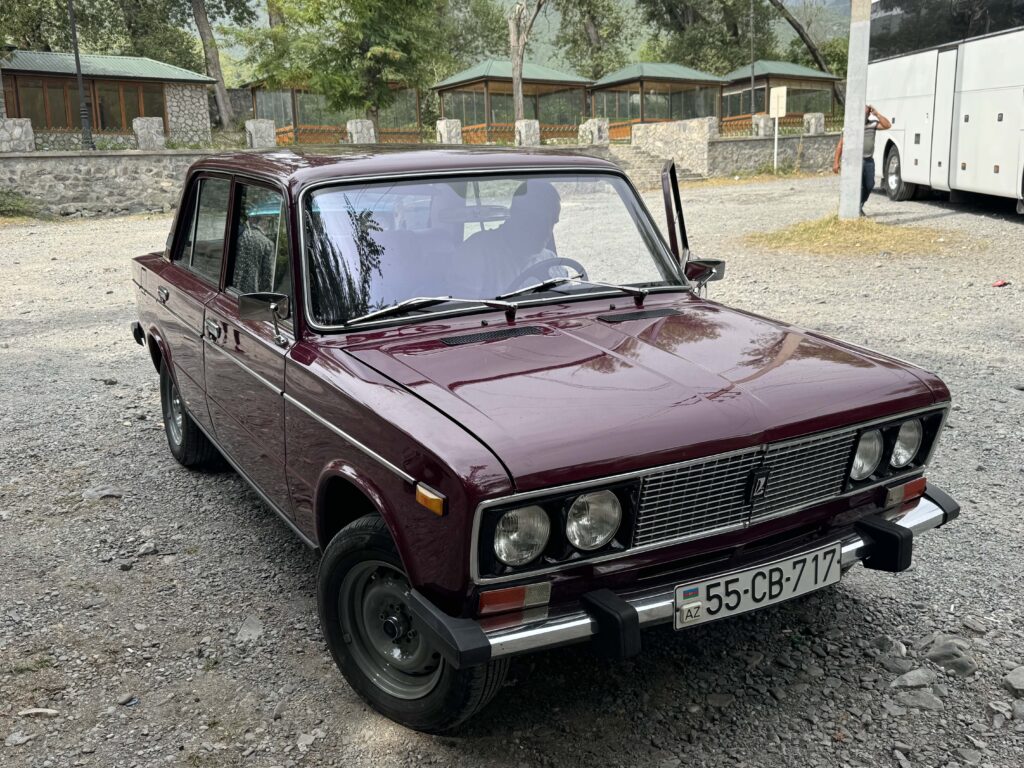
Politicians aside, the people are wonderful. I went to a traditional hamam (bathhouse) in Baku, and the experience was incredible. Out in the rural areas, I met exceptionally lovely families. Kids in the countryside would eagerly run up to engage with me, excited to try out the few words of English they knew.
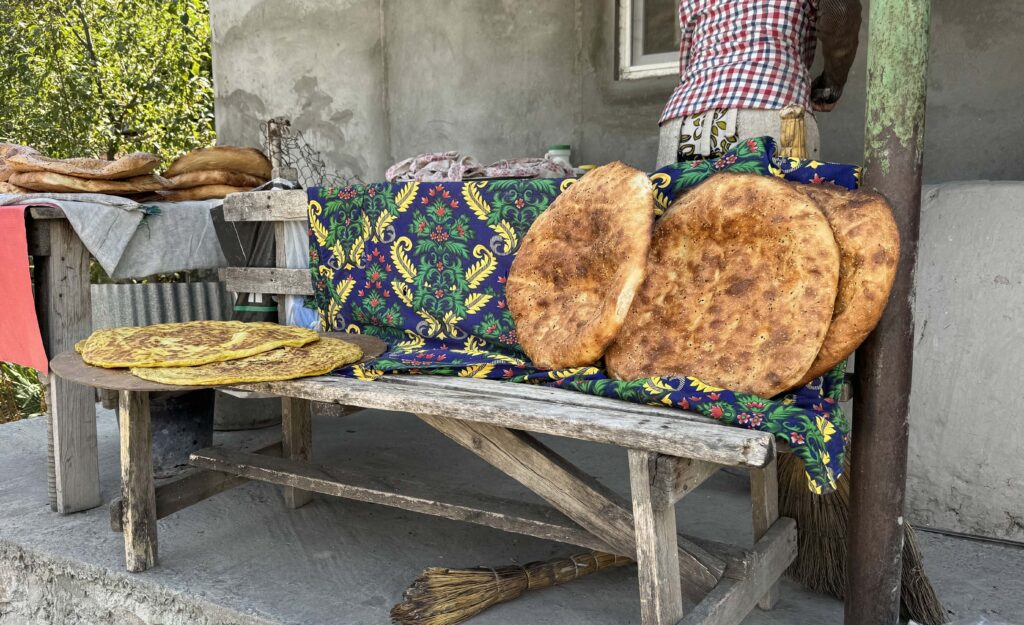
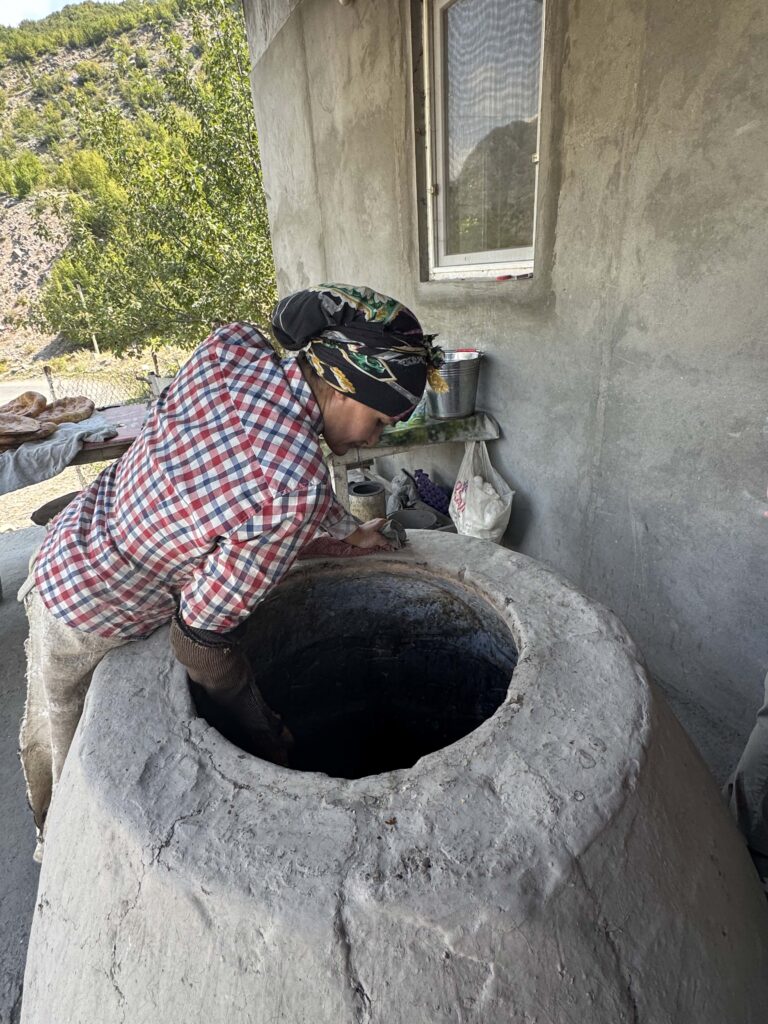
In the small mountain town of Kish, I met a local, fourth-generation woman who headed up the community tourism board. She managed a small fleet of rugged Russian Lada cars, conducted local cooking classes, and ran her own restaurant. She was justifiably proud of her achievements and deeply passionate about sharing her town and culture with the world.
The Search for Odin
The famous Norwegian explorer Thor Heyerdahl theorized that modern Scandinavians actually originated from what is now Azerbaijan. He based this idea on the 13th-century Icelandic Sagas, which claimed the Norse god Odin was a real, historical king who migrated to Europe from a southern land called Aser.
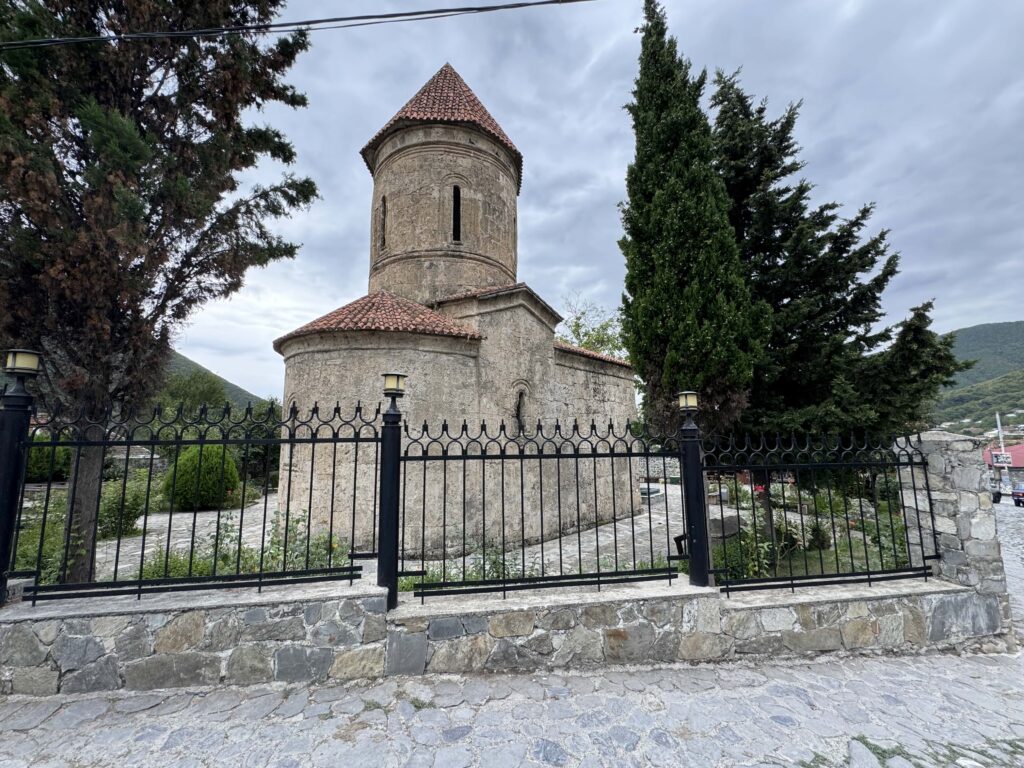
Sparked by his interest, a collaborative project between Azerbaijan and Norway excavated and restored the ancient Caucasian Albanian Church in Kish. Touring the site was a highlight of my trip. Heyerdahl was particularly fascinated by the archaeological discovery of ancient skeletons buried there that measured an imposing 6 feet 6 inches tall! The excavation also revealed Bronze Age artifacts dating back to 3000 BC, proving the mountain site has been a place of sacred worship for millennia.
Employment and the Brain Drain
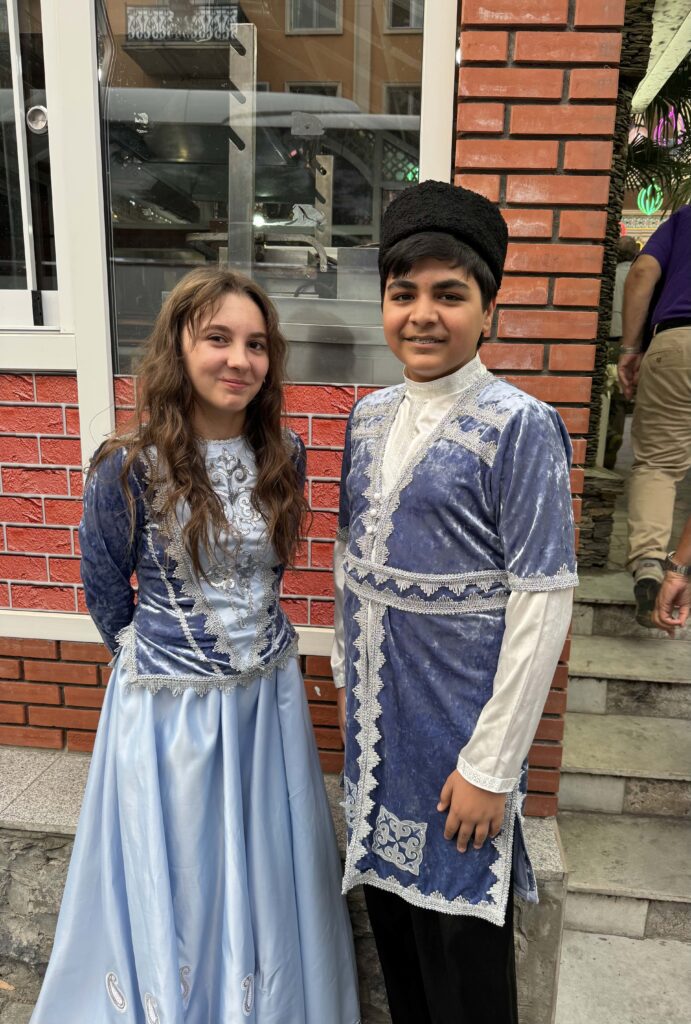
While the influx of oil money has created a glittering
, clean and safe capital, Azerbaijan’s labor market faces a quiet crisis. The country’s official unemployment rate sits at a low 5.2% to 5.5%. However, this number masks a heavy reliance on the state sector—with education and public services employing the vast majority of workers—and a severe lack of high-paying opportunities in the non-oil private sector.
This has triggered a “brain drain.” Highly educated, tech-savvy, and qualified young professionals are increasingly leaving the country for Europe, Turkey, and North America in search of better wages, career growth, and innovation opportunities. The government has attempted to counter this by funding study-abroad scholarships on the condition that graduates return to work domestically for five years. However, until the local economy diversifies away from “black gold” and creates a more dynamic private market, retaining its brightest young minds remains one of Azerbaijan’s most difficult problems.
The Verdict
Azerbaijan is defined by stark contradictions. Petrodollars remain fundamental of the nation’s identity, even as the state actively implements strategies to reduce its economic dependence on oil and gas. Azerbaijan faces a complex political future shaped by authoritarian rule, regional tensions, and the delicate balance between the West, Russia, and Iran. Apart from the state-led projects and political noise, the country’s identity lies in its geography—which moves from arid peninsulas to rugged mountains—and its people. From the streets of Baku to the mountain valleys of Kish, the hospitality and pride of the ordinary Azerbaijanis I met delighted me. It is a place where history, landscape, and conflicting objectives intersect, but it is the locals who make it a destination worth exploring.
Wow. Fascinating and beautifully written. Thank you for the education and sharing ❤️
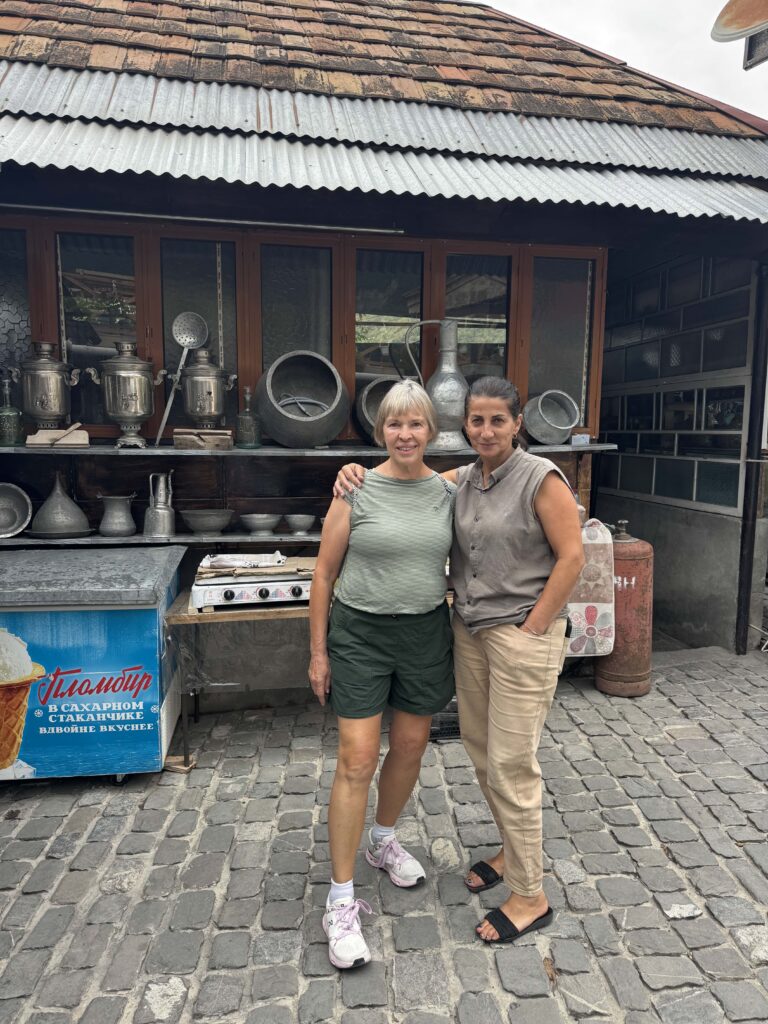
Denise you truly are a gifted writer. I am glad you included a picture of yourself. You look well.
Love,
Your cousin,
Diane
Very interesting. Sounds like a country which has managed its oil wealth to a decent extent. I know some petroleum engineers from mines who relocated to Baku for a decade and loved it. Will be interesting to see what new industries launch there as the demand for oil globally moves to zero. Many countries in a similar dilemma invest heavily in tech startups and have had some success.