Philippa and I arrived into Malpensa, the Milan Airport, on a Saturday afternoon. Passport control went quickly and within an hour of landing, we were on a local train headed to our hotel.
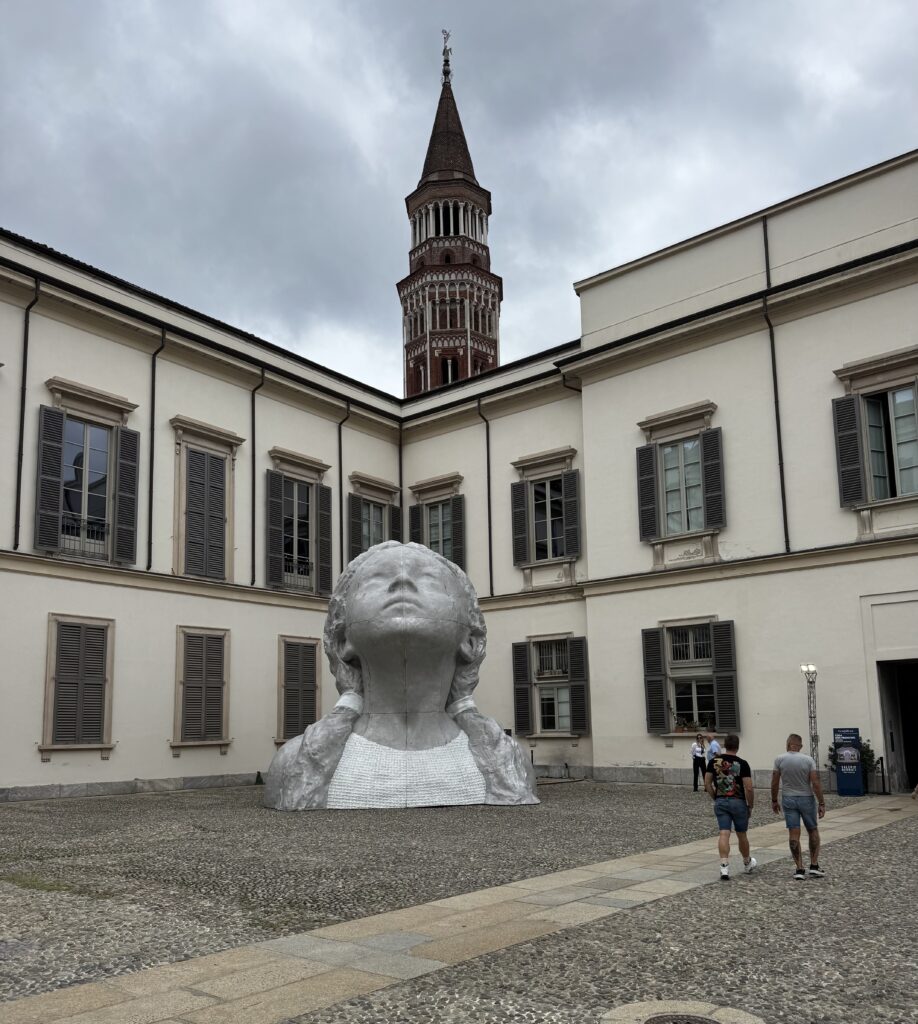
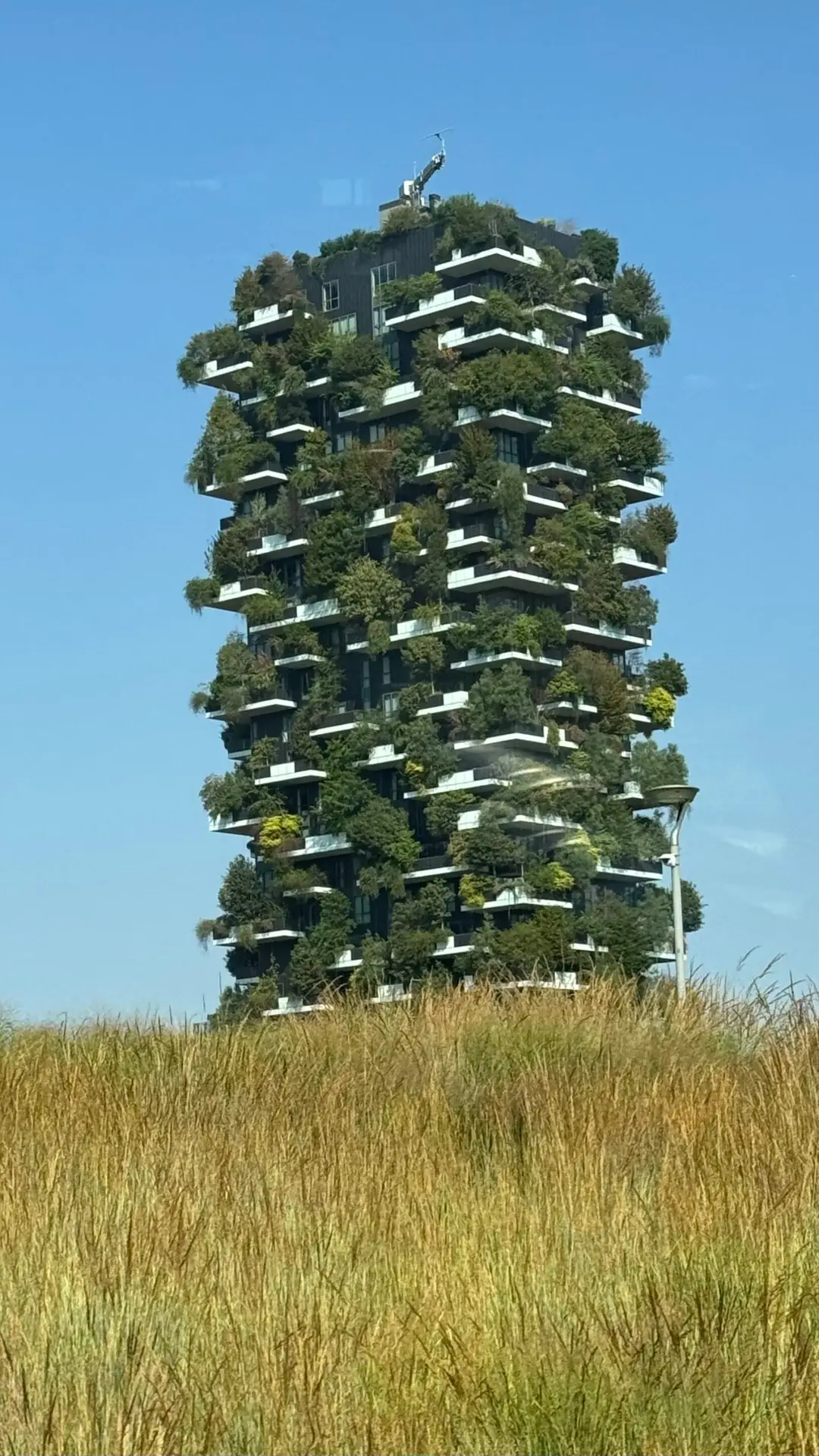
Milan is the regional capital of Lombardy. Of the 20 Italian regions, Lombardy has the highest GDP. It’s the industrial hub of the country as well as a global center for financial services, fashion and industrial design.
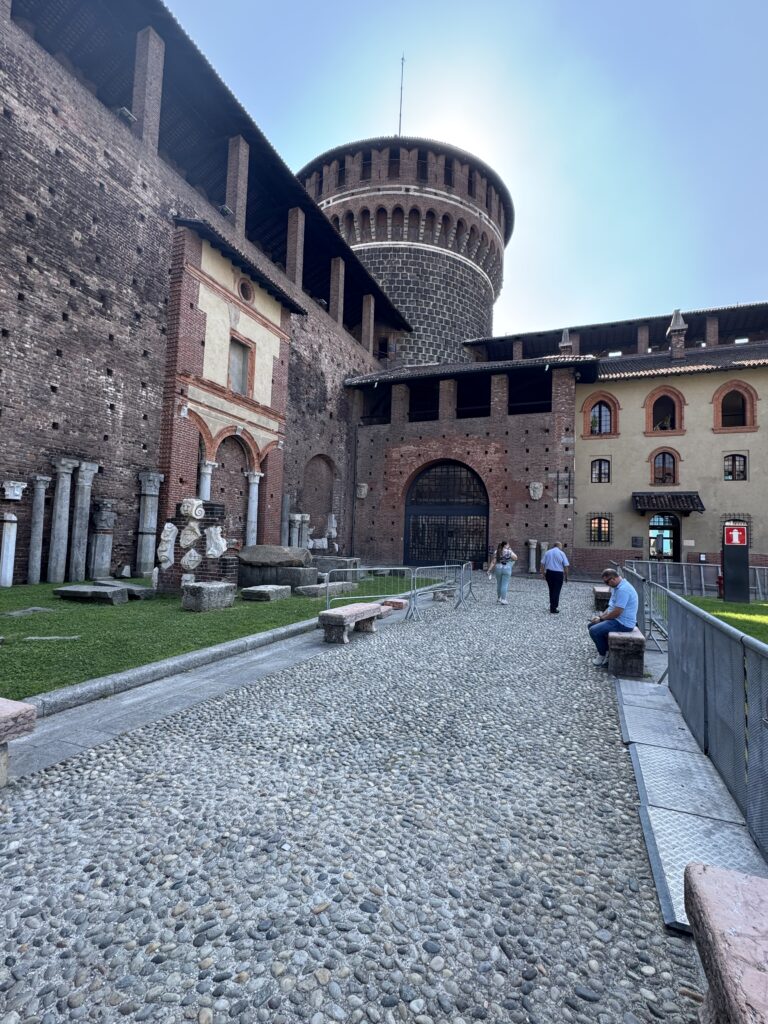
The architecture in Milan reflects the various empires that have ruled Lombardy. The Sforzesco castle was constructed on the site of a 14th century fortification. It was later enlarged in the 16th and 17th centuries and became one of the largest citadels in Europe. It was further renovated in the 1890’s. Today, it houses several city museums and art collections.
The most renowned landmarks in Milan are La Scala, the Galleria and the Basilica.
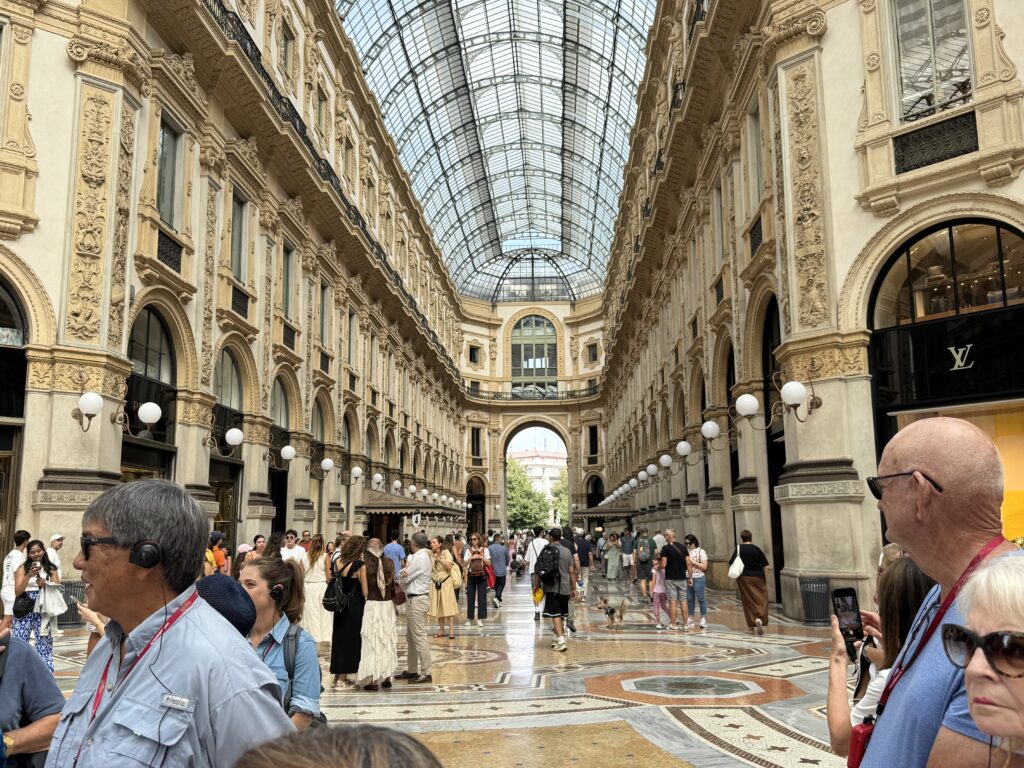
The Galleria Vittorio Emanuele II was designed in 1861 with construction completed in 1877. Two glass vaulted arcades intersect into an octagon which is topped by a massive glass dome. The galleria was similar in construction to shopping arcades in Brussels and London, but it is much grander.
The Galleria connects Milan’s two other famous structures , the Duomo di Milano and Teatro La Scala.
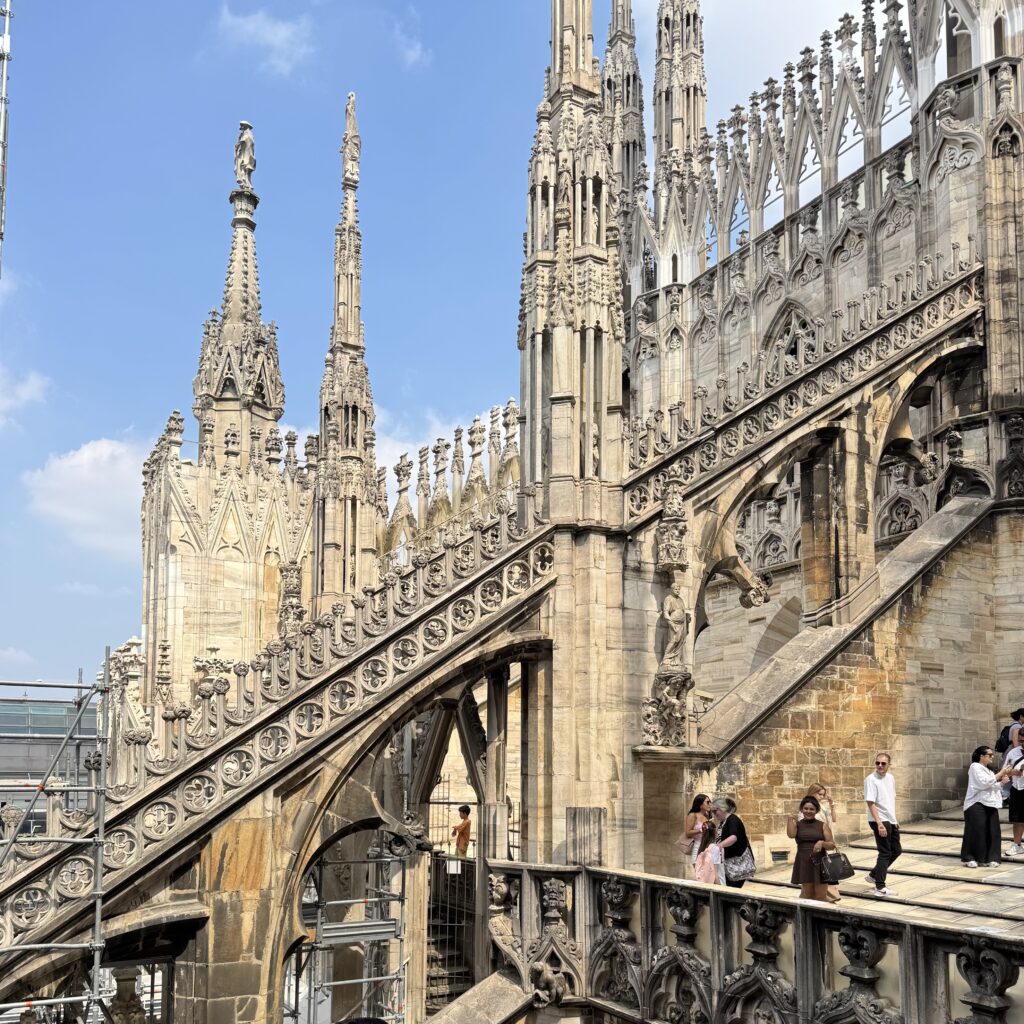
The Duomo, a Roman Catholic Basilica, took six centuries to complete. Construction began in 1386. Over the centuries, religious, political and foreign domination as well as economic crises and World Wars, impacted the pace of work as well as the design. Napoleon Bonaparte is credited with financing and prioritizing the completion of the facade (1812).
Philippa and I climbed to the top of the cathedral, 400’ above the pavement. The roof is a forest of pinnacles, spires and statues. The flying buttresses are intricately carved. Even on a sunny day, I had a feeling of foreboding. It’s as if tormented souls were captured in the stone waiting to be released. The Roof of the Duomo could easily be the setting of a surreal murder mystery.
Time was short, and I was only able to see La Scala from the outside. If I return to Milan, I’ll head to the opera house for a proper tour and tickets for a performance.
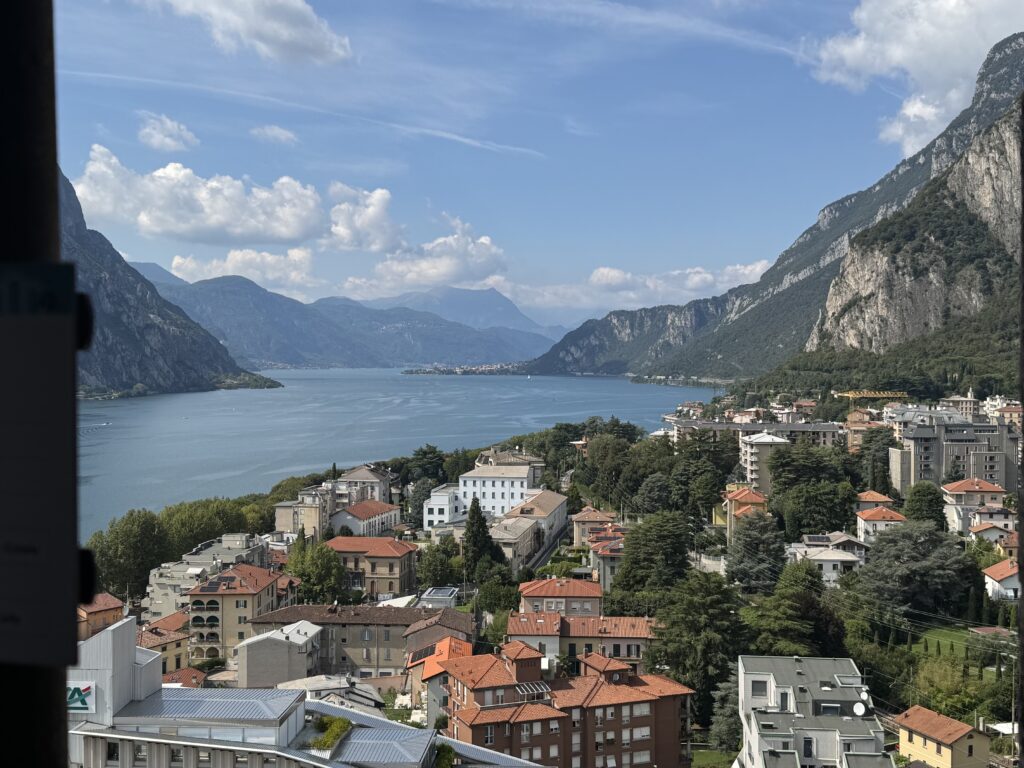
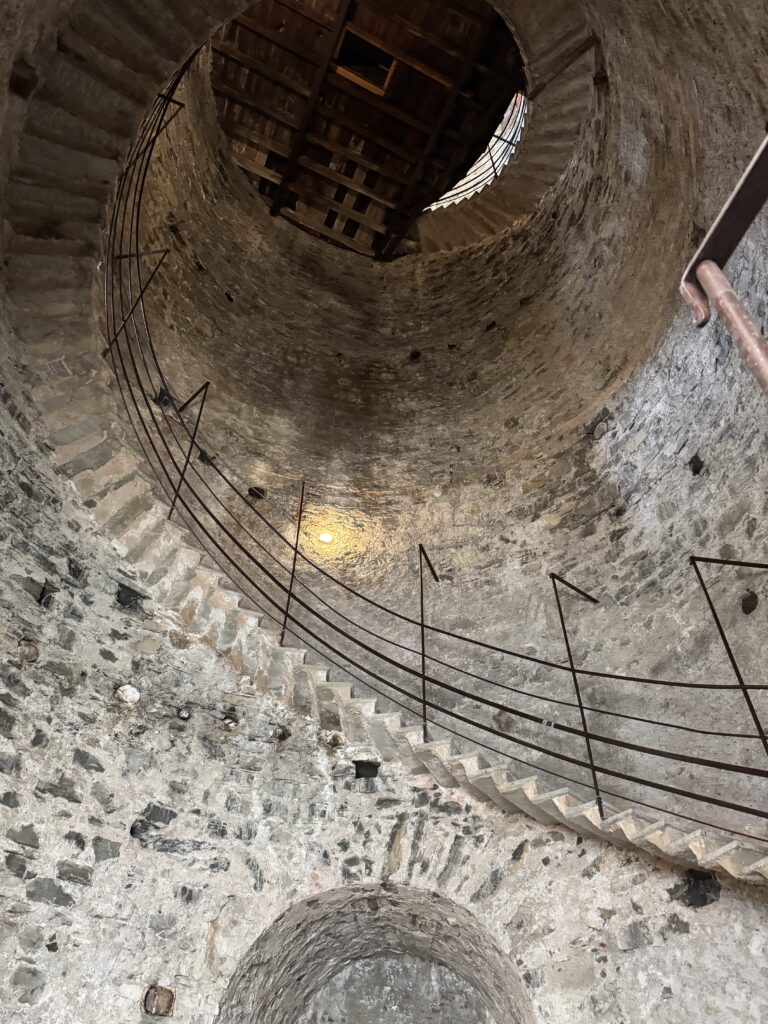
Lecco, our home for four nights, is located at the southern end of the eastern branch of Lake Como, about 35 minutes north of central Milan by train. One of the city’s stunning local landmarks is the bell tower. We had a curated climb to the top where we took in the stunning vistas. Our guide, a local volunteer, often climbs to the top of this 300 foot structure several times each week.
I could have spent more time exploring Milan and relaxing in Lecco, however we departed for Tirano Wednesday morning. There was a brief picturesque stop in Varenna, a small fishing village which is home to Villa Monastro. The villa was originally a Cistercian convent, now it features a lovely botanic garden and museum.
The Lombardy landscape is rugged and hosts the largest terraced vineyards in Italy. The vineyards are supported by dry stone walls. The walls permit rain run off and hold the sun’s heat which moderates the temperature drop at night. The ground is fertile and the microclimate of the region combines perfectly. Nebbiolo grape is the signature grape of the region. The wine throughout the trip, was consistently excellent.
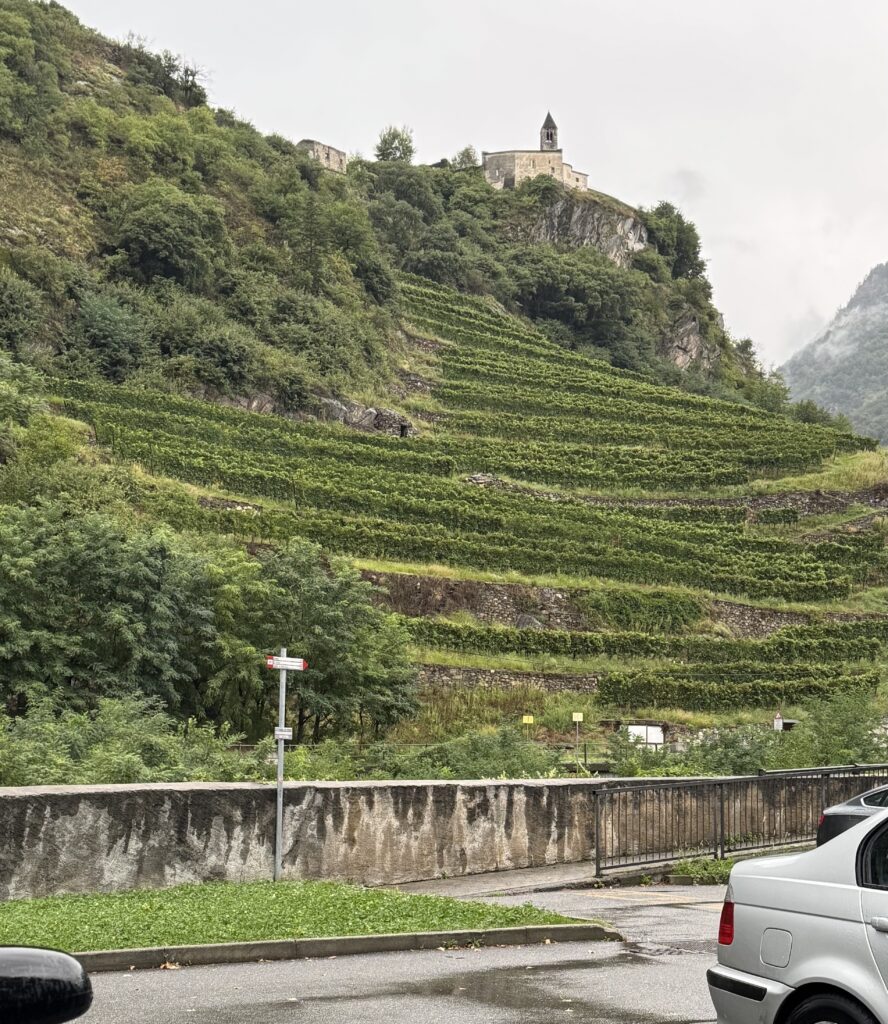
Tirano is the center of commerce in the Valtellina Valley region. It is also a popular stop for pilgrims. The local Madonna di Tirano shrine is dedicated to an apparition of the Blessed Virgin which was credited in ending the pestilence in September 1504.
Tirano is also the departure point for the Bernina Red Train. On Friday, our group took a day trip to Switzerland. The scenery was spectacular. The Red Train has the world’s highest Alpine crossing, 7,400’ and the steepest gradients, up to 7%. We got off the train at the Diacolezza station, where we took a cable car up to the top of the ski area, (9,754’). Diacolezza translates to “female devil”, an apt name for ski area offering challenging ski terrain. The Minor Piste run has an 86% gradient!
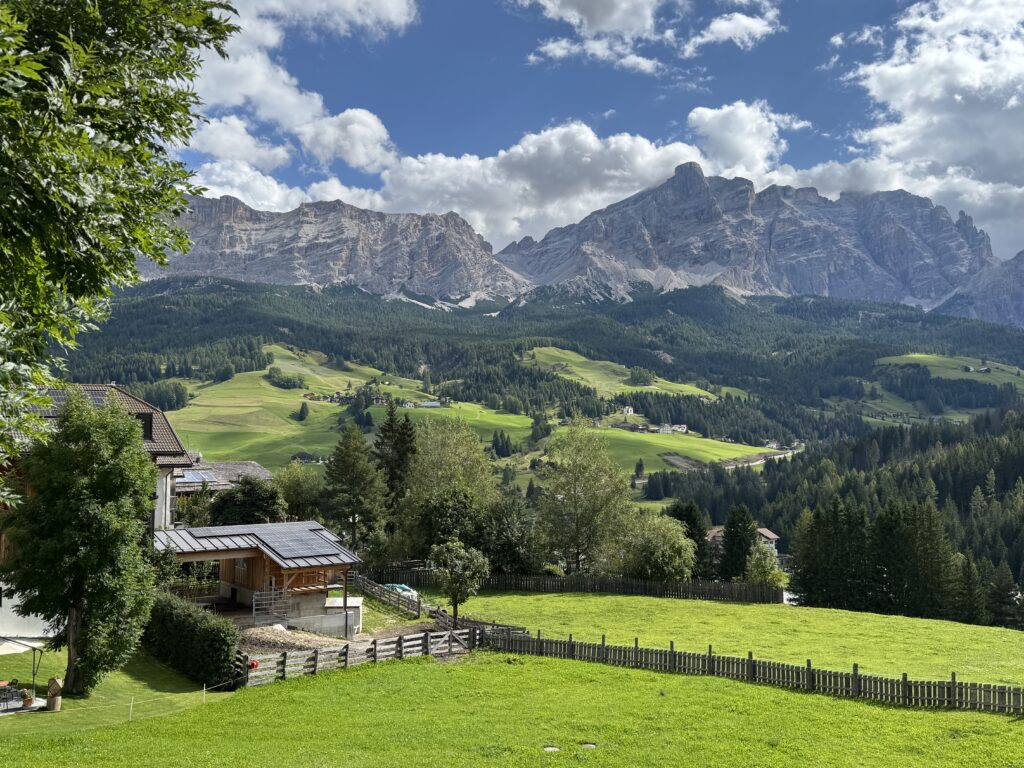
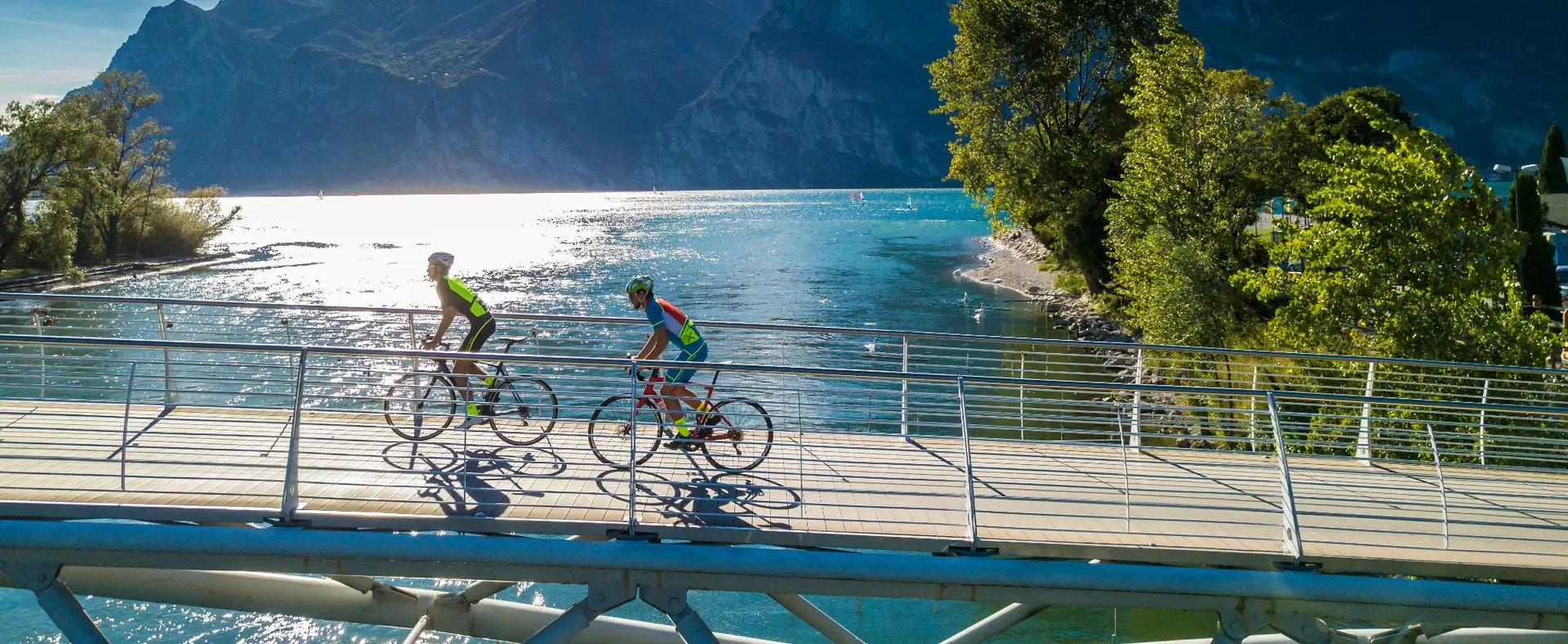
Our next stop in Lombardy was Lake Iseo. We toured wineries, tasted olive oil, explored villages and basked in the beautiful weather. I was amazed by the number of road cyclists. There are bike routes to accommodate anyone, from the scenic relatively flat lake area to challenging alpine passes.
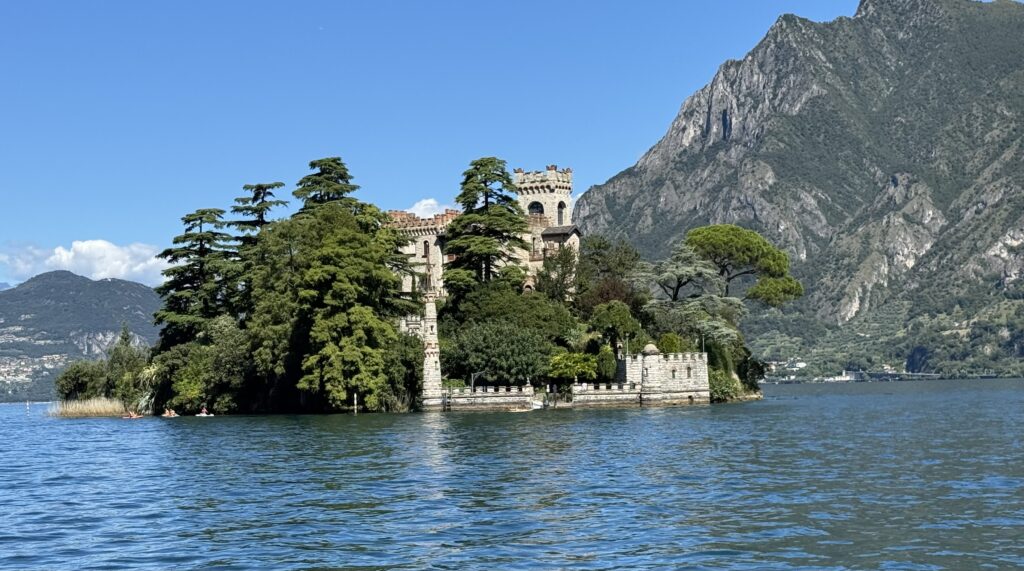
The Lombardy province is a wonderful destination. There’s beautiful scenery, great wine and fascinating history.
On to the Dolomites!