
Arriving into Stockholm by ferry is a serene experience. The verdant shoreline gradually becomes more urban. The periodic colorful wooden homes transition to small communities. In the distance, the port of Stockholm is visible.
The city hall tower and church steeples pierce the sky. Many of the buildings are neoclassical. Sweden’s long term trading partnership with Germany, from the 15th century, has influenced its architecture and culture.
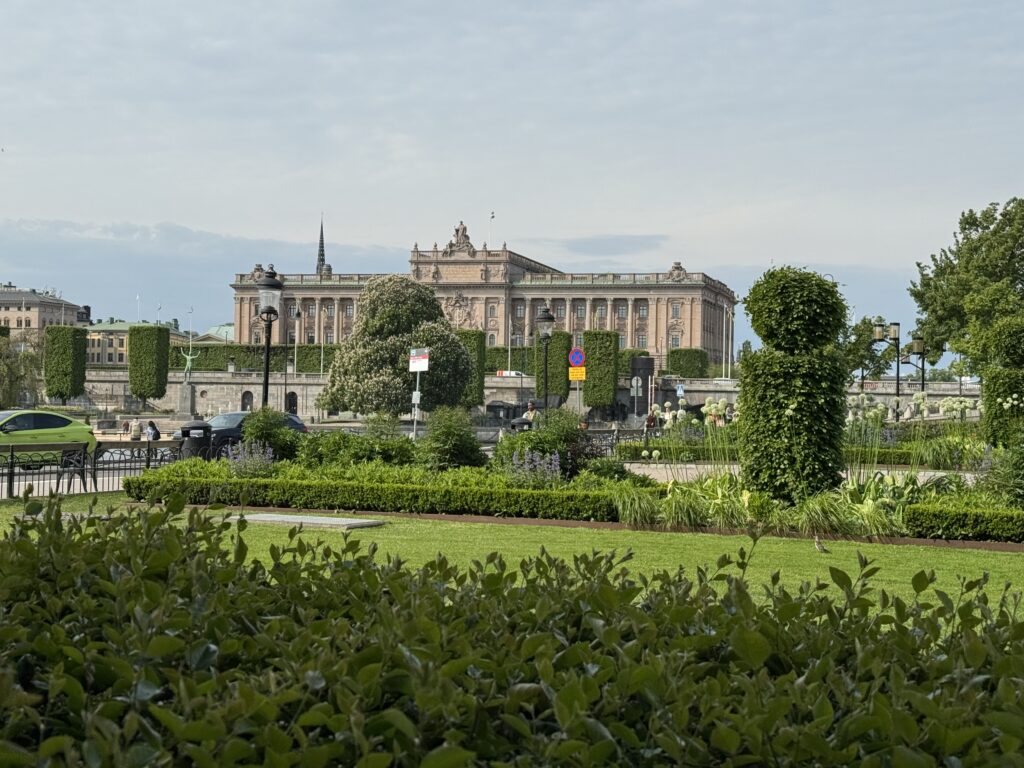
Sweden was a neutral nation during WWII, thus avoiding damage to its historic city center. The Royal palace was completed in 1760 and despite renovations and maintenance, looks much the same in 2025.
I was extremely impressed with the Stockholm City Hall. This building hosts the dinner for the Nobel recipients and attendees. It was designed, 1907, and constructed, 1911-23, at a time when Sweden was politically trending strongly toward socialism.
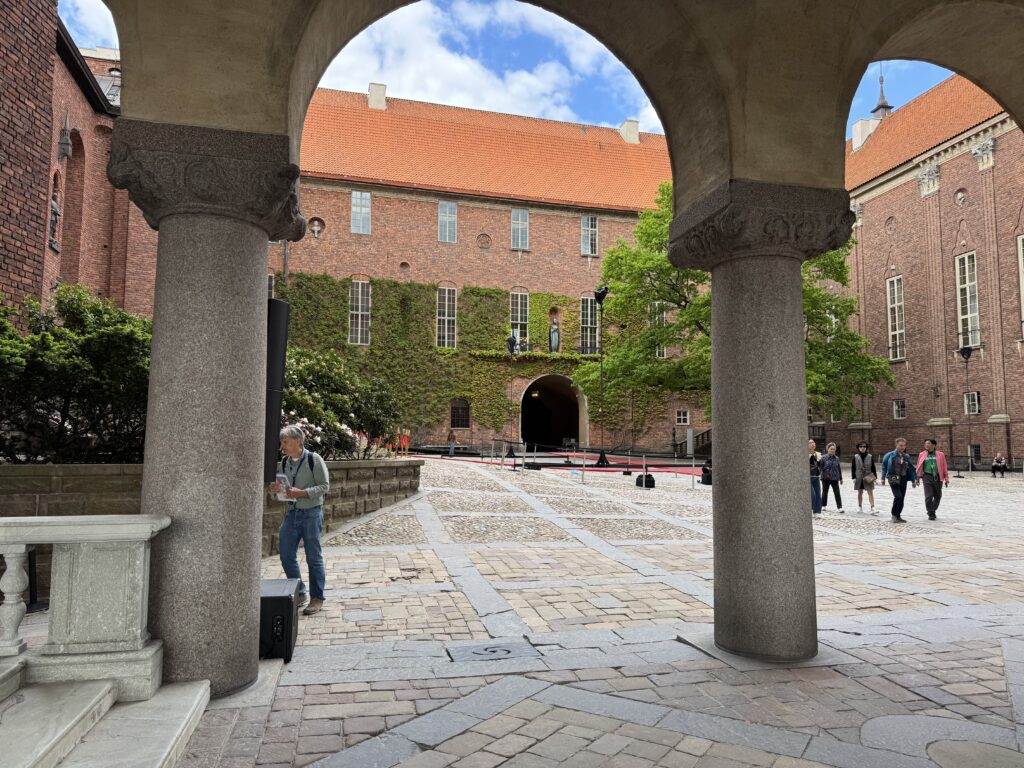
The City Hall architectural style has been dubbed National Romantic. The exterior can be described as very restrained, yet imposing. There aren’t any art deco flourishes or ornate details, however the red brick, subtle accents, as well as the location, adjacent to Lake Mälaren, results in a powerful iconic presence.
There is a lovely asymmetry in the courtyard which is extremely pleasing to the eye. While the exterior is restrained, the interior is a trip into Wonderland. There are several different styles represented in the spaces within the building. The main hall is Venetian gothic, buffeted by ornate balconies.
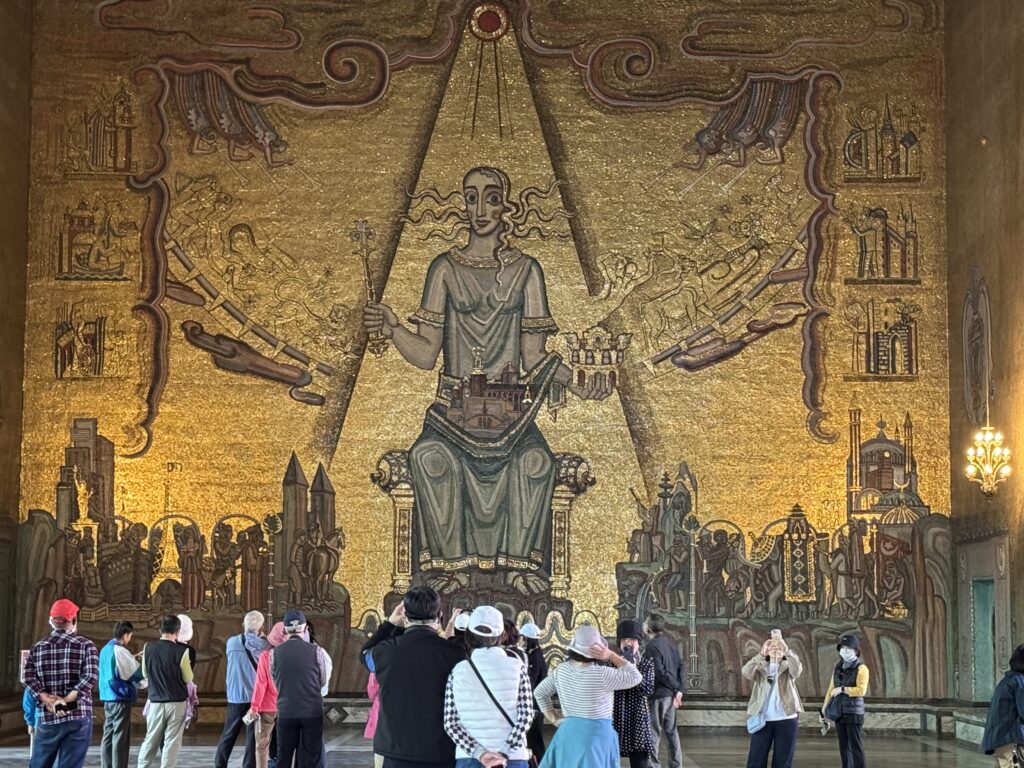
The gold room has over 18 million gold mosaic tiles displaying Swedish motifs and capturing the history of Sweden in elaborate designs. The room is especially remarkable as it was completed during the depression, with a socialist parliament overseeing the city and country.
The southeast corner of the building has a 106 meter tower, topped with Sweden’s national symbol, three golden crowns.
The whimsy within City Hall continues in the metro. There are art tours of the Stockholm metro system. The 110 km of tracks have over 100 stations featuring art. The decor runs the gamut from dioramas to mosaics adorning benches to visual motifs that explode on to the ceilings and walls.
Even though the weather was beautiful, I ventured indoors for a few hours to tour the Vasa Museum. This museum is a must see for any sailing aficionado as well as history buffs who enjoy snickering at hubris.
The Vasa was a Swedish warship built in the 1600’s. Its maiden voyage was in 1628. The ship, which cost more than 5% of the Gross National Product of Sweden, sunk after sailing less than 1,300 meters.
The construction process was mired in change orders. In the midst of construction, the Swedish King heard that another king was building a ship more heavily armed. He couldn’t be upstaged. Without confirming the rumor or modifying the hull design, a second level of cannons were added. Seventy-two 24 pound guns were ordered. At the time of its maiden voyage, 56 24-pounders had been delivered and were distributed over the two gun decks, despite the fact that the upper gun deck had ports sized for 12 pound cannons.
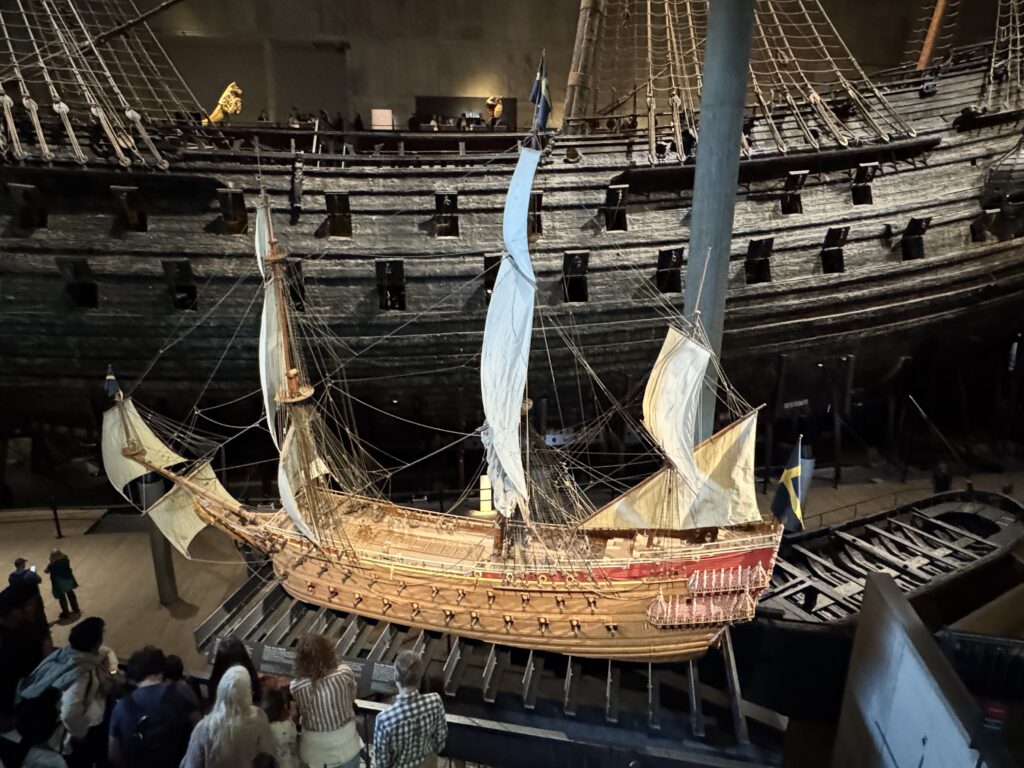
The ship was the largest ship of its kind, richly decorated and heavily armed. The bronze cannons were cast in Stockholm.

Before its maiden voyage, a basic stability test was performed. A naval official had thirty sailors run back and forth across the upper deck. The ship being to roll.
But no one had the courage to share the results of the test with the king, as Gustavus was impatient to have his flagship set sail and play a crucial role in the war against Poland and Lithuania.
There was a light breeze on the day Vasa set sail. The cannons had been positioned to fire a salute as it left the harbor.
The sails were set, a gust of wind filled the sails and the ship leaned. The port holes of the upper gun deck went below the water line. The ship sank quickly.
30 years later, many of the valuable cannons (50) were retrieved by utilizing diving bells. The depth of the wreck was a bit more than 100 feet.
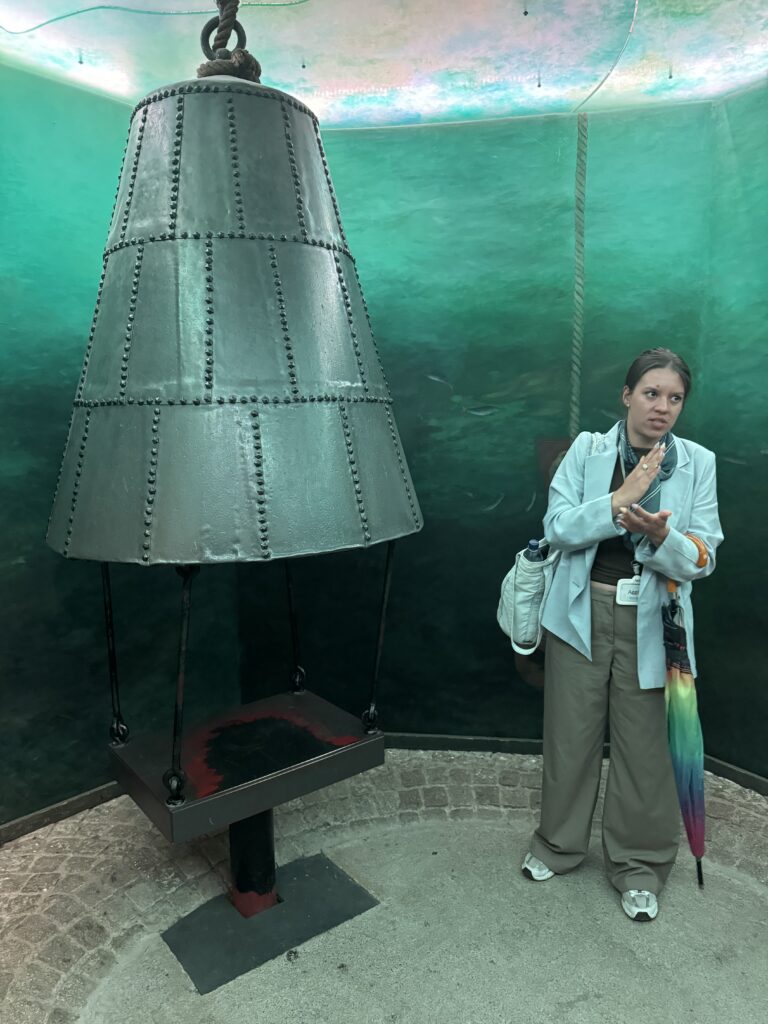
The Baltic Sea has a low salinity. Low salt content and cold water helped to preserve the wood of the wreck, despite the deterioration of the iron bolts.
In 1959, salvaging of the ship commenced. Check out YouTube for some excellent shorts detailing the salvage. The final lift was completed on April 24, 1961.
The Vasa has been wonderfully restored and is housed in a grand structure. It is a must see exhibit if you’re in Sweden,
I head back to the US via Reykjavik, though I’m already planning a return trip to the Nordic countries. This is a historically fascinating part of the world with great transport and pleasant, welcoming locals.
Jag kommer tillbaka
(I’ll be back)