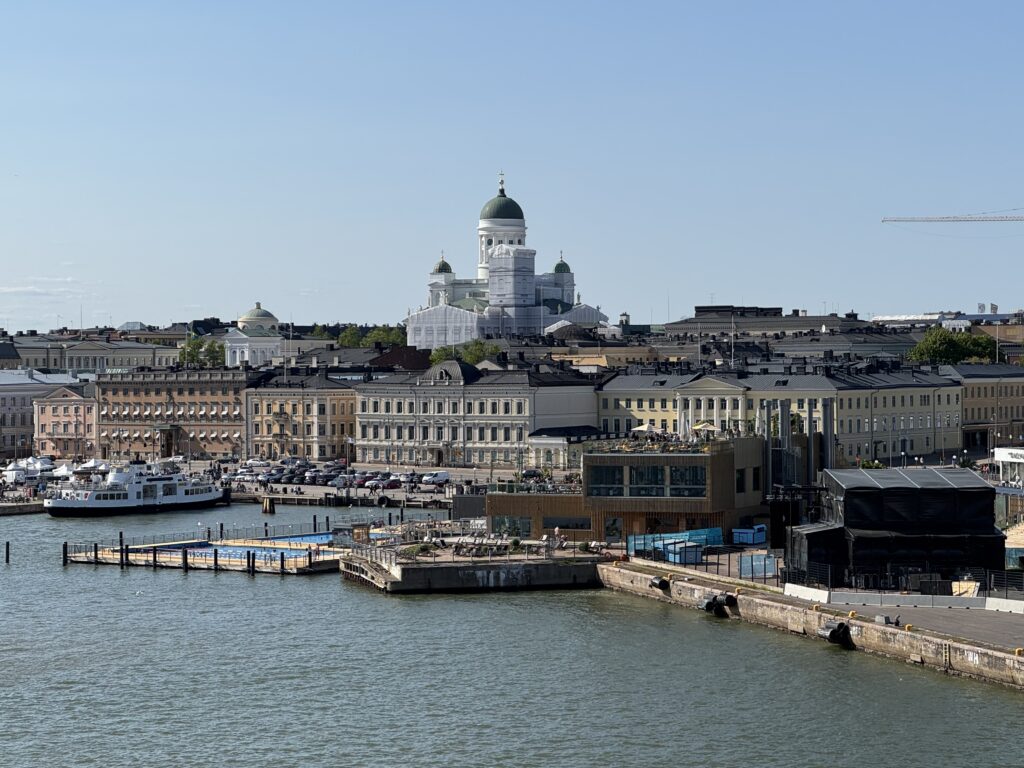
Finland’s capital, Helsinki, is a short ferry ride away from Tallinn. The ferry is a giant shopping arcade with several restaurants, a grocery store, bars and well appointed open seating areas.
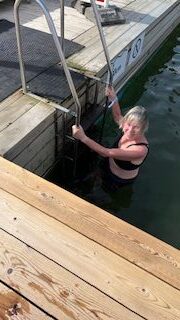
I finally did a proper sauna by alternating lounging in a steam room with plunging into the Baltic. The Temperature was 10 degrees Celsius which sounds much colder than 50 degrees Fahrenheit. The “plunge” was, in actuality, a cautious descent on a ladder.
Finland has been ranked as the happiest country in the world for 8 years in a row. The Finns are incredulous as they keep asking each other, “Are you happy?”. I would describe the Finns as generally taciturn and gritty. Finland celebrated its 100th anniversary of independence in 2017. In honor of the occasion, a beautiful and multifaceted library was built in Helsinki and the country celebrated on the date of their independence by stopping at 2 pm to have a fika. Fika is a social coffee break, where you connect with friends, coworkers and even strangers, for a few moments of relaxation and calm.
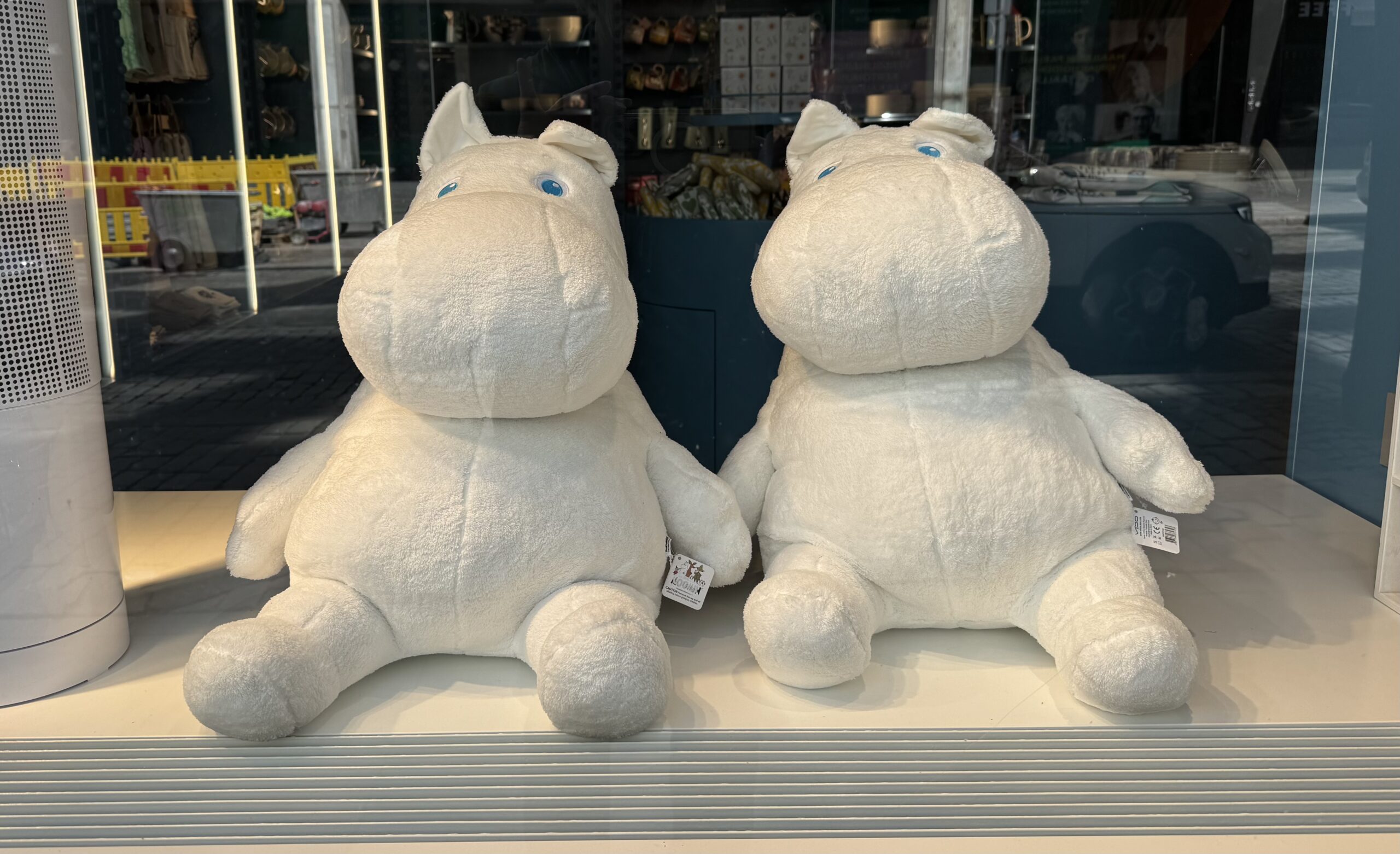
Moomins, amorphous, white round, fairy tale characters, were used as the title image for this post. The Moomins were created by Tove Jansson in the 1940’s, a difficult decade for Finland and the world. The characters were featured in children’s books and novels. The authors desire was to help children deal with difficulties and to seek friendship. Tove was both the author and illustrator of the books. The author and three Moomin characters are featured on a 2 euro coin.
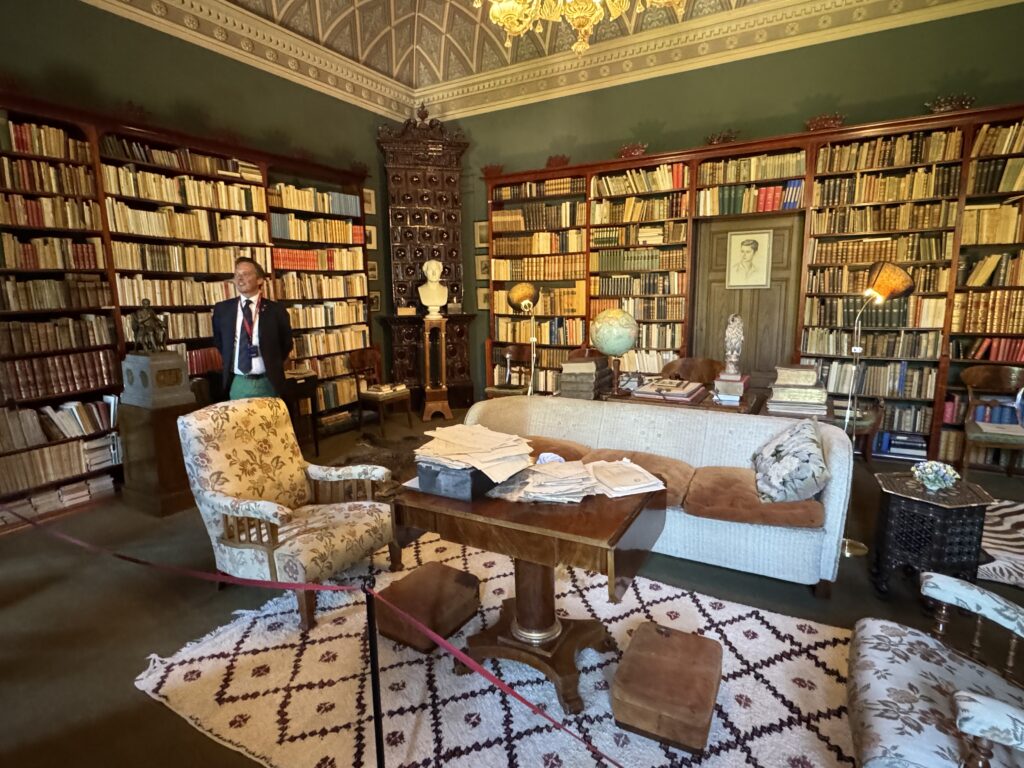
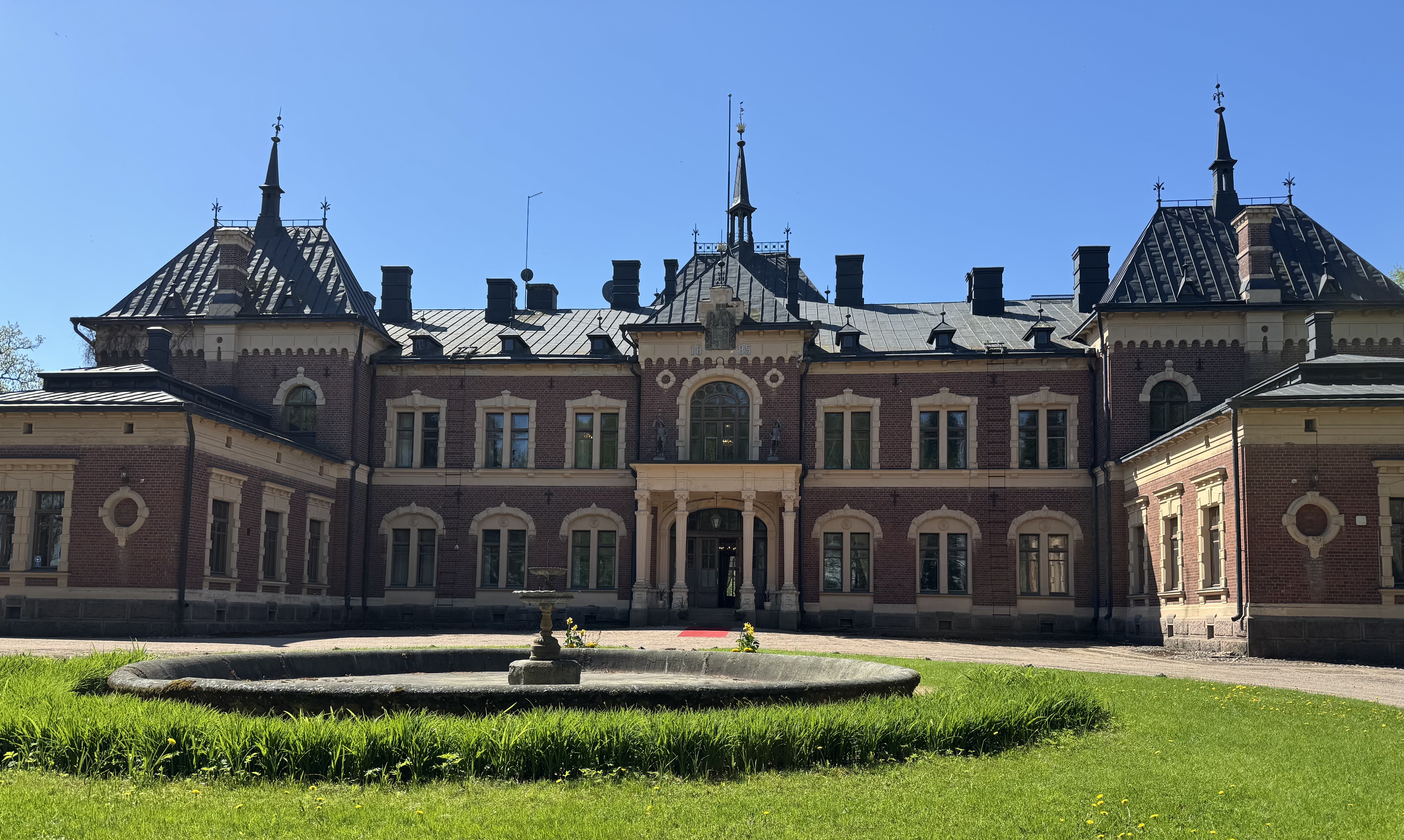
Before heading to Lapland, our group visited an estate than has been in the same family for 13 generations. The grounds of the Malmgård Estate were inherited by a Swedish noblewoman in the 1600’s. Since that time, the Creutz family has owned and developed the land. Our host, Count Henrik Creutz, was an exemplar of Nordic nobility. In addition to being our host during a tour of the manor house which was built in the mid 1800’s, he regaled us with stories of his ancestors, their patriotism and their struggles.
5% of the Finnish population are Swedish. Finland was part of the Kingdom of Sweden from 1150 through the end of the Finnish War, 1809. Finland was then ceded to Russia where it was granted Duchy status. In 1812 Tsar Alexander I moved the capital from Turku to Helsinki in an effort to limit Swedish influence.
Present day Swedish-Finns are still concentrated in the western coastal regions, near the old capital of Turku.
The next morning, we were off to Lapland. We flew over heavily forested land, which is carefully monitored and controlled by the Ministry of Agriculture and Forestry. The forest growth has consistently exceeded the annual logging volume. The primary species of trees are pine, spruce and birch.
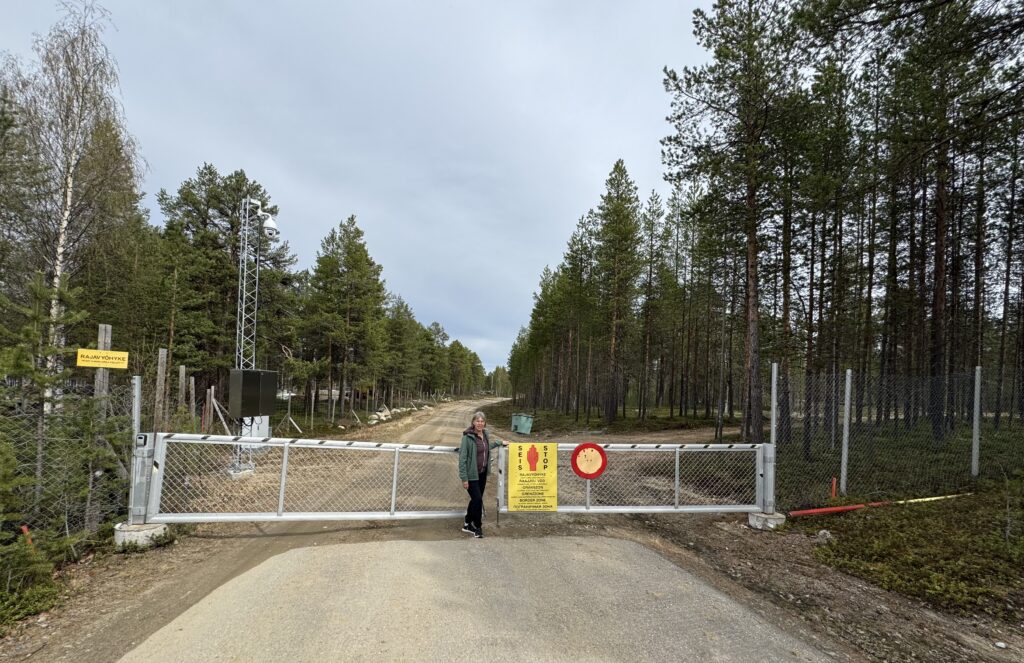
We disembarked in Ivalo, which is 30 miles from the Russian border. Our group headed out to the DMZ area where there was an unmanned gate, a couple of cameras and warnings in six languages to stop. The Finns are keenly aware of geopolitics. Every Finnish man has a compulsory service requirement at the age of 18.
Sápmi is the Sámi name for their traditional territory, the northern part of the Scandinavian Peninsula. “Lapland” is considered outdated and can be offensive to some of the Sámi people.
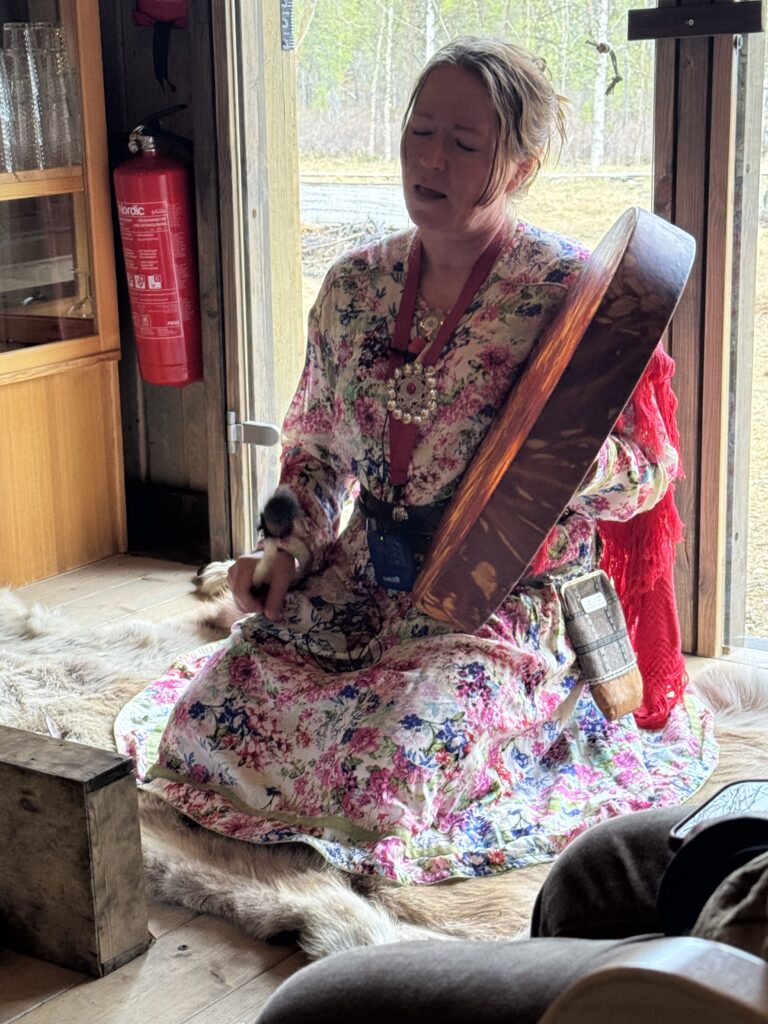
There are many Sápmi tribes and languages. The largest language group is North Sámi. During the last 40 years two of ten recognized languages have become moribund.
Efforts by the Finnish government and the Sámis strive to keep the languages and the culture alive. In Finland, an individual is considered Sámi if they are a native Sámi speaker or has at least one parent or grandparent who learned Sámi as their first language. There is an issue before the Sami parliament which seeks to limit official Sámi membership. The concern is cultural appropriation. An individual who learns to speak one of the Sámi languages but fails to embrace the cultural aspects could be refused recognition.
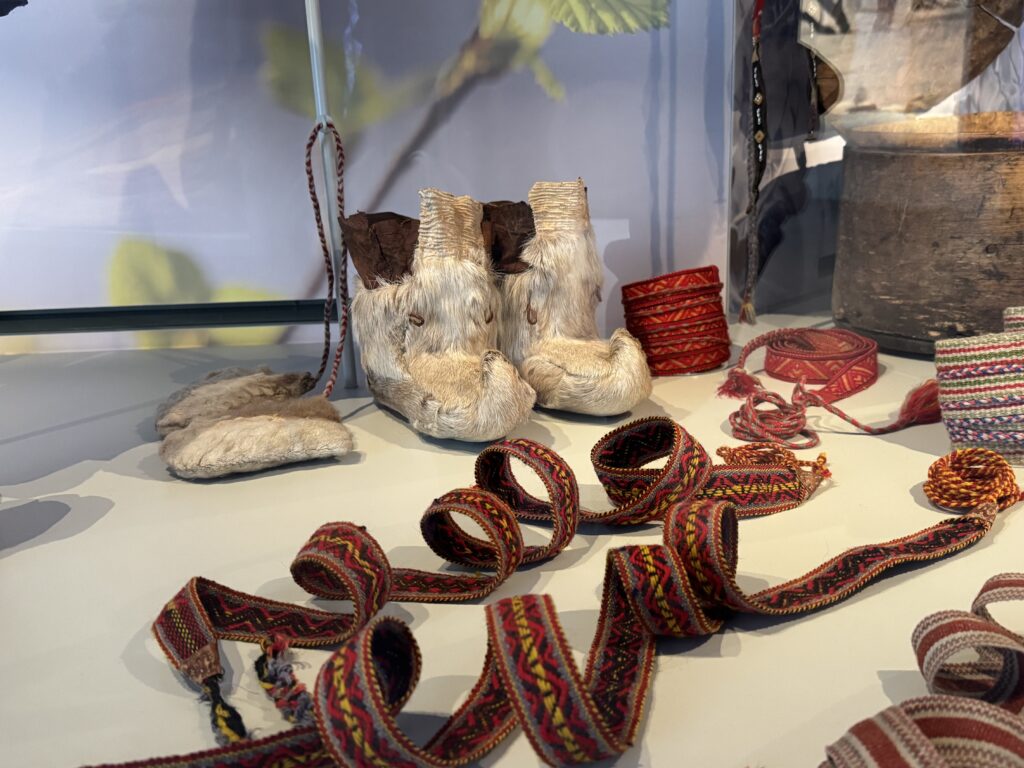
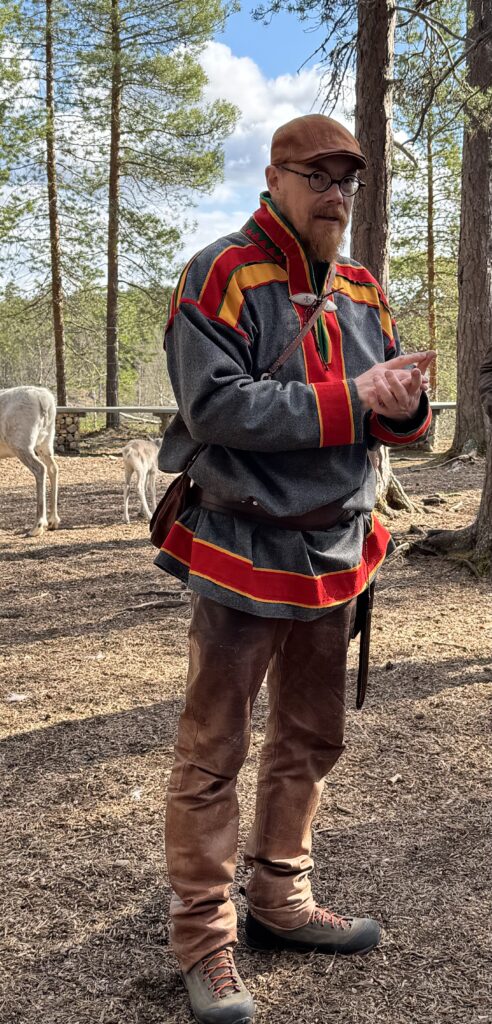
Sámis are deeply connected to nature. Their livelihoods of reindeer herding, fishing and hunting are connected to the land and the seasons. Shamanism, animism and polytheism are embraced and these themes are expressed in their oral traditions, particularly their music. The joik, a traditional Sámi song, is a method of storytelling, which seeks to preserve knowledge, culture and tap into spiritual energy.
The Samis were integral to the Nordic trading network (16th – 18th centuries). They provided reindeer hides to Europeans as well as acting as intermediaries between coastal Norway and the Gulf of Bothnia, the waterway that separates present day Finland and Sweden.
The Sámi written languages were established in the 1600s by missionaries. During the 1800’s, when social Darwinism was in vogue, their language and culture was repressed and assimilation was mandated. In Finland, the aftermath of the Lapland War (Sept – Nov 1944) devastated the Sami territory. As Germany retreated, they pursued a scorched earth policy, leaving a 100,000 Sámis homeless, and vital infrastructure ruined.
Today, three Sámi languages have an official status in Finland in the Sámi populated municipalities. This means government business and services can be provided in the language of the area. Where I traveled, Inari was the predominant language.
There’s an excellent Sámi museum, Siida, in Inari. The complex includes an open air museum where buildings from the 1800 and 1900’s have been preserved.
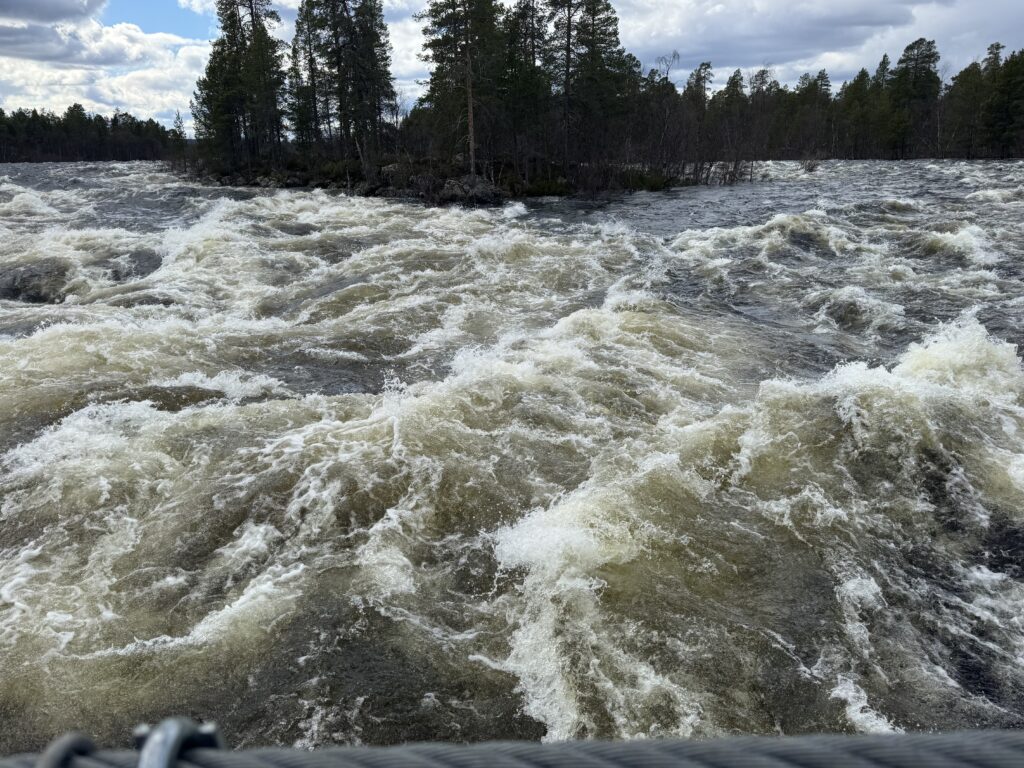
Lapland’s high season for tourism is the winter when the Aurora Borealis and winter sports lure travelers from around the world. I’m glad to have visited during the low season. The Ivalo River surged with the spring melt. The water had a feral energy and a ferocity that left me in awe.
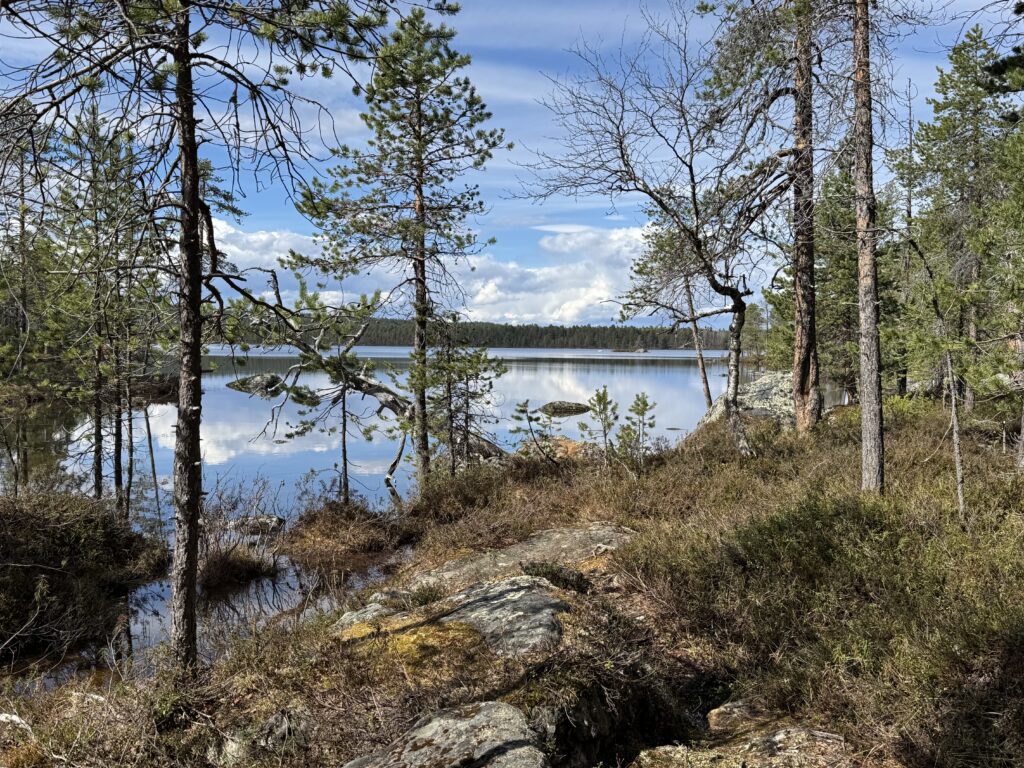
In contrast, the landscape is heavily treed, quiet and serene. The trails are well maintained with enough width to accommodate snowmobiles and dog sleds. Mosquitoes become a nuisance during the summer as the area is crisscrossed with streams and dotted with lakes and ponds.
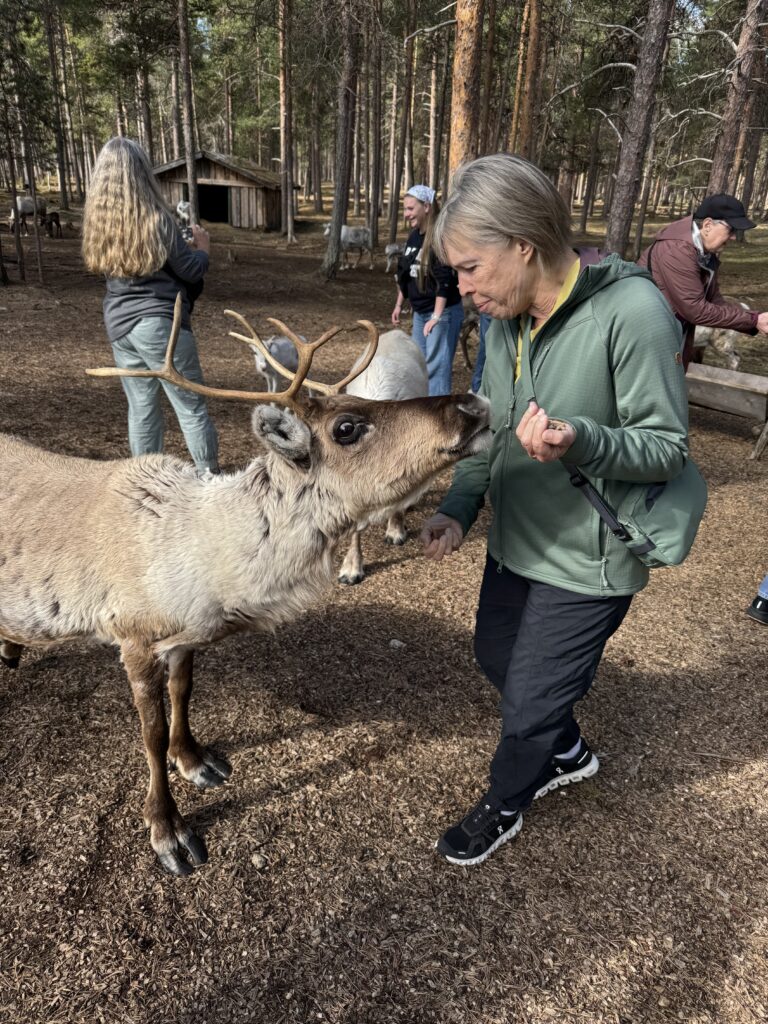
Before leaving Lapland, our group visited a Reindeer farm. Every reindeer in Finland is owned by a herder. Finnish Reindeer farms are organized into one of 54 cooperatives. The reindeer migration is usually less than 100 km (62 miles). The majority of the reindeer are owned by the Sámi. In Sweden, reindeer can only be owned by Sámi.
Instinctually, a reindeer returns to its birth place with fawns being born in late May to mid June. Shortly after birth, a unique series of cuts are notched into the reindeer’s ear to indicate ownership. The optimal ratio of bulls to cows in a herd is 1:20. During the summer, the herd is “managed” by castration and identifying bulls which can be groomed to pull sleds or sent for slaughter.
Reindeer lose their antlers each year. A pregnant cow doesn’t lose her rack until the birth of her calve. This adaptation allows the female to better defend herself. During the winter migration, the deer must use their hooves to dig through the snow in search of food. A female will often use her antlers to push the male away from forage he’s just worked to uncover.
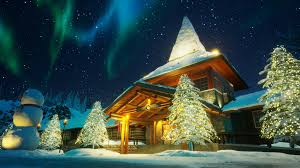
Our Lapland visit ended at Santa’s Village, an entertainment venue located at the Arctic Circle, near Rovaniemi. Eleanor Roosevelt visited this area in 1950. A building was erected for her visit, the Roosevelt Lodge. The lodge became a tourist destination. Local entrepreneurs added buildings and facilities as well as adopting the Coca Cola image of Santa Claus.
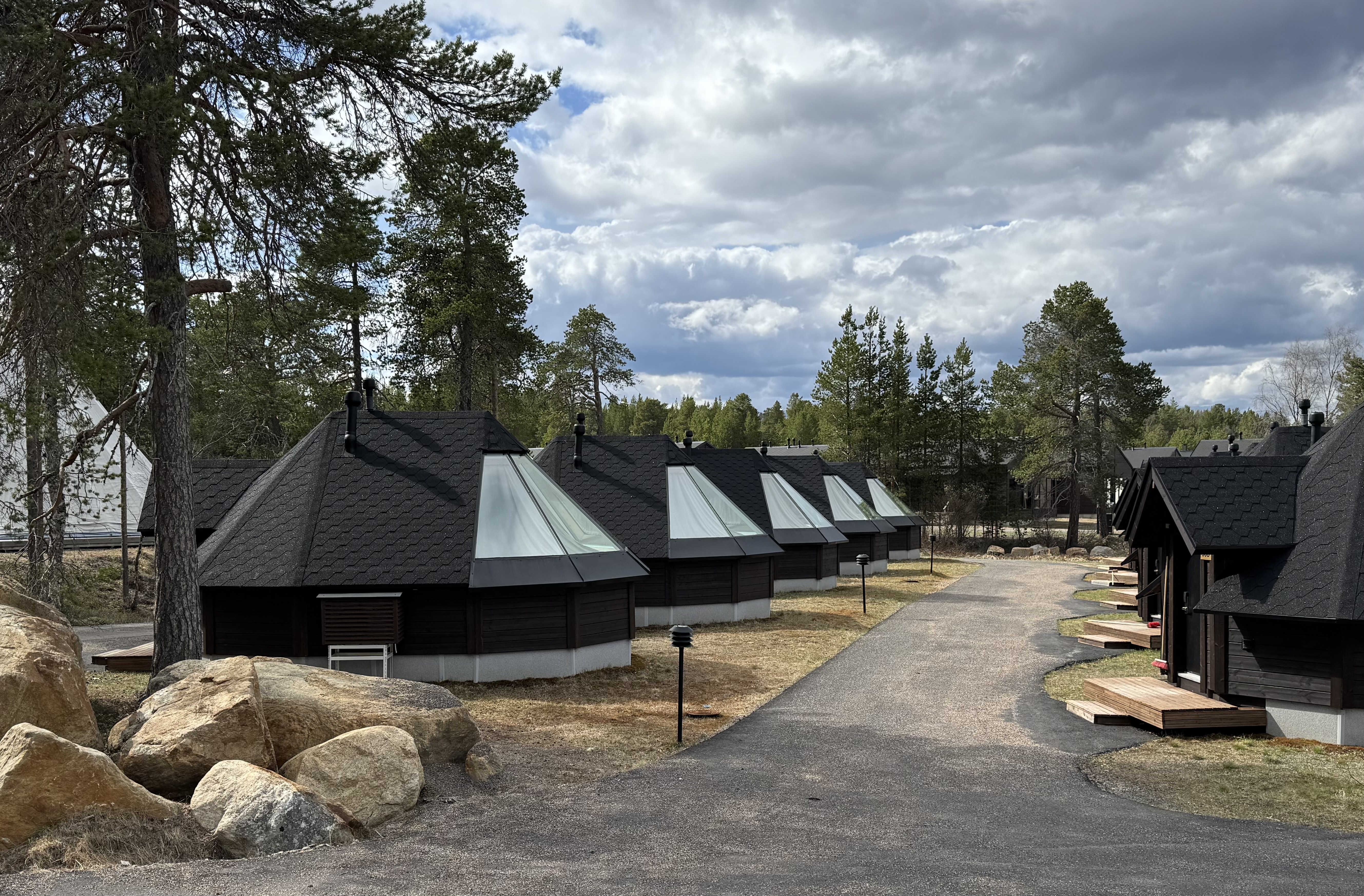
In Finland, Santa Claus is known as Joulupukki, which translates to “Christmas Goat”. This name is a reminder of older pagan traditions where a goat-like figure was part of winter solstice celebration. The picture below is from the web, as the Village appears commercial and bland in summer. Snow, still dark skies and the possibility of an aurora, transforms the area into a mystical and magical locale.
If you’re not in a hurry, you can travel by train from Helsinki to Rovaniemi. The route, dubbed the Santa Claus express, takes ten hours and would be a lovely way to travel north, especially if you’re traveling in winter with children or grandchildren in your entourage.
On to Stockholm!
Fascinating people! Love the reindeer bonding 🤗