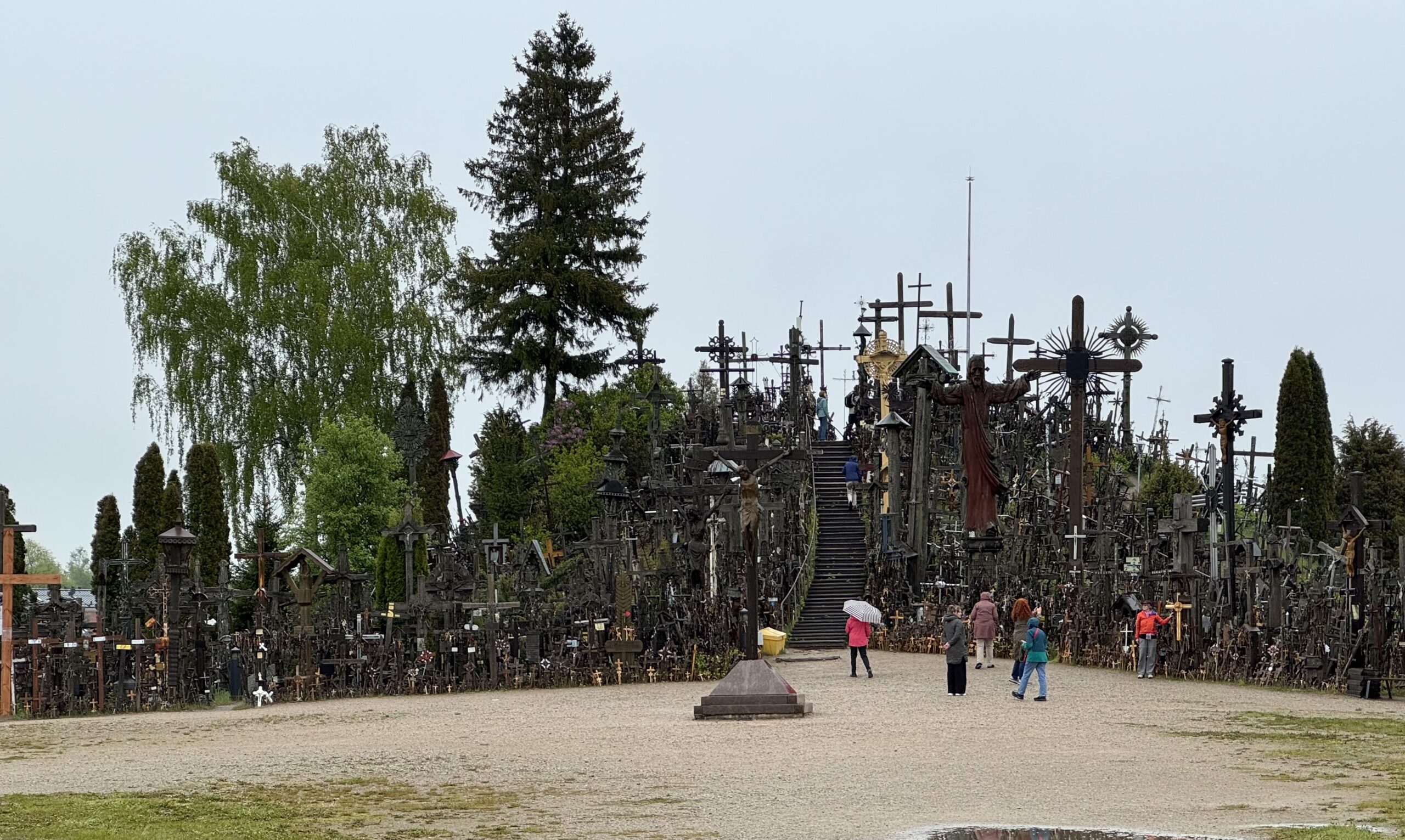
I wanted to visit the Baltics before Putin got there. That comment is only slightly “tongue in cheek”. My first stop was Vilnius the capital of Lithuania. It’s a beautiful city with an interesting large old town area. The city has an abundance of green space with clean, wide streets, even in the oldest sections of the town.
The people of the Baltics are truly indigenous. The area was the last to be Christianized in Europe. At one time the Grand Duchy of Lithuania stretched from the Baltic to the Black Sea, subsequent wars and invasions by the Swedes and the Russians, decimated the population. Lithuania ceased to exist as an entity after the third partition of 1795.
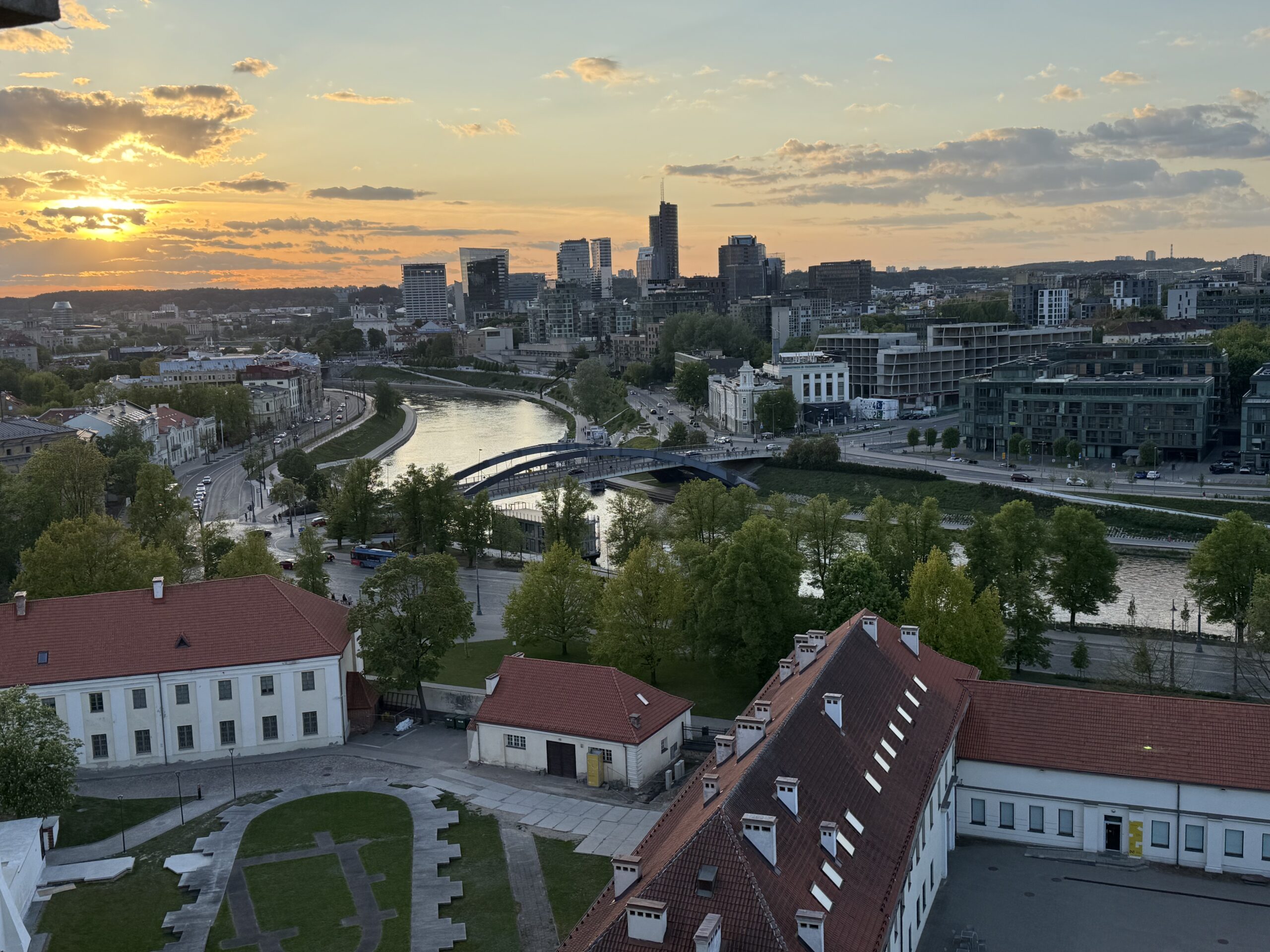
When Napoleon marched through Vilnius in 1812, the French troops were treated as liberators with many Lithuanians joining the French forces to fight czarist Russia.
There were two unsuccessful uprisings ( 1830 and 1863) against Russia. Both brought further repression. After the 1863 uprising the University of Vilnius was closed and the use of the Lithuanian language was outlawed. Secret schools kept the language and the culture alive.
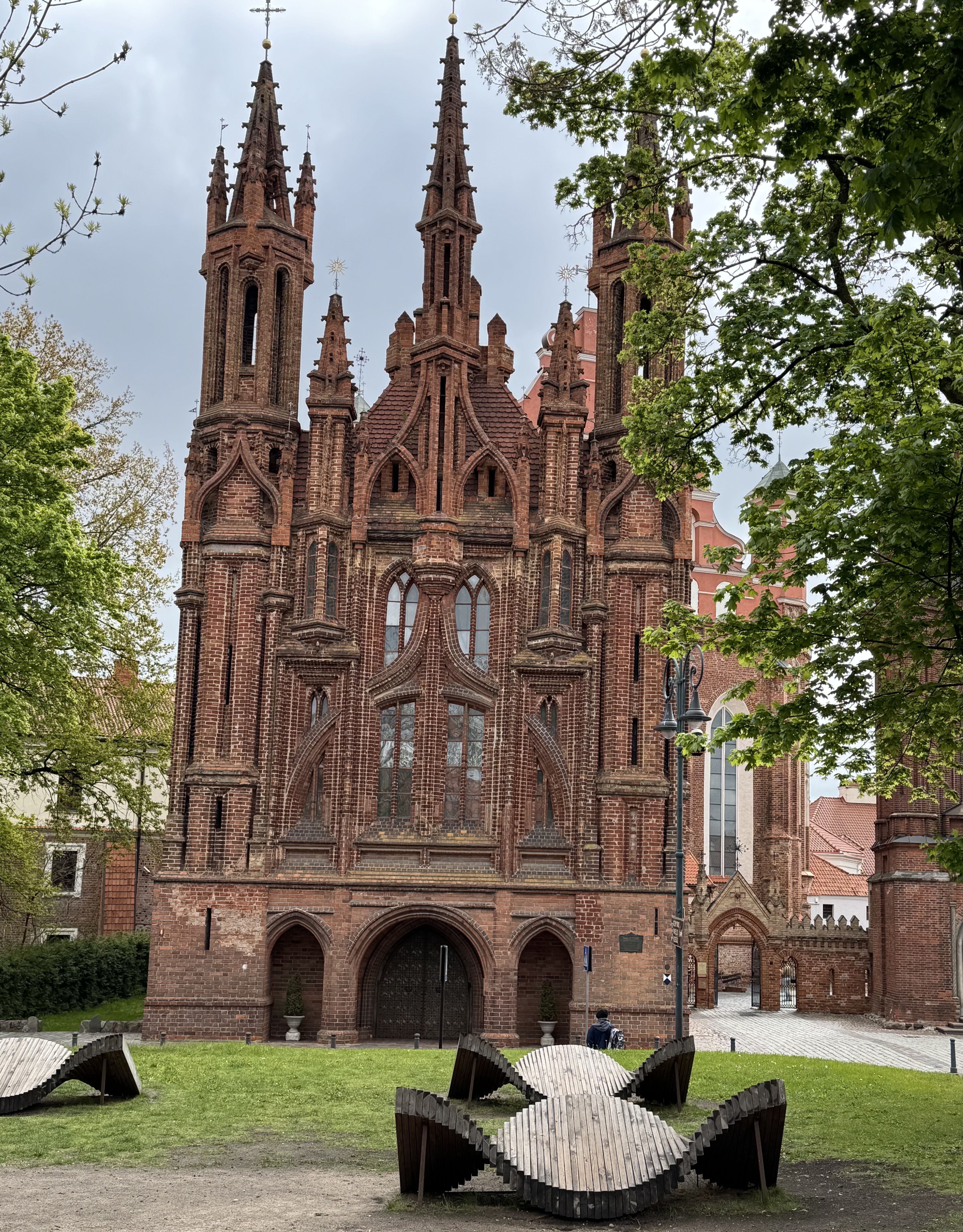
Lithuania, as well as Estonia and Latvia, were reestablished as a countries after WW1.
In 1939, the nonaggression pact between Germany and the USSR, the Molotov-Ribbentrop Pact, partitioned Europe. While most of the world was focused on Germany’s invasion of France in June 1940, the Soviet NKVD raided the Baltics. State officials were liquidated and replaced with Soviet sympathizers. 75,000 Lithuanians were deported to gulags or murdered. In 1940, the total population of Lithuania was 2.3 M.
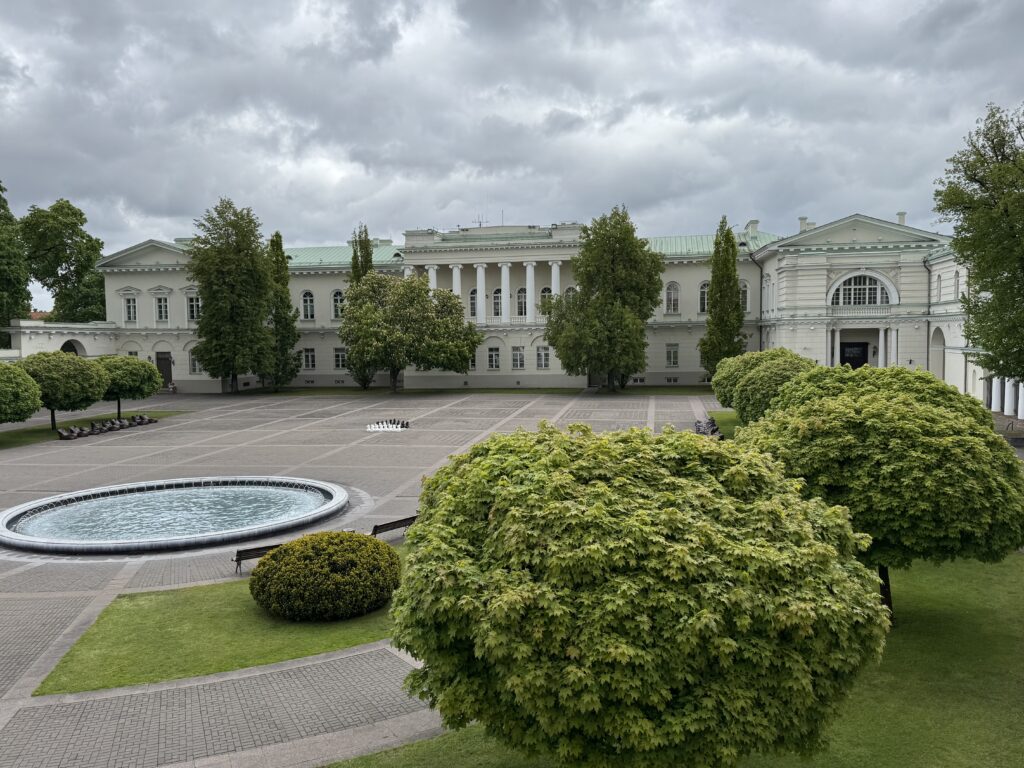
Hitler violated the Nonaggression pact when he decided to invade the USSR, June, 1941. Nazi troops marched into Vilnius. The Nazis were welcomed with flowers.
Vilnius was known as the Jerusalem of the North. The Jewish population of nearly 250,000 was systematically annihilated during the three year occupation. Fewer than 5% of the population survived.
The Russians returned in 1944 to “liberate” Lithuania. This time, the Soviets remained until 1991.
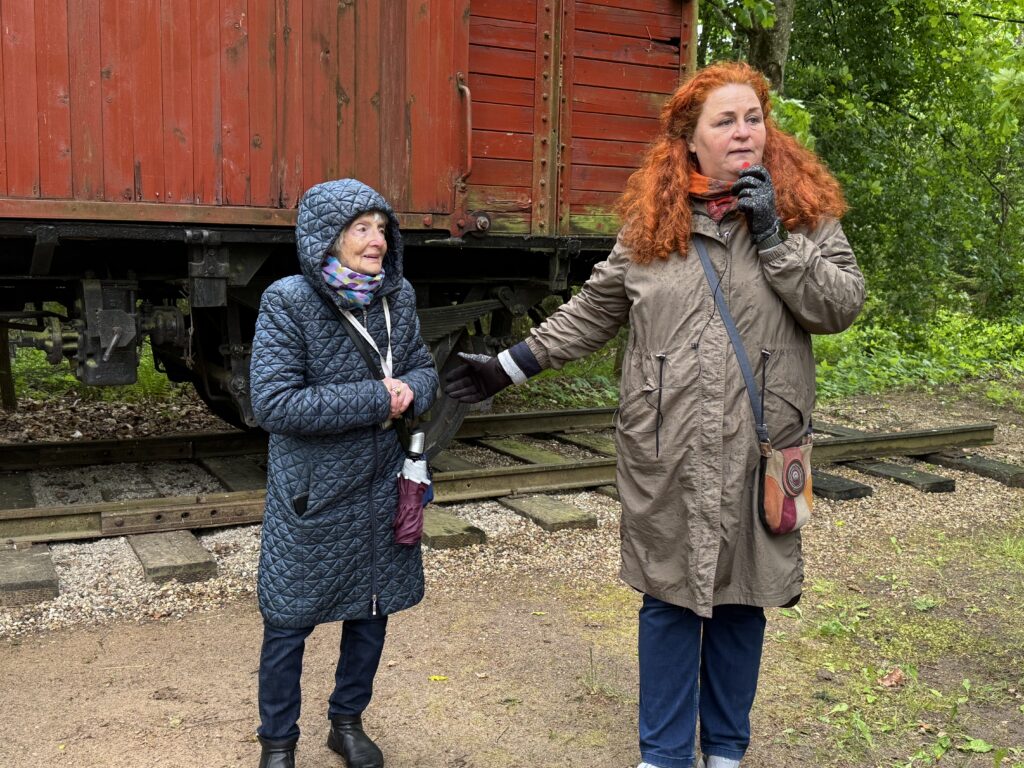
Life under Stalin was difficult. We visited the local NKVD headquarters where political prisoners were questioned, tortured and frequented executed or deported. Former land owners, educators and professionals were targeted. Farms were turned into collectives.
Everything you needed to survive, housing, food, clothing was provided by the state. You were fortunate to have a benevolent government taking care of your needs. You were fortunate that a centrally planned system would tell you what school you would attend, what your occupation would be and where you would work.
Our tour leader, Vita, told us that her parents married so that they would be transferred after university to the same town. In 1964, they were sent to Kretinga. . They were assigned one room in a 3 room, 500 sq ft apartment. The other two rooms housed single men. The one bathroom and kitchen were communal areas.
After the birth of two children, they were allowed to have two of the bedrooms. When Vita’s grandmother retired, she applied to live with them. So, now that their family consisted of three adults and two children, they could occupy the entire apartment.
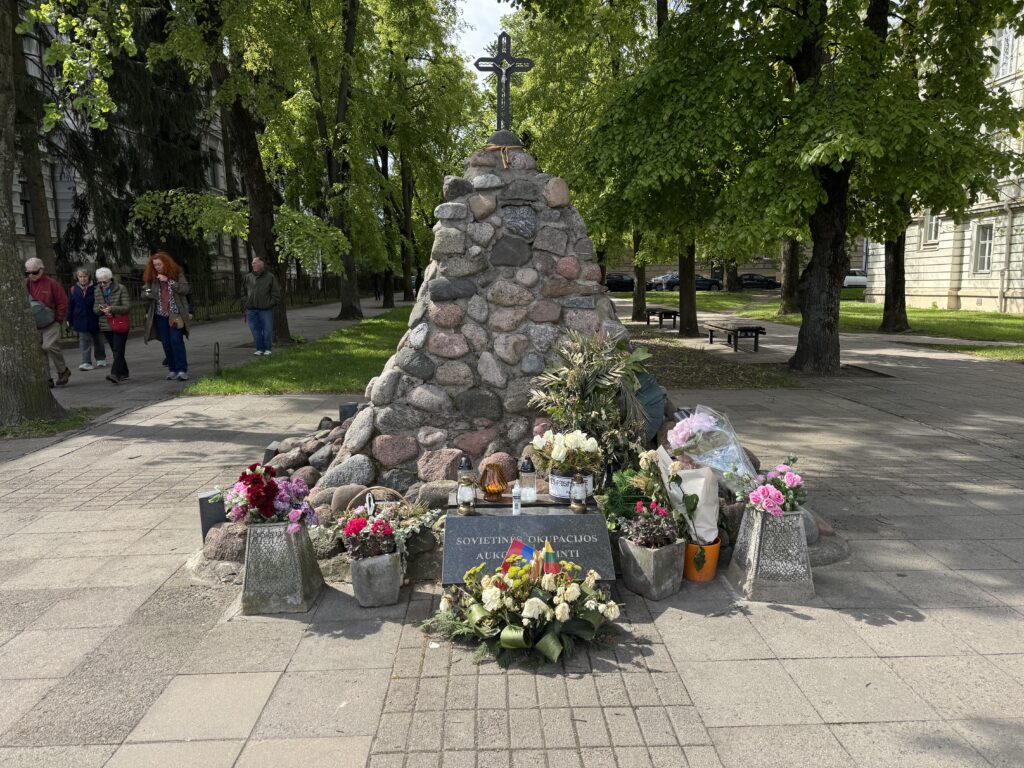
Lithuania, as well as Latvia and Estonia, were Soviet republics. The republics were more tightly controlled than the Soviet satellite countries, such as Poland and Yugoslavia.
August 23, 1989, Estonians, Latvians and Lithuanians turned out to form a human chain weaving through all three Baltic States, from Vilnius to Tallinn. 2 million people participated, this was a quarter of the Baltic state’s entire population. August 23, 1989, was the 50th anniversary of the Molotov-Ribbentrop Pact.
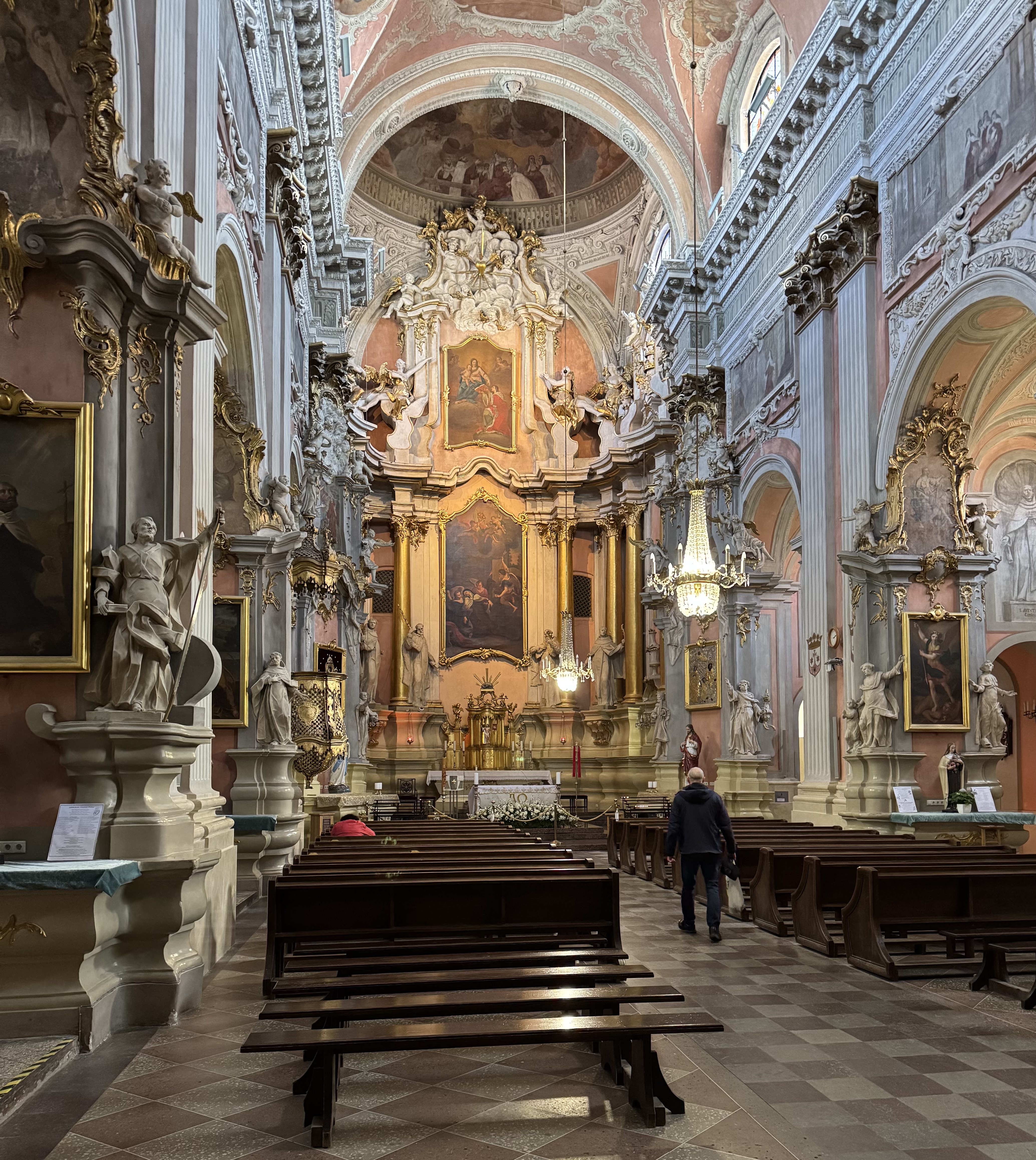
Efforts continued to removed the Soviet yoke. With Glasnost in the air, a deteriorating Soviet economy, a costly Afghanistan war, and internal power struggles, in early 1990, the Lithuanian legislature unanimously declared Lithuania an independent country.
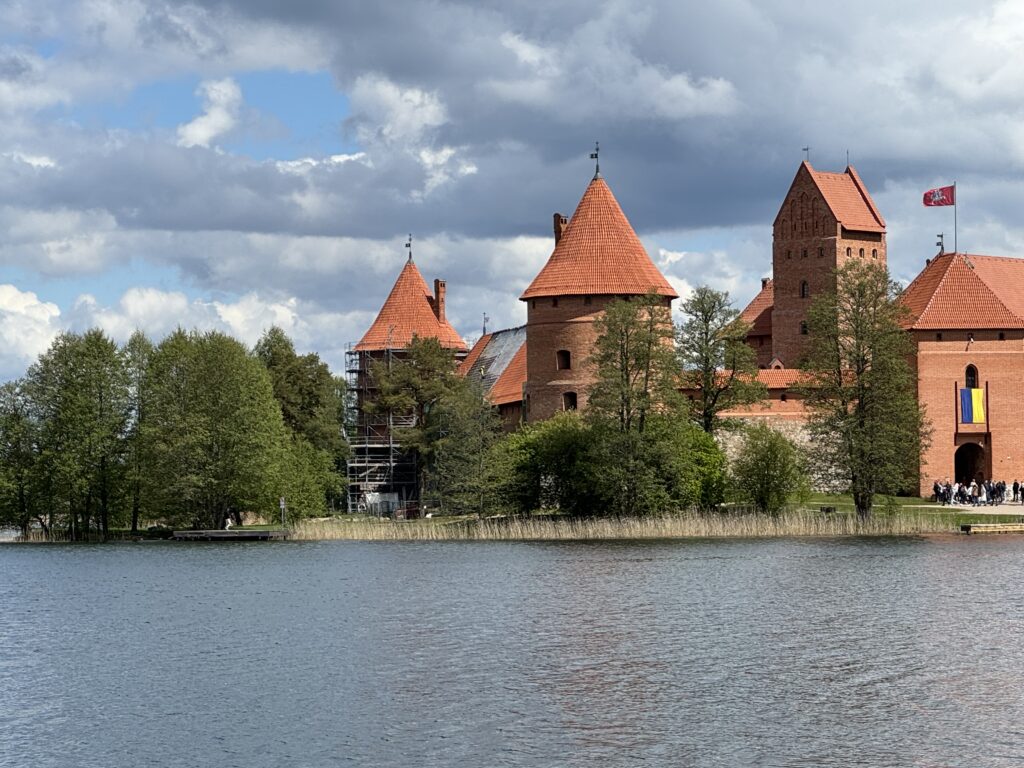
Soviet response was initially muted, but on January 13, 1991, Soviet forces attacked key facilities. 14 people were killed and the Soviets gained control of the TV tower, but the legislature held.
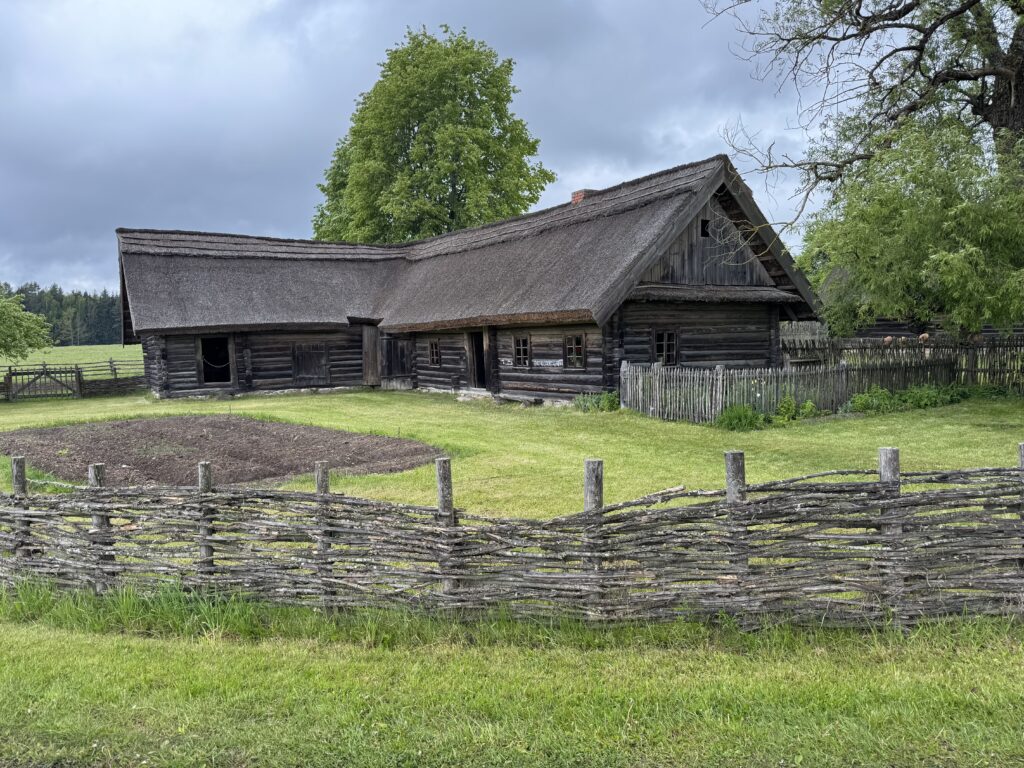
The last Soviet tank left Lithuania in 1993.
Iceland was the first country to recognize Lithuanian independence.
The transition to a free market economy was difficult, but the Lithuanians embraced the challenge.
On November 23, 2002, George Bush visited Vilnius. He officially invited Lithuania to join NATO.
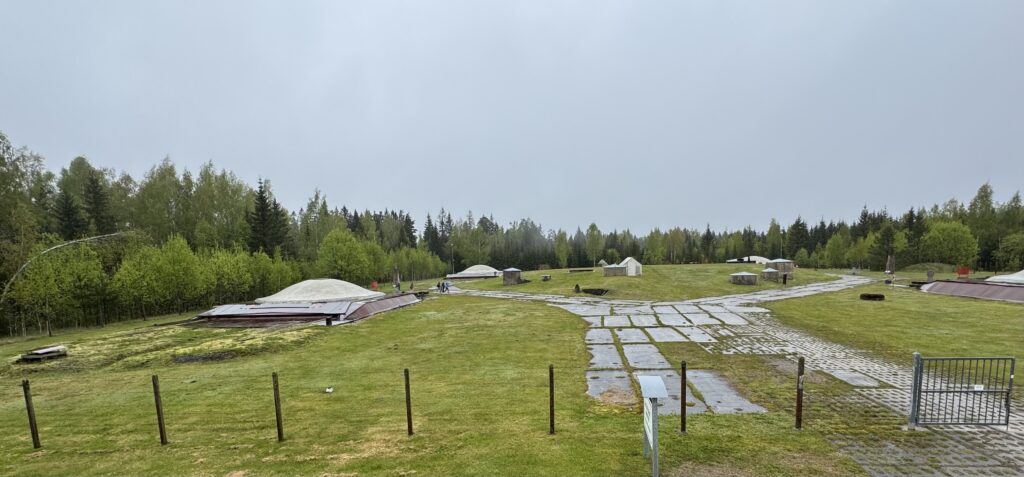
A sentence from his speech has been captured on a plaque mounted to the wall of the Vilnius Town Hall – “Anyone who would choose Lithuania as an enemy, has also made an enemy of the United States of America.”
The Baltics states are very wary of Russia. They were opposed to energy agreements with Russia. Despite their reservations, Nord Stream 1 was put in service in 2011. Lithuania spent precious capital to build its own LNG terminal. Their terminal has been operational since 2014.
The Baltic States take a great deal of solace in their NATO Association. I hope they’re justified in this belief.
So, my principle purpose for this excursion to Europe has been satisfied. Subsequent posts will be lighter with more emphasis on culture, architecture and food.