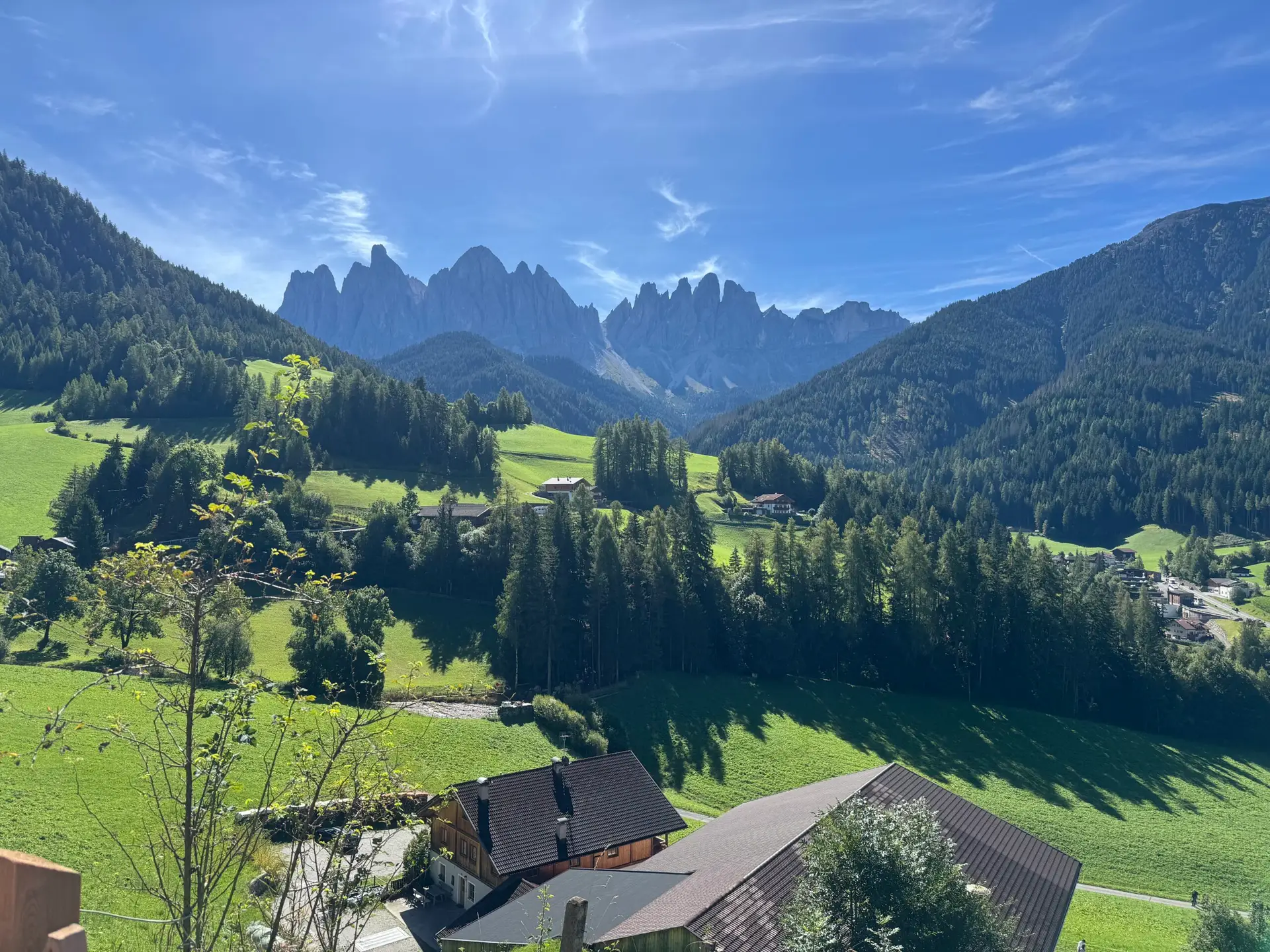
South Tyrol, officially Trentino Alto-Adige in Italian or Südtirol in German, is an absolutely “must experience” locale. A walk along an alpine mesa is an ethereal experience. The multicolored peaks of the Dolomites rise up above lush fields and picturesque villages. The stunning scenery is simultaneously exhilarating and calming.
The Pale Mountains and the Alpenglow
The “Pale Mountains,” were formed 250 million years ago, beneath a tropical sea. These rugged peaks were once massive coral reefs in an ancient Ocean. Through a slow, chemical process called dolomitization, marine life turned to stone and created a rock that glows with a supernatural light. At dusk, if you’re lucky and the weather is cooperative, you’ll see the “Alpenglow”. As the sun dips below the horizon, the magnesium in the rock refracts the fading light, setting the peaks ablaze in a palette of orange, violet, and soft pink.
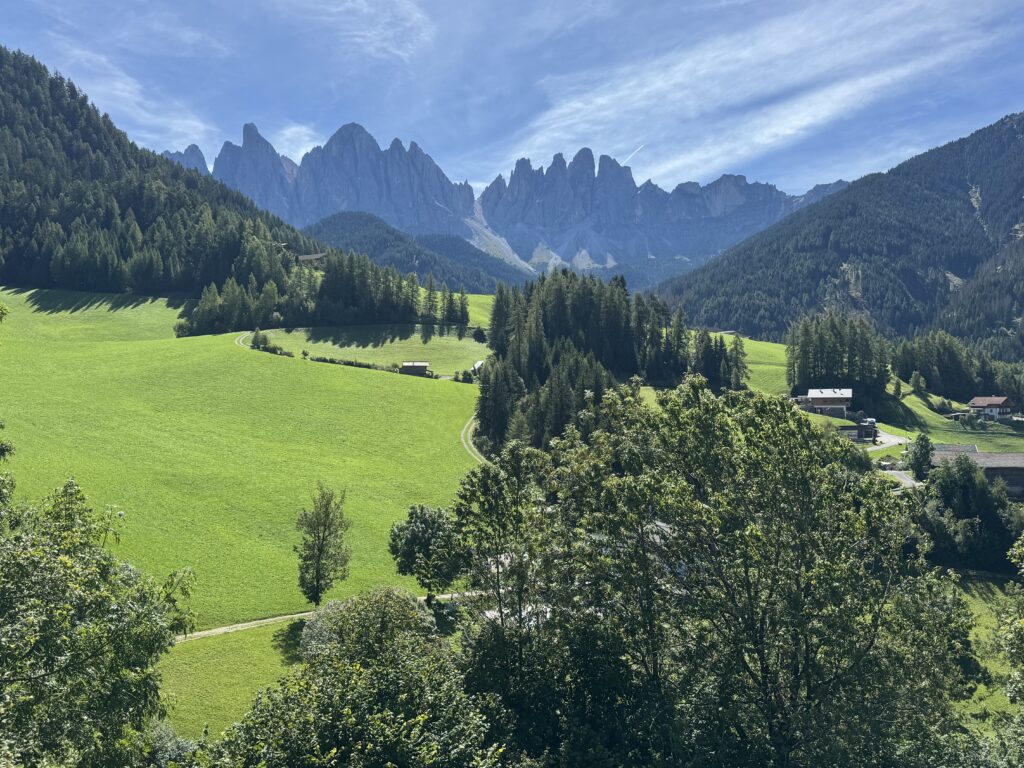
A Borderland
South Tyrol is shaped by its history as well as its geography. For centuries, it was the heart of the Austro-Hungarian Empire only becoming a part of Italy after the First World War. The era of “Italianization” left scars on the local populace. The divisions and animosity were further exacerbated after WWII.
In 1948 Italy enacted the First Autonomy Statute. Its goal was to protect the German ethnic minority in the Tyrollean region. However, it didn’t grant the German dominant province of Bolzano direct self government. After years of civil unrest and violence, the Second Autonomy Statute of 1972, transferred and split the bulk of legislative and administrative powers between the majority German speaking Bolzano province and the majority Italian speaking Trento province.
The Bolzano province is also home to the Ladin. They speak a Rhaeto-Romanic language that you might have heard in Ancient Rome. Even though there are only about 40,000 native speakers, there are 5 distinct dialects. Each dialect corresponds to one of the five high isolated mountain valleys where this ethnic group avoided invasions and dilution of their language.
Separate but equal
South Tyrol is an ongoing social experiment in maintaining cultural identity. Every ten years, during the national census, citizens in the province must officially declare their affiliation with one of three language groups. Most recently the region is 68.6% German, 27% Italian and 4.4% Ladin.
This cultural balancing act is most evident in the school system. To protect linguistic identities, children are typically segregated from a young age into either German or Italian-language schools. While this ensures that the German minority preserves its mother tongue, it creates a unique social hurdle. The students are also taught from two different curriculums, Viennese based German and Rome based Italian. Children living in the same neighborhood grow up in parallel worlds, only interacting once they enter the workforce.
The young adults I spoke to referenced the “ethnic cage,” a system of quotas that requires a citizen, once they are 18 years old, to declare their language group. Your language group controls access to public jobs and housing. It is particularly difficult decision for individuals who embrace both cultures. Current sentiment is favoring a move away from segregated language schools.
Trento
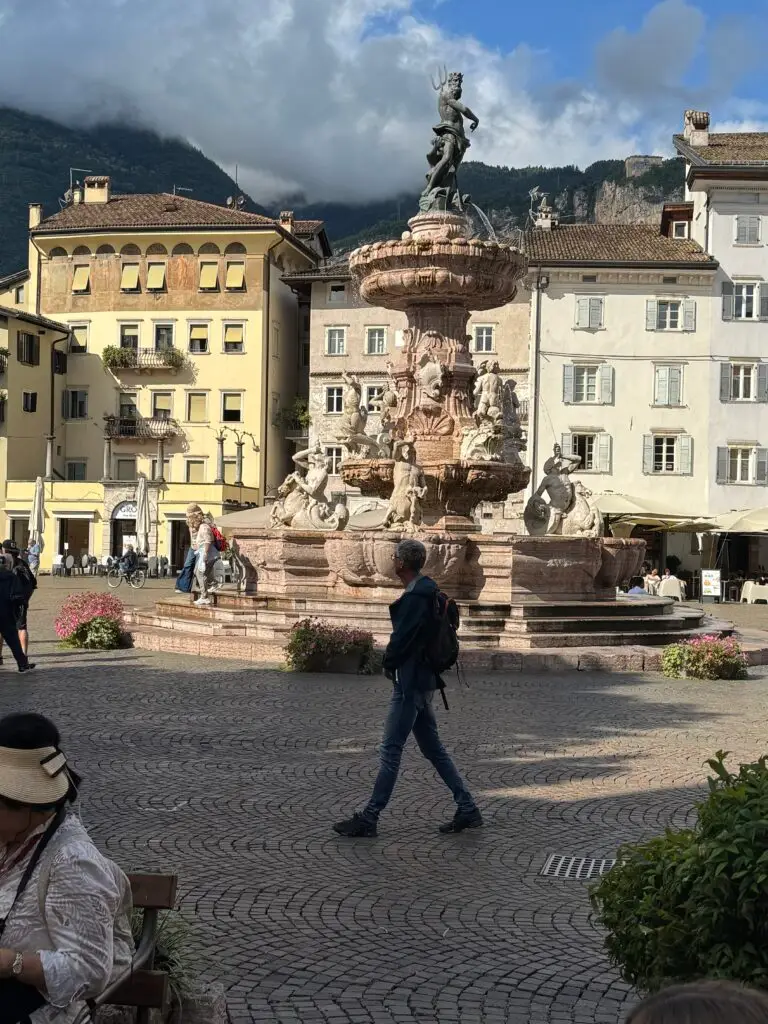
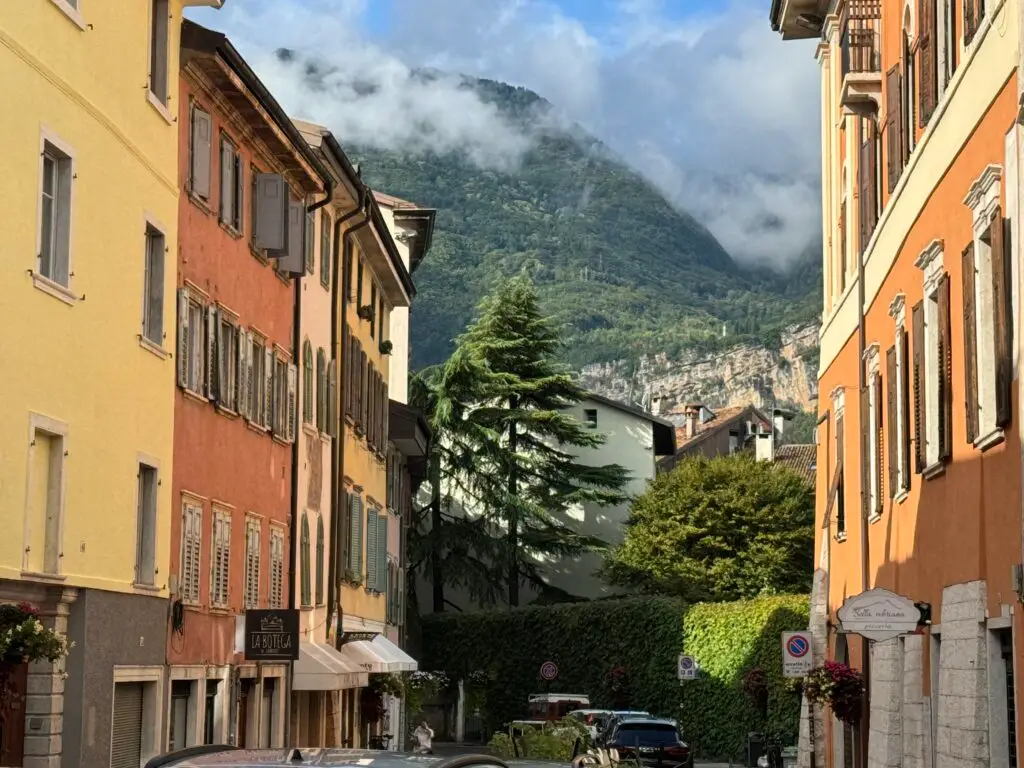
Our trip was well planned and took us through both beautiful landscapes and fascinating historic urban centers. Trento, with a population of 120,000, is situated in a basin of the Adige River. The jagged peaks of the Dolomites encircle the town and provide spectacular views.
Trento was the epicenter of the Roman Catholic Counter Reformation. The Council of Trent, 1545-1563, brought thousands of clergy from throughout Europe to the medieval hamlet.
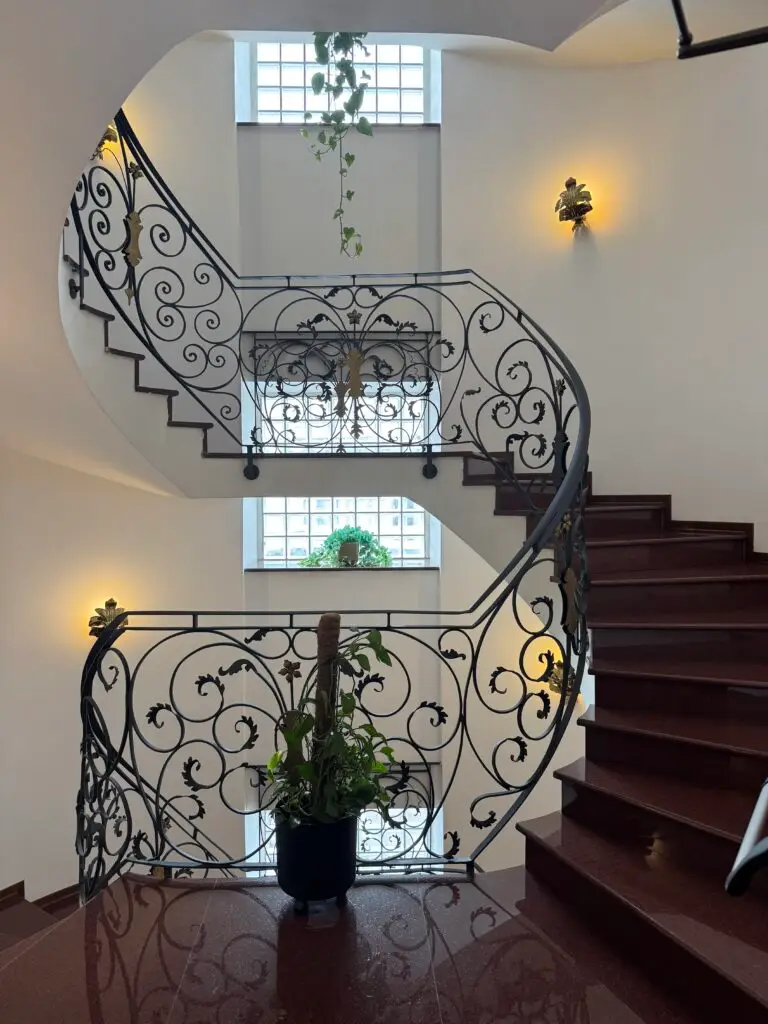
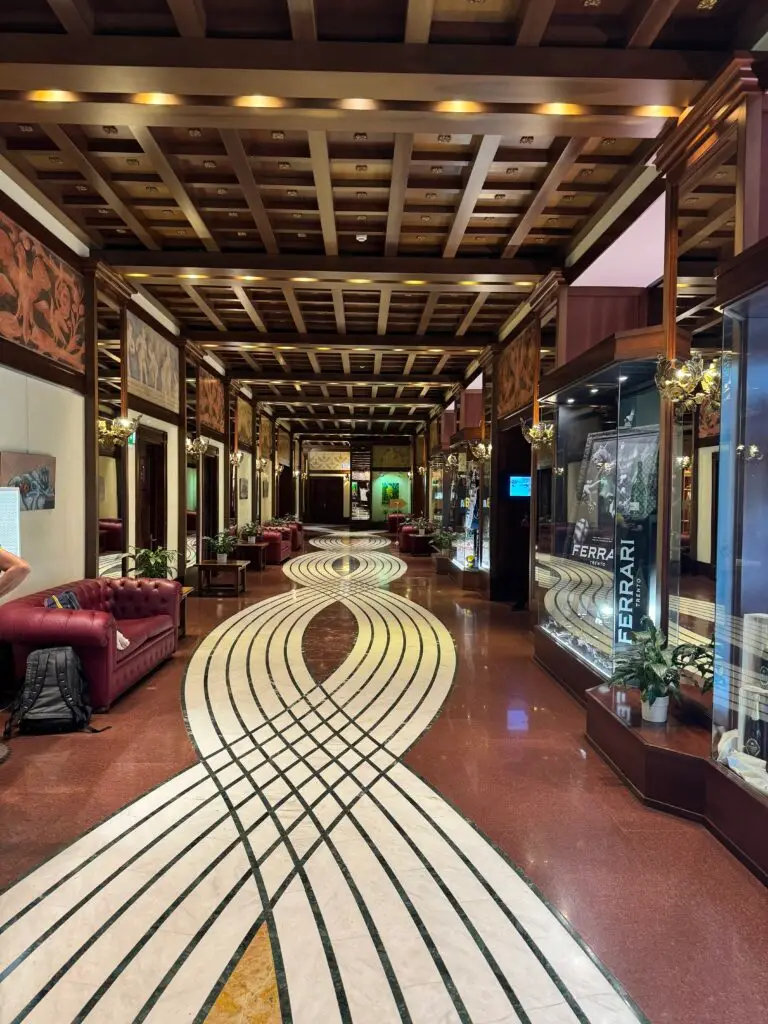
The Grand Hotel, my home for three nights, had an imposing Germanic feel with inlaid marble floors, heavy ornate meeting areas and art deco railings. It was built in 1939 and had a decidedly 1930’s vibe.
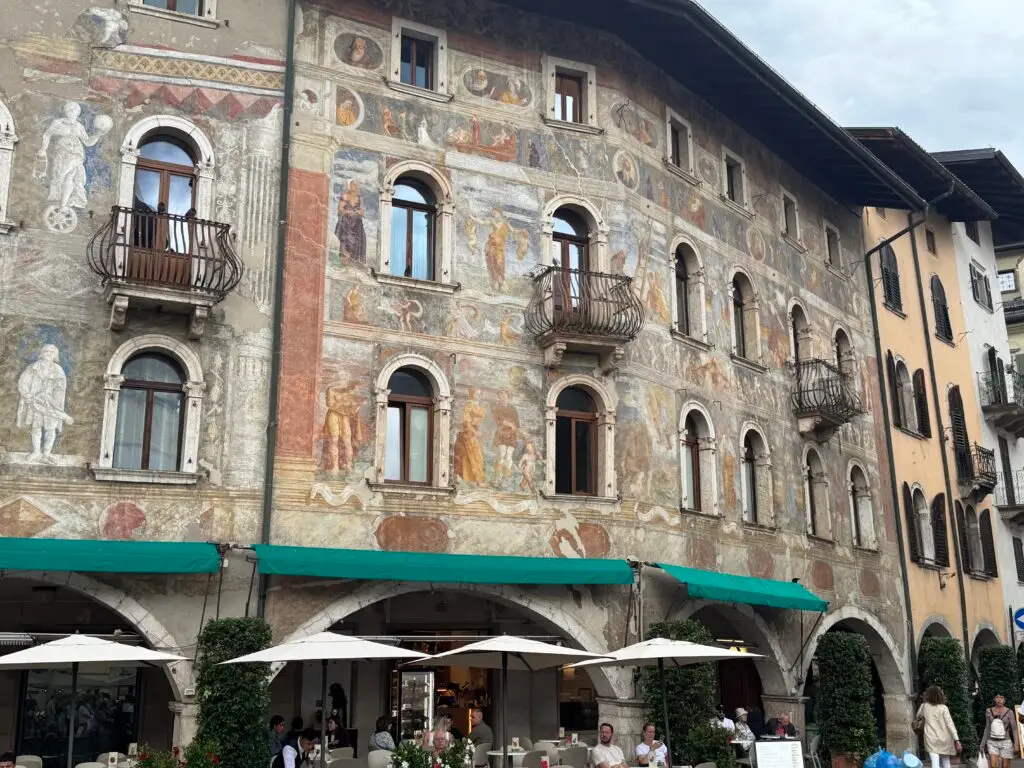
The local Prince-Bishop, Bernardo Clesio, orchestrated many civic projects to support the influx of high ranking European clergy. The town was modernized with the renovation of medieval buildings, improvement in infrastructure and the construction of new renaissance inspired statues, piazzas, and residences. The frescos adorning the facades gave birth to the moniker, The Painted City.
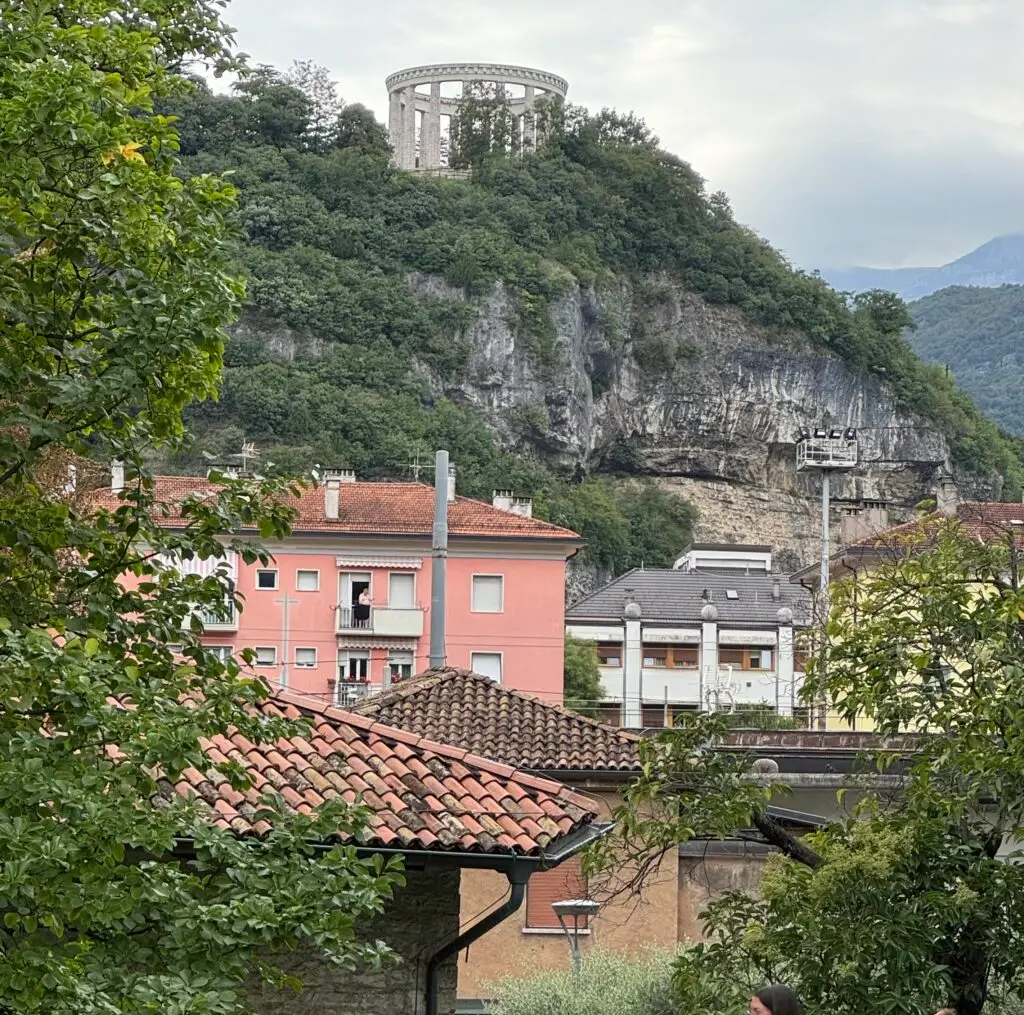
Roaming through the cobble stoned streets of Trento was delightful. Equally lovely was a hike up to the Mausoleum of Cesare Battisti. (Cesare is a symbol of the Italian fight for independence. He was captured and executed during WWI.)
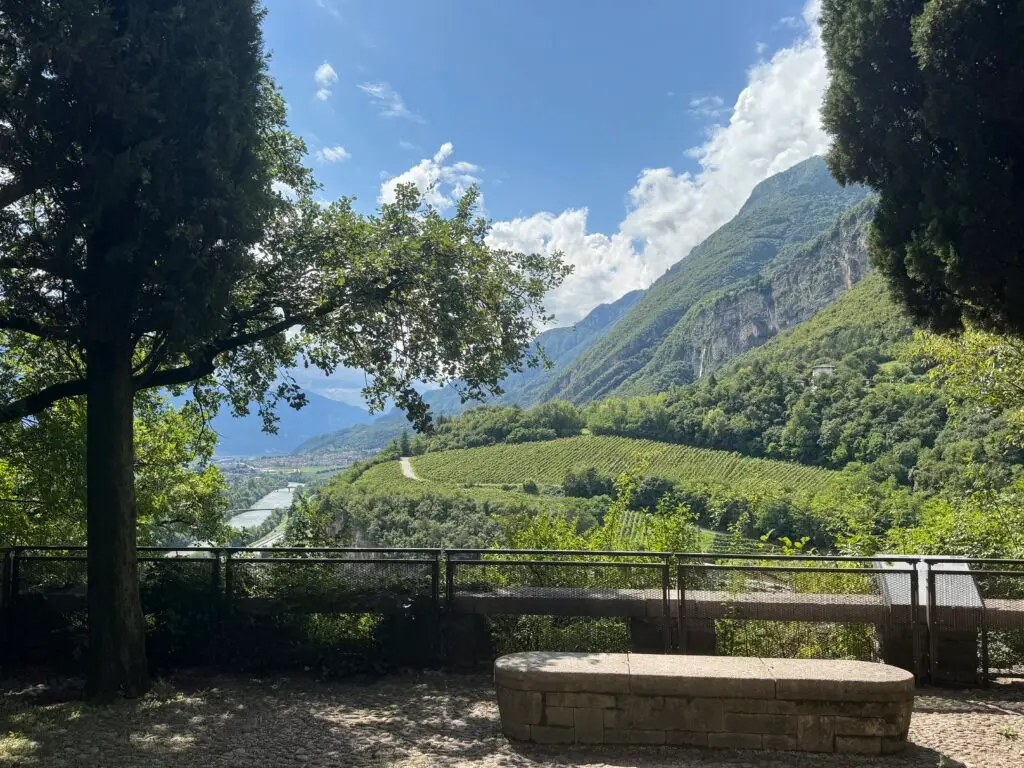
The monument itself was a bit too gaudy and seemed out of place on the steep hillside. But our reward on the short steep hike was beautiful perspectives of the city below. We stopped for lunch at a cafe on our return route and had an unexpectedly, extraordinary lunch of braised rabbit. The rabbit was perfectly cooked and paired well with the local table wine.
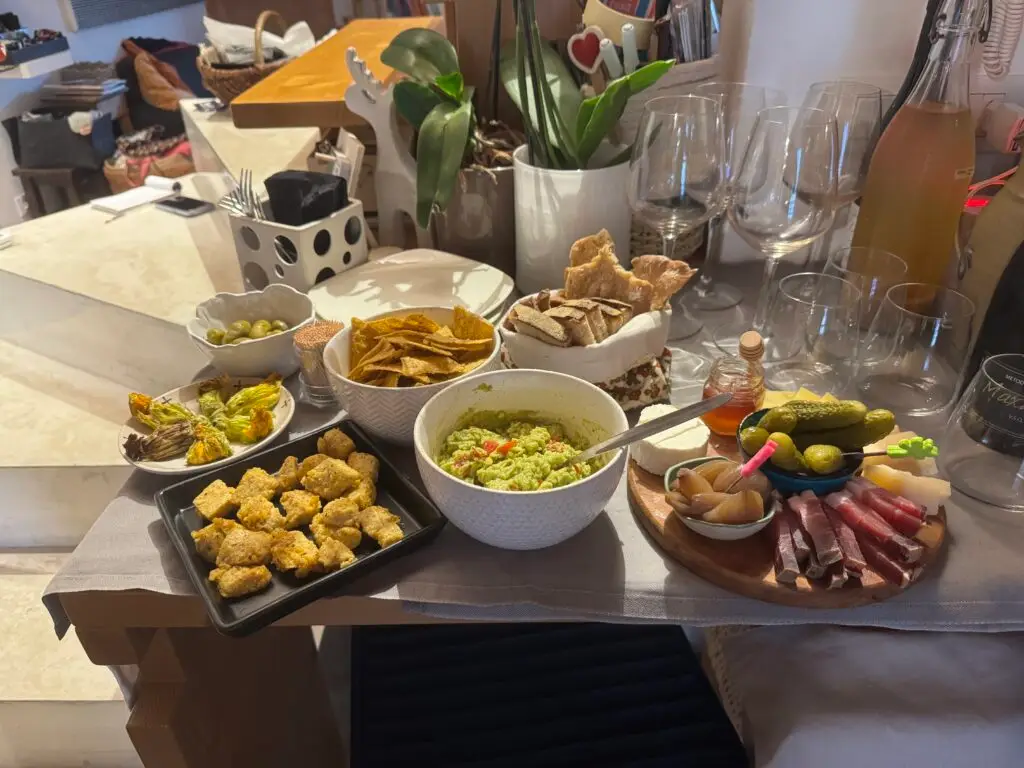
In the evening, I attended a gnocchi cooking class. The class was in a private residence. The apartment had a warm and welcoming feel. Our dinner was delicious, feather light gnocchi with three different sauces made from local cheese and produce.
Bolzano
We headed deeper into the Dolomites and the landscape continued to enthrall me. Our home for the next few nights was Brixen, a Germanic alpine village. Brixen is the oldest town in the Tyrol region with a founding date of 901 AD. The old town has a grand piazza. The Domplatz is flanked by the Hofburg palace, the Brixen Cathedral and the White Tower.
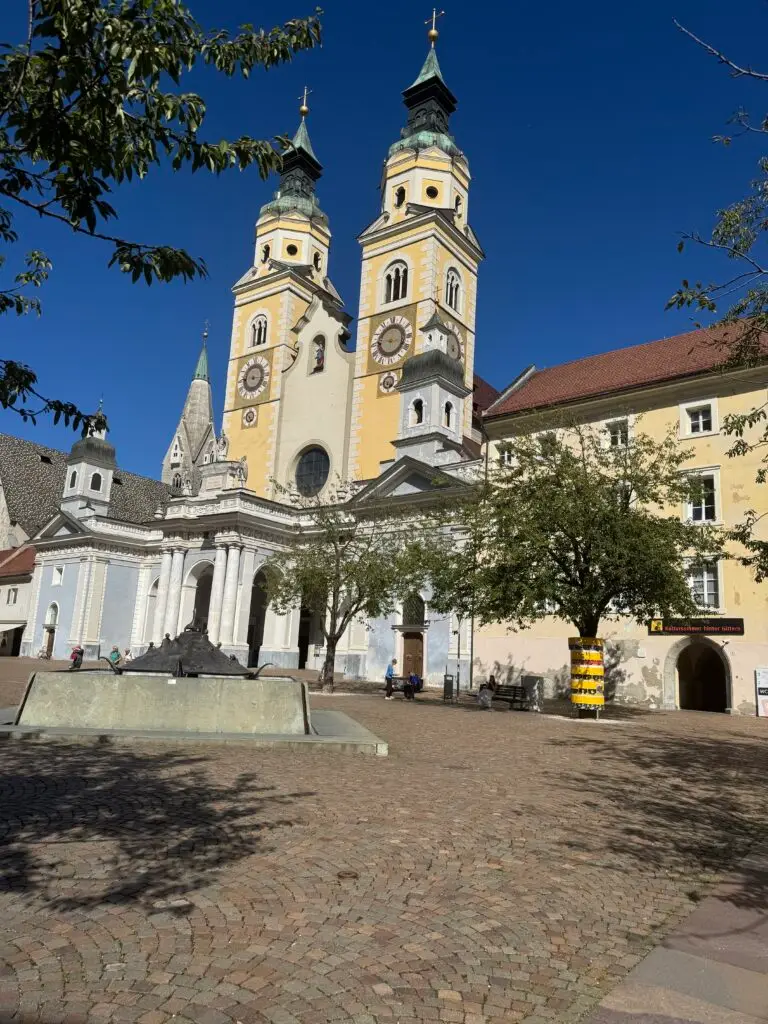
The cathedral was rebuilt, 1745-1754, in an ornate, baroque style that utilized 33 different types of marble. Frescos adorn the interior. The pillared entryway was added in 1790.
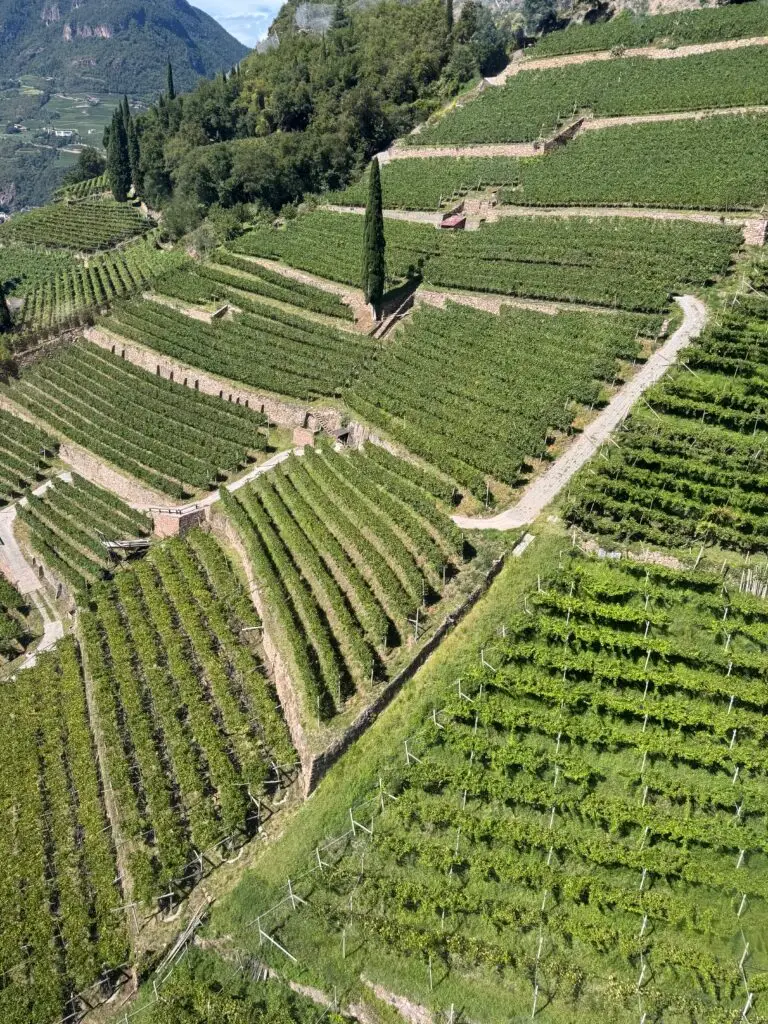
A short walk outside the town is the Neustift Monastery. The Augustinian monastery is surrounded by terraced vineyards. I arrived there too late to tour the buildings in depth, however I caught a glimpse of the Rococco Library and the cellar, where white wines produced by the monks can be sampled.
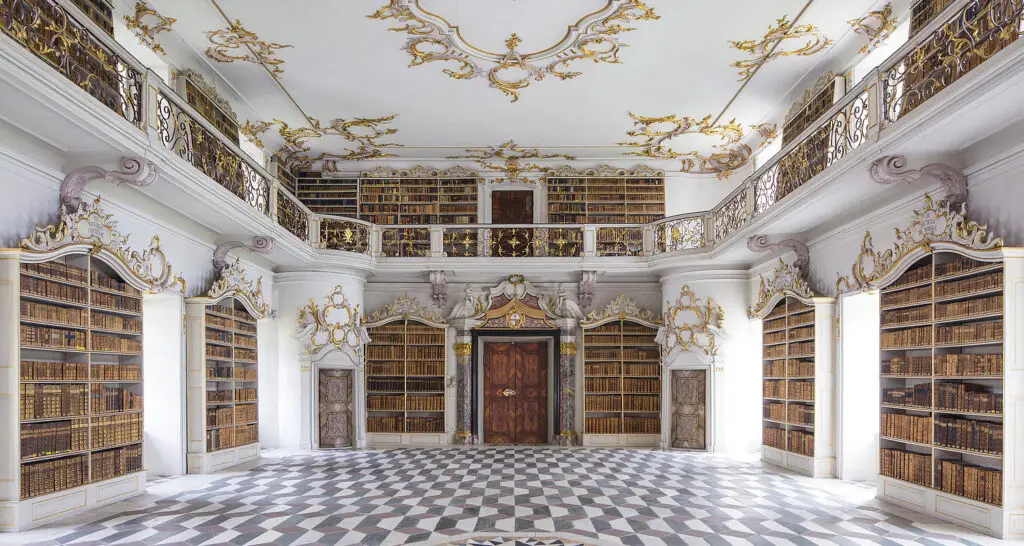
On the path to the monastery, an automated sign tracks the number of hikers and bicyclists. Brixen is a stop along a popular biking route that runs from Munich to Venice. The distance between the cities is 350 miles. It is typically a nine day route. With the advent of e-bikes the cycling adventure is much more accessible to the novice biker.
The local population of 23,350 supports the tourist industry, historical sites, and town maintenance. It’s amazing that such a small populace can support and maintain incredible structures, cobbled streets, paths and daily life.
With Brixen as our home base, our group explored Bolzano and the Bressanone in the Ladin valley before heading on to Venice.
The provincial capital, Bolzano is situated at the junction of three rivers. The bustling city has bilingual street signs and a delightfully schizophrenic architecture. The grand cathedral is reminiscent of a Viennese church with an intricately patterned green and yellow tiled roof while the piazza is surrounded by renaissance Italian structures. The Via dei Portici, a grand street of luxury stores, is housed in a medieval stone arcade.
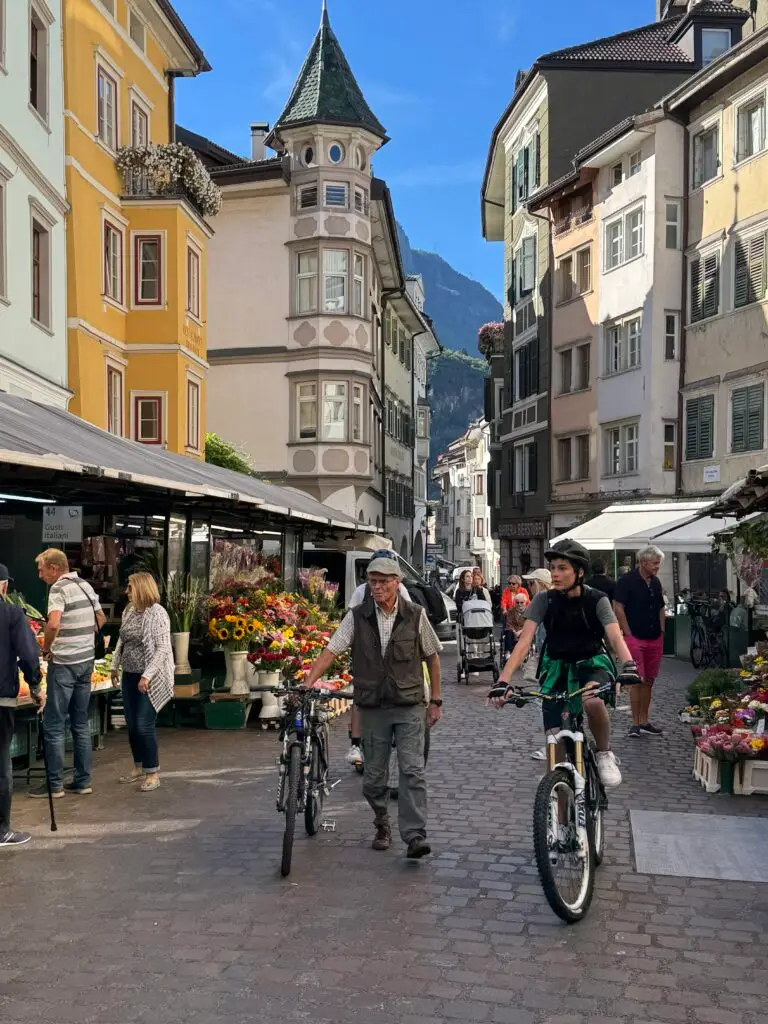
The brilliant blue skies and rugged landscape complement the architectural contrasts. I loved walking through the city and only wished I would have had more time to take in the atmosphere and wander without an impending time limit.
Unfortunately, it was a jammed packed day. In addition to simply enjoying the town, we were slated to visit the Archaeological Museum and ride the Renon cable car up to the Ritten high plateau.
Ötzi the Iceman
The South Tyrol Museum of Archaeology is home to Ötzi, the region’s most famous traveler. His mummified remains were found high in the Ötztal Alps by hikers in 1991. This 5,300-year-old alpine inhabitant was perfectly preserved by the glacial ice.
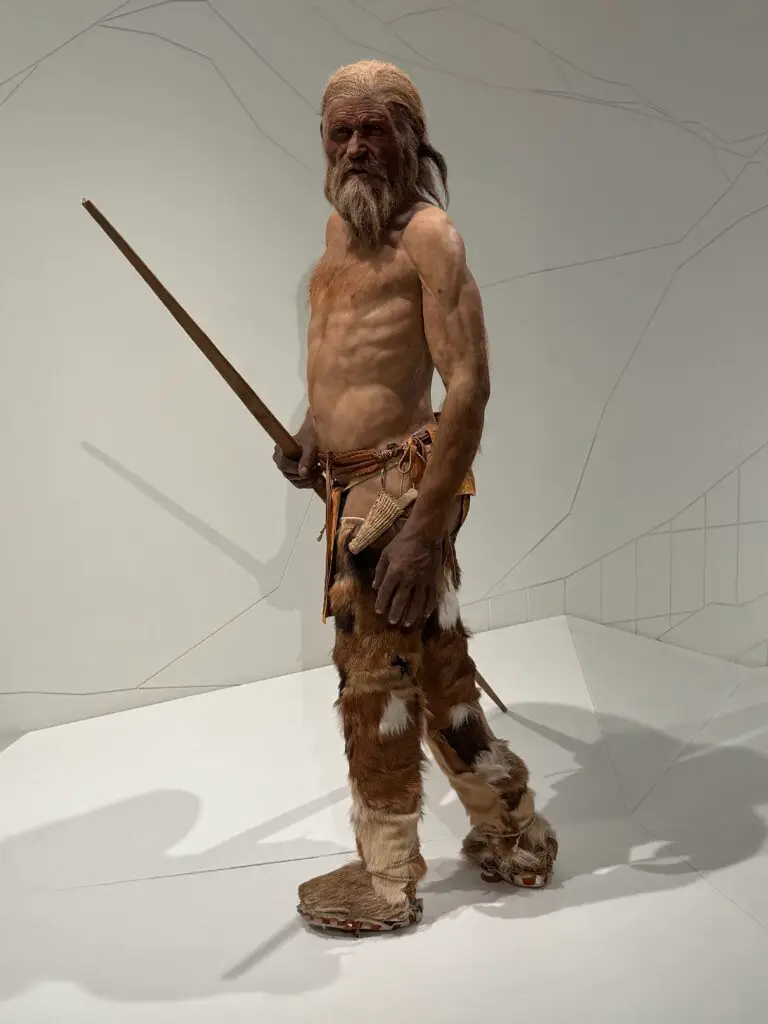
Ötzi is unique because, unlike Egyptian mummies, he was flash frozen with all of his everyday accouterments. His clothing was layered and made from the hides of five different animal species.
Notable among his possessions was a copper axe. Analysis of the metal, traces its origin to Tuscany. That means, that there were trade routes in the area as early as 3300 BC.
Ötzi also had 61 distinct tattoos. The patterns were made by rubbing charcoal into fine incisions. The designs are located on areas of his body that were beginning to suffer from age related degradation — lower spine, knees and ankles. The tattoos might have been therapeutic as their positions closely align with acupuncture points.
The South Tyrol Museum of Archaeology has done an exceptional job of displaying Ötzi. The interactive displays culminating in the actual viewing of the mummy make the excursion a “ must see” for anyone visiting the region.
The remainder of the day was spent outdoors exploring the plateau 3,000 ft. above Bolzano. An efficient cable car transported our group to the Ritten Station. Then, a wooden trolley, circa 1907, took us along a 7 km flat mountain track, making 5 stops at small alpine resort areas.
Philippa and I had decided to hike back to the meeting point. We managed to get lost despite being on a relatively flat path. The locale who assisted us, an alpine curmudgeon, would only speak to us in German. We understood enough to find the correct path and reach the Ritten Station with time for a glass of the local Kerner wine. It’s a palate pleasing wine that has nice acidity and distinctive mineral notes.
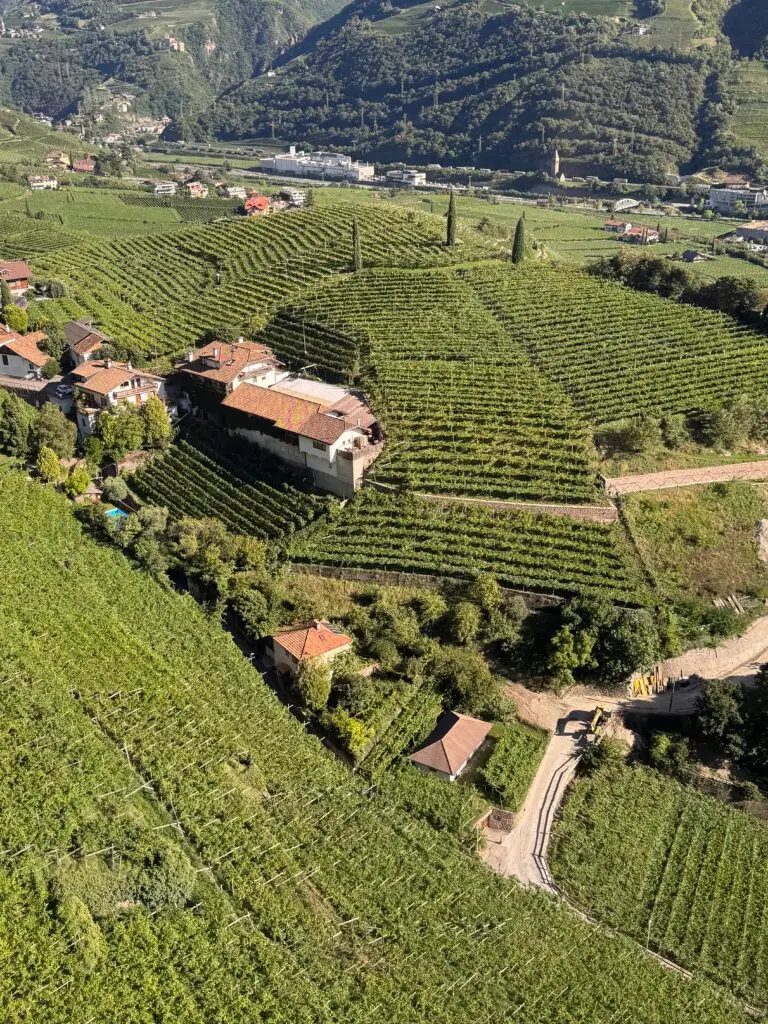
Our last full day in South Tyrol was spent in the Ladin Valleys. The winding mountain roads took us by the several of the 2026 Olympic venues. It was a day spent immersed in the mountains where short lovely walks were interspersed with scenic drives.
Ciao and Auf Weidersehn to South Tyrol
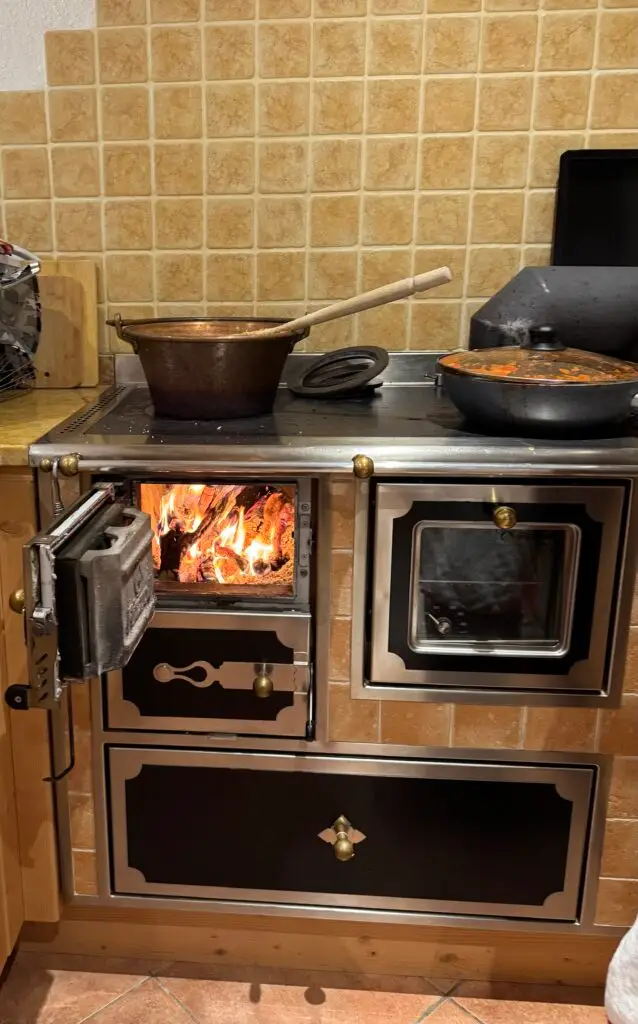
We reluctantly left Brixen en route to Venice. Our last travel segment took us through some areas of fierce WWI fighting. Our final luncheon stop was at a family orchard. We toured the orchards and had a lunch of polenta with tomato salad. The flavors exploded in my mouth. It was one of the simplest and most satisfying meals of the trip.
I would return to the Dolomites in a heartbeat. The inter mountain transportation is quite adequate and a combination of trains and buses would get you to practically anywhere. For the physically fit, a good bike will get you anywhere, as long as your comfortable navigating mountain roads alongside Italian drivers.
On to Venice.